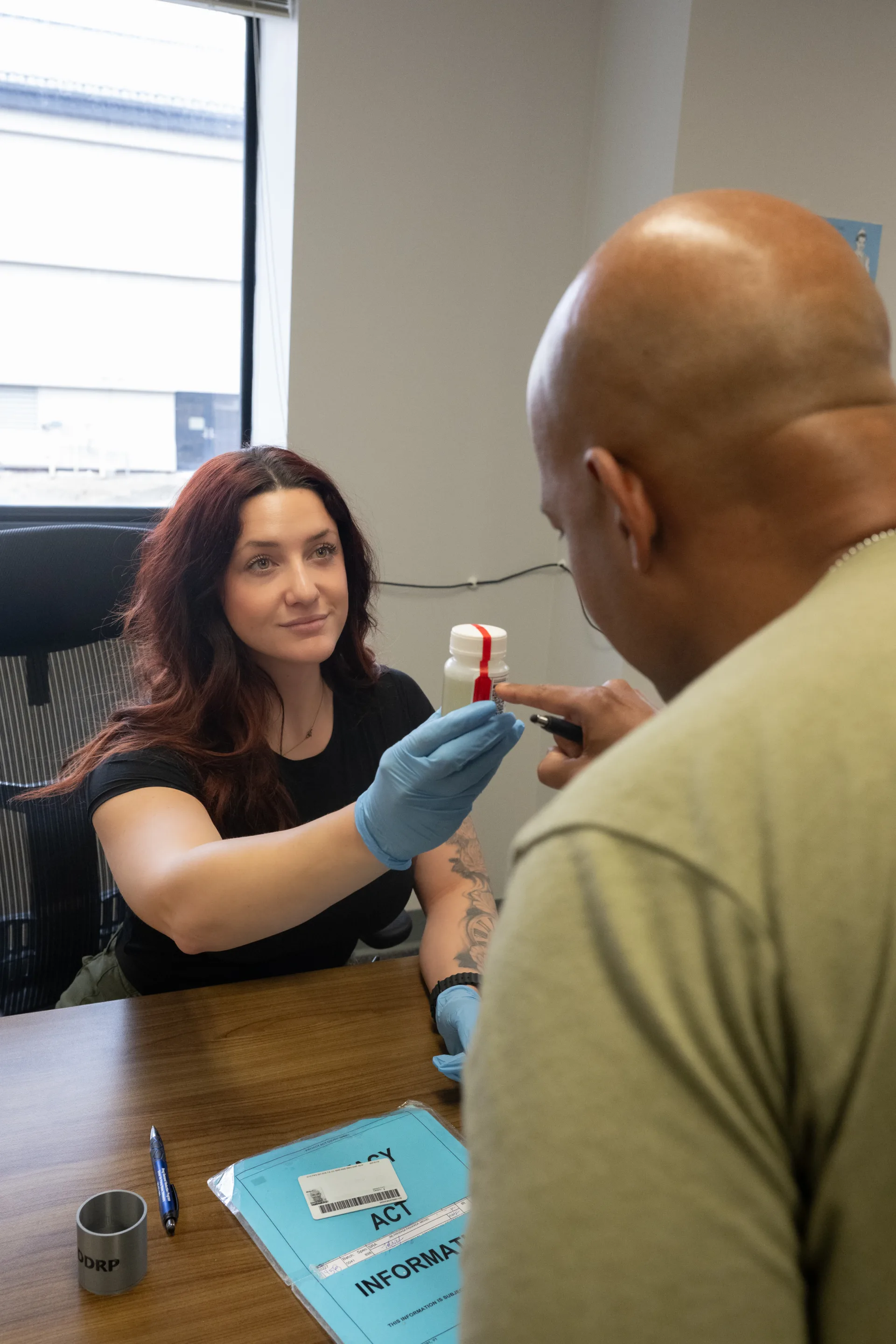
You didn’t plan for this moment. Maybe it was a positive urinalysis that came back wrong, or a decision you made during one of the hardest stretches of your life. Now you’re staring at a Statement of Reasons — or waiting for one — and wondering whether your career, your clearance, and everything you’ve built is about to come apart.
It doesn’t have to.
A security clearance denial or revocation based on drug involvement is not automatically the end. The federal adjudication process under Security Executive Agent Directive 4 (SEAD-4), Guideline H is designed to evaluate the whole person — not just the worst moment. Cases that look closed on paper are often winnable with the right legal strategy, the right mitigation evidence, and an attorney who knows how military adjudications actually work.
| A Recent Result: Kevin Courtney represented a Staff Sergeant after a positive UA for marijuana while on active duty. She had already filed her own response to the Statement of Reasons before retaining attorney Kevin Courtney — an extremely difficult starting position. Kevin stepped in, rebuilt the mitigation strategy, prepared a detailed legal brief, and represented her at the DOHA hearing. The adjudicator granted the clearance. No ADSEP. Career intact. Outcomes vary by case. Past results do not guarantee future outcomes. |
Security Clearance Attorney: Kevin Courtney, Esq.
My name is Kevin Courtney. I’m a former Marine Corps Captain and Judge Advocate — a military lawyer and defense attorney — and I now run Courtney Military Law Group, a boutique military law firm based in Southern California. I represent active duty Marines and sailors at Camp Pendleton, MCAS Miramar, and installations across the country. If your security clearance is at risk because of drug involvement, I know how these cases are built — and how to beat them.
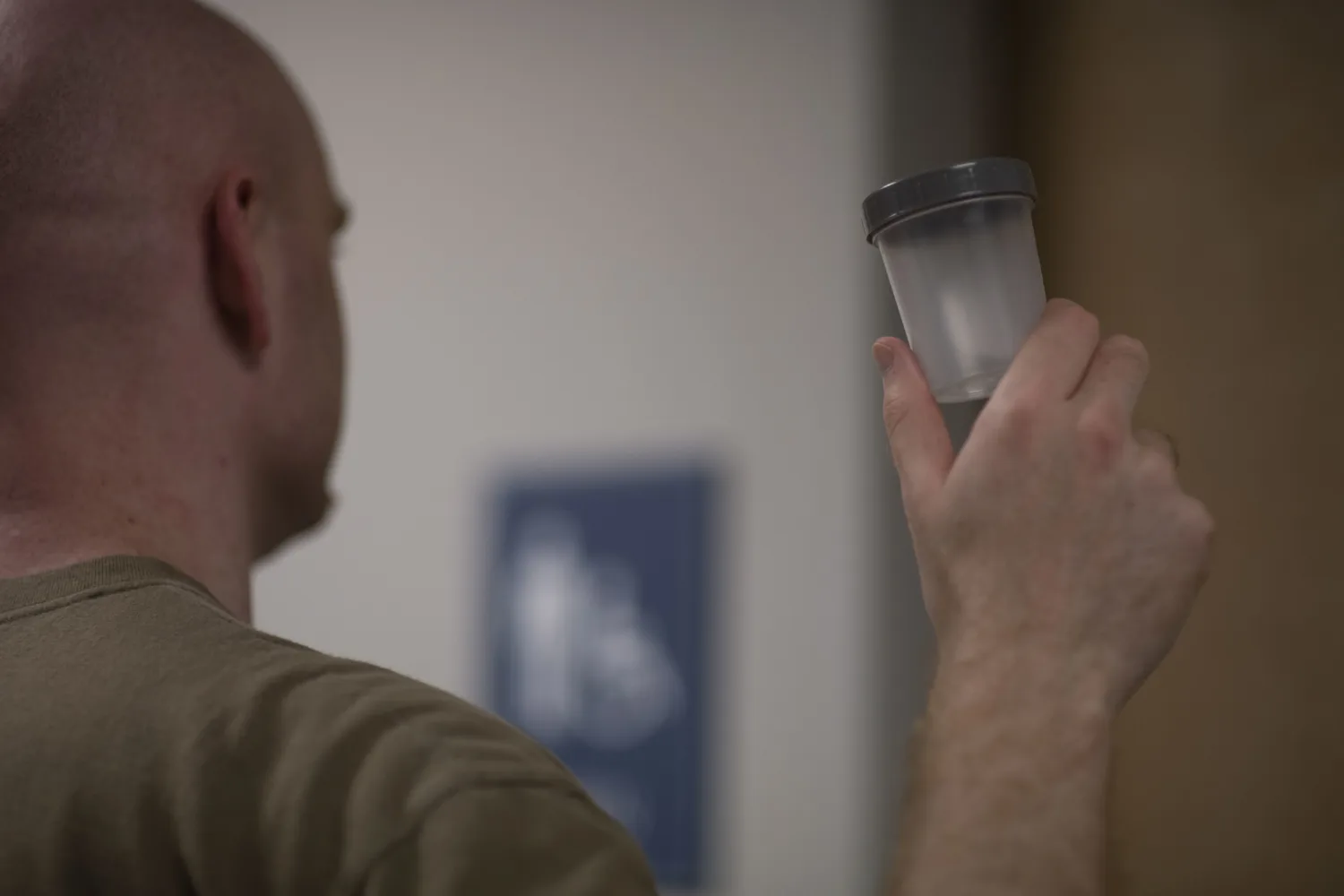
What “Drug Involvement” Actually Means Under Federal Law
The legal framework that governs every military security clearance adjudication is Security Executive Agent Directive 4 (SEAD-4), signed by the Director of National Intelligence in December 2016. Guideline H — Drug Involvement and Substance Misuse — is the specific standard applied when drug use appears in your background.
According to SEAD-4, the government’s core concern is straightforward: drug abuse or dependence may impair judgment, reduce reliability, and create vulnerability to coercion — all of which compromise a person’s ability to safeguard classified information.
What Triggers a Guideline H Security Concern
The following conditions can raise a Guideline H concern in your adjudication:
- Any illegal use of a controlled substance — past or present
- Misuse of a prescription drug or legal substance in a manner inconsistent with its intended purpose
- A positive drug test, including a military urinalysis (UA)
- Illegal drug possession, purchase, sale, cultivation, or distribution
- A diagnosis of drug abuse or dependence by a credentialed medical professional
- Failure to complete a drug treatment program prescribed by a qualified provider
- Expressed intent to continue using illegal drugs
The Marijuana Trap: California Law Doesn’t Protect You
This is the issue we see most often with active duty clients in Southern California. Marijuana is legal in California. It is not legal under federal law. It remains a Schedule I controlled substance under the Controlled Substances Act, and the security clearance adjudication process follows federal law exclusively.
Under SEAD-4 and clarifying guidance from the Office of the Director of National Intelligence, marijuana use — even use that occurred in a state where it was legal at the time — remains relevant to Guideline H adjudications. This is true whether the use happened before you enlisted, before you applied for your clearance, or during service.
If you used marijuana during active duty and tested positive on a UA, you are facing simultaneous exposure under the Uniform Code of Military Justice (UCMJ), Article 112a — wrongful use of a controlled substance — and a Guideline H security clearance review. These proceedings are related but legally separate. How each one resolves can affect the other.
The Bond Amendment: The Hardest Line in the Law
One statutory limitation that most attorneys don’t flag: the Bond Amendment (50 U.S.C. § 3343(b)) creates an absolute statutory bar — not just a guideline concern — against granting or renewing a clearance for a current illegal drug user or addict. This is not mitigatable. No amount of character evidence, rehabilitation documentation, or legal argument can overcome it if current use is established. This is why the distinction between past use and current use is the first question in every Guideline H case.
How Adjudicators Actually Think About These Cases
Here is what most online resources miss: the adjudicator’s job is not to punish you for past mistakes. It is to make a predictive judgment about whether you can be trusted with classified information going forward. That is a fundamentally different inquiry than a criminal prosecution.
SEAD-4 requires adjudicators to apply the whole-person concept — meaning they must weigh all of the information about you, positive and negative, and make a determination about your overall reliability and trustworthiness. Your military service record, your deployment history, your commendations, your treatment of fellow service members — all of it is in play.
The cases that are most often lost are not lost because the conduct was too serious. They are lost because the response to the SOR was poorly constructed, because mitigating evidence wasn’t assembled correctly, or because the applicant appeared before the adjudicator without legal representation and couldn’t articulate why the behavior is behind them.
As a former Marine JAG, I’ve watched these cases from the inside. The adjudicator is looking for one thing above all else: credible evidence that the past conduct is not predictive of future behavior. That case has to be built deliberately and presented professionally.
Military-Specific Drug Scenarios: What’s Different for Marines and Sailors
General security clearance resources are written for civilian federal employees and contractors. If you’re active duty Navy or Marine Corps, your situation has layers that civilian-focused attorneys often miss entirely.
Positive Urinalysis: The Two-Front Problem
A positive UA on active duty doesn’t just trigger a Guideline H review. It typically triggers a simultaneous investigation under UCMJ Article 112a. You may be facing nonjudicial punishment (NJP), administrative separation (ADSEP) under DoDI 1332.14, and a security clearance revocation — all at the same time.
These proceedings interact in important ways. The disposition of your UCMJ action will appear in your clearance adjudication. An NJP or court-martial conviction for drug use is additional negative evidence that the adjudicator will weigh. Conversely, a strong character showing in the UCMJ process — with command support, a clean record, and documented rehabilitation — can become part of your mitigation package in the clearance proceeding.
An attorney who handles only clearance cases and not UCMJ proceedings cannot coordinate both fronts. You need someone who can operate in both arenas simultaneously.
ADSEP Triggered by Drug Use
Under DoDI 1332.14, drug use is a basis for mandatory administrative separation in many circumstances. The characterization of that separation — Honorable, General Under Honorable Conditions, or Other Than Honorable (OTH) — can follow you into every future security clearance application.
An OTH discharge from a drug-related ADSEP will appear as negative evidence under Guideline H and potentially under Guideline J (Criminal Conduct) in any future clearance adjudication. Veterans who separated under those conditions and then entered the defense contractor world often face Guideline H concerns compounded by Guideline J and discharge characterization issues simultaneously.
If your ADSEP and clearance proceedings are both pending, the goal is to protect your characterization of service in the ADSEP process while simultaneously building the mitigation record for the clearance adjudication. These strategies must be coordinated, not run in parallel by different attorneys who don’t talk to each other.
The Innocent Ingestion Defense
Secondhand marijuana smoke is not a viable defense on a military positive urinalysis — that claim has been litigated and rejected repeatedly. However, there are documented cases of legitimate innocent ingestion: poppy seed products triggering codeine or morphine positives, for example, or contaminated CBD products containing THC above the 0.3% hemp threshold.
If you believe your positive urinalysis resulted from innocent ingestion, that defense must be investigated forensically and presented with supporting documentation. It is not enough to assert it — you must build the evidentiary record to support it.
What Actually Mitigates a Guideline H Concern
SEAD-4 identifies specific mitigating conditions that can overcome a Guideline H concern. The following are the most significant in military drug cases:
- The conduct was isolated, infrequent, or under unusual circumstances unlikely to recur
- Sufficient time has elapsed since the conduct — recency is one of the most important factors in the adjudicator’s analysis
- The individual voluntarily self-referred for substance abuse evaluation or treatment before being confronted
- Satisfactory completion of a drug treatment program, with a favorable prognosis from a credentialed medical provider and no recurrence
- A signed statement of intent to abstain from future illegal drug use, with acknowledgment that clearance will be automatically revoked for any violation
- Strong character evidence: deployment history, performance evaluations, awards, letters from commanding officers, peer statements
- Full, voluntary honesty on the SF-86 about the conduct — candor is a mitigator in itself; concealment almost always makes the case worse
This is not a checklist you complete on your own and submit. Each mitigating condition requires supporting documentation, presented in a legally structured format that directly addresses each allegation in the Statement of Reasons. A bare assertion that “it won’t happen again” is not mitigation. A sworn statement, a treatment completion certificate, a letter from your CO, and a documented timeline of abstinence — built into a professional brief — is mitigation.
The Process: From Statement of Reasons to DOHA Hearing
Here is how the adjudication process works once a Guideline H concern is identified:
1. Statement of Reasons (SOR)
The Defense Counterintelligence and Security Agency (DCSA) issues a Statement of Reasons setting out each specific allegation of concern. You have 20 – 30 days from receipt to file a written response admitting, denying, or explaining each allegation. Missing this deadline can forfeit your right to further review.
This is the most consequential document in your entire proceeding. The SOR response sets the record. Everything that follows — the DOHA hearing, any appeal — is built on what you submit here. Filing it without an attorney is one of the most common and costly mistakes applicants make.
2. Request for a Hearing
You can request an in-person or video-teleconference hearing before an Administrative Judge (AJ) at the Defense Office of Hearings and Appeals (DOHA). At the hearing, your attorney can present witnesses, submit documentary evidence, make oral argument, and cross-examine evidence from the Department Counsel. If you do not request a hearing, an AJ will decide based solely on the written record.
3. For Military Members: PSAB and Personal Appearance
Active duty military personnel and DoD civilian employees go through a Personnel Security Appeals Board (PSAB) process, which differs from the contractor track. The appeal pathway and the role of the Administrative Judge differ. Understanding which process applies to you — and what procedural rights you have within it — requires an attorney who knows the military-specific track.
4. DOHA Appeal Board
If the AJ issues an adverse decision, you can appeal to the DOHA Appeal Board. The Board reviews the written record and evaluates whether the AJ’s decision was properly reasoned and supported. It does not re-weigh the evidence from scratch — which is exactly why building a strong record before the AJ hearing matters more than the appeal brief.
Why You Need a Security Clearance Attorney for Drugs — And Why Military Experience Matters
There are national security clearance firms that have handled thousands of DOHA cases. If your only issue is a clearance concern, some of them are capable. But if you are active duty Navy or Marine Corps — and especially if you are facing both a UCMJ action and a clearance review simultaneously — a civilian-focused clearance attorney is operating with one hand tied behind their back.
They don’t know Article 112a. These firms don’t know ADSEP. They can’t advise you on how an NJP disposition will read to a DOHA adjudicator. Oftentimes, they can’t coordinate your discharge characterization defense with your clearance mitigation strategy. And they’ve never stood inside a military courtroom.
I have. Here’s what working with Courtney Military Law Group looks like in a drug-related clearance case:
- Pre-filing SF-86 strategy: if you haven’t disclosed yet, we advise you on how to disclose drug use in a way that frames the mitigation from the first document
- SOR response: drafted by a litigator, not a form-filler — each allegation addressed with precision, each mitigating condition documented
- Simultaneous security clearance and ADSEP representation if both proceedings are pending
- DOHA hearing preparation: witness preparation, exhibit package, legal brief, oral argument
- BCNR/BCMR petition if a prior discharge is compounding the clearance problem
| The case referenced at the top of this post is an example of what coordination looks like mid-stream. The Staff Sergeant came to us after already filing her own SOR response — a difficult position. We rebuilt the mitigation record from the ground up, prepared the legal brief, and appeared at DOHA. The clearance was preserved.If you’ve already filed without help, don’t assume the case is over. Request a consultation. |
Frequently Asked Questions
Can I keep my security clearance if I tested positive on a military drug test?
In many cases, yes. A positive UA triggers a Guideline H review, but it is not an automatic revocation. The outcome depends on the drug involved, the circumstances, your overall service record, how you disclosed it on the SF-86, and the quality of your mitigation package. Cases with strong character evidence and documented rehabilitation have succeeded at DOHA even with in-service drug use.
Does marijuana use in California affect my security clearance?
Yes. State legalization is irrelevant to federal adjudications. Under SEAD-4, any marijuana use — including recreational use legal under California law — is treated as illegal drug involvement. Use during active duty is particularly serious because it occurred while holding a clearance. However, past marijuana use can be mitigated in many circumstances depending on recency, frequency, and the overall record.
I already filed my SOR response without an attorney. Is it too late?
No. If you have not yet had a DOHA hearing, an attorney can still enter the case, rebuild the mitigation strategy, prepare a legal brief, and represent you at the hearing. The earlier you retain a security clearance attorney after filing, the more options are available. Do not wait until after the hearing.
Military Service Members Also Asked…
What’s the difference between an ADSEP and a security clearance revocation?
They are separate proceedings with separate standards, but they affect each other. An ADSEP under DoDI 1332.14 addresses your continued military service. A security clearance revocation addresses your eligibility to access classified information. A drug-related ADSEP resulting in an OTH discharge can be used as negative evidence in a future clearance adjudication. Coordinating both proceedings simultaneously gives you the best outcome on both fronts.
Do I need a lawyer to respond to a Statement of Reasons?
You are not required to have one. But the SOR response is the most important document in your clearance proceeding — it sets the record for everything that follows, including the DOHA hearing and any appeal. A poorly drafted SOR response cannot be fully corrected later. The consequences of filing without counsel are often irreversible.
Talk to a Security Clearance Attorney for Drugs — Today
If you’re active duty Navy or Marine Corps and your security clearance is at risk because of drug involvement — a positive UA, a prior use disclosure, a pending SOR — the clock is already running. Statement of Reasons deadlines are strict. DOHA hearing dates are set. And the record you build now is the record you’re stuck with later.
Courtney Military Law Group represents service members at Camp Pendleton, MCAS Miramar, and installations nationwide. We handle clearance cases, UCMJ defense, and ADSEP proceedings — and we know how to run them together when the situation calls for it.
Request your security clearance consultation today. If you’ve already received a Statement of Reasons, bring it. We’ll tell you exactly where you stand.
Sources and Legal Authority
The following primary sources are cited throughout this post:
- Security Executive Agent Directive 4 (SEAD-4), National Security Adjudicative Guidelines — Office of the Director of National Intelligence (2016)
- Bond Amendment — codified at 50 U.S.C. § 3341(b)
- UCMJ Article 112a — Wrongful Use, Possession, etc., of Controlled Substances
- DoDI 1332.14 — Enlisted Administrative Separations
- CDSE Adjudicative Training Module PSS0016: Guideline H — Drug Involvement and Substance Misuse — Center for Development of Security Excellence (CDSE)
- DCSA AVS Conditional Eligibility Determinations Industry Fact Sheet — Defense Counterintelligence and Security Agency (DCSA)
- ODNI Clarifying Guidance on Marijuana Use and Security Clearance Adjudications — Office of the Director of National Intelligence (2021)
This blog post is an attorney advisement and is not intended as legal advice. Past results are not indicative of future success.