Many Army military retirees in Southern California — whether stationed at Fort Irwin, living near other installations, or simply retired in the region — are leaving thousands of dollars on the table every month. Not because they don’t qualify for Army CRSC (Combat-Related Special Compensation). But because no one told them which of the four Army CRSC types applies to their injury — or that the Army’s application process is more demanding than the governing regulation requires.
This post explains the four types of Army CRSC, the legal standard that governs them, the evidentiary rules you need to understand before you apply, and what your options are if the Army Human Resources Command (HRC) denies your claim.
What Is CRSC — and Who Qualifies?
Combat-Related Special Compensation is a tax-free monthly payment authorized by Congress under 10 U.S.C. § 1413a. It is designed to restore military retirement pay that was reduced — dollar for dollar — by VA disability compensation. The administrative rules governing Army CRSC are set out in DoD Financial Management Regulation (DoD 7000.14-R), Volume 7B, Chapter 63 (June 2024).
One important threshold point: CRSC is exclusively for military retirees. If you separated from the Army without achieving retired status — whether through an administrative separation, an honorable discharge at the end of your contract, or any other non-retirement separation — you do not qualify. You must be on the retired rolls and receiving military retired pay (even if that pay is currently offset by VA disability compensation) to be eligible.
To qualify for Army CRSC, you must:
- Be in retired status and receiving military retired pay
- Have a VA disability rating of at least 10%
- Have an active VA waiver reducing your retired pay
- Have filed DD Form 2860 with the Army HRC CRSC Division
- Have at least one VA-rated disability that the Army determines is combat-related under one of the four categories described below
The Army HRC CRSC Division at Fort Knox, Kentucky, adjudicates all Army CRSC applications. They are the gatekeeper — not the VA.
CRSC vs. CRDP: Which Pays More for Army Retirees?
Before diving into the four types, it is worth understanding the difference between CRSC and Concurrent Military Retirement Pay and DVA Disability Compensation — the program formerly known as Concurrent Retirement and Disability Pay (CRDP). Our guide on CRSC v. CRDP and which may be better is here.
Both programs exist to address the same problem: the dollar-for-dollar offset between military retired pay and VA disability compensation. But they work differently, and you can only receive one at a time.
CRDP requires a VA disability rating of 50% or higher, requires no application, and is processed automatically. It is taxable income — taxed the same way as your military retired pay.
CRSC requires a VA disability rating of at least 10% (with at least that portion being combat-related), requires an application to your branch of service, and is completely tax-free under 26 U.S.C. § 104.
CRSC is not always the better choice, and any claim that it is should be viewed with skepticism. The math depends on two key variables:
- What percentage of your total VA rating is combat-related. CRSC uses a “lesser of” formula — your payment is capped at the lesser of your combat-related VA compensation or the amount of your retirement pay that is being offset. If only a small fraction of your total VA rating is combat-related, CRSC’s restoration will be limited, and CRDP’s full restoration may pay more.
- Your effective tax rate. Because CRSC is tax-free and CRDP is taxable, CRSC’s after-tax value is higher than its face value. For Army retirees living in Southern California, this difference is amplified: California taxes military retired pay at rates up to 9.3%. A $1,000 monthly CRSC payment can be worth the equivalent of $1,100 to $1,300 of taxable CRDP, depending on your bracket. (Please note, this blog post is not intended to be legal or tax advice for any person in particular. Specific questions about your situation should be addressed during a consultation with an attorney or accountant.)
How to Choose Between Army CRSC and CRDP
CRSC tends to be the stronger choice when most or all of your VA-rated disabilities are combat-related. CRDP tends to be stronger when only a small portion of your total VA rating qualifies as combat-related.
You must elect one program annually. DFAS conducts an open season each January. If you make no election, DFAS defaults to whichever program pays more — but the responsibility for that election is yours. (10 U.S.C. § 1414(d); DoD FMR Vol. 7B, Ch. 63, § 3.2)
The Four Types of Army CRSC
Under 10 U.S.C. § 1413a(e) and DoD FMR Vol. 7B, Ch. 63, Section 6.0, a disability qualifies as combat-related if it was incurred through one of four categories (if not already determined to be a Purple Heart Award related injury). Your Army CRSC application must identify which category (or categories) applies and provide evidence linking your VA-rated disability to a qualifying event in that category.
1. Instrumentality of War
A disability qualifies under this category when it was caused by a vehicle, vessel, or device designed primarily for military service. The key requirement is a direct causal relationship between the military instrumentality and the disability. It is not required that the injury occurred during an actual period of war.
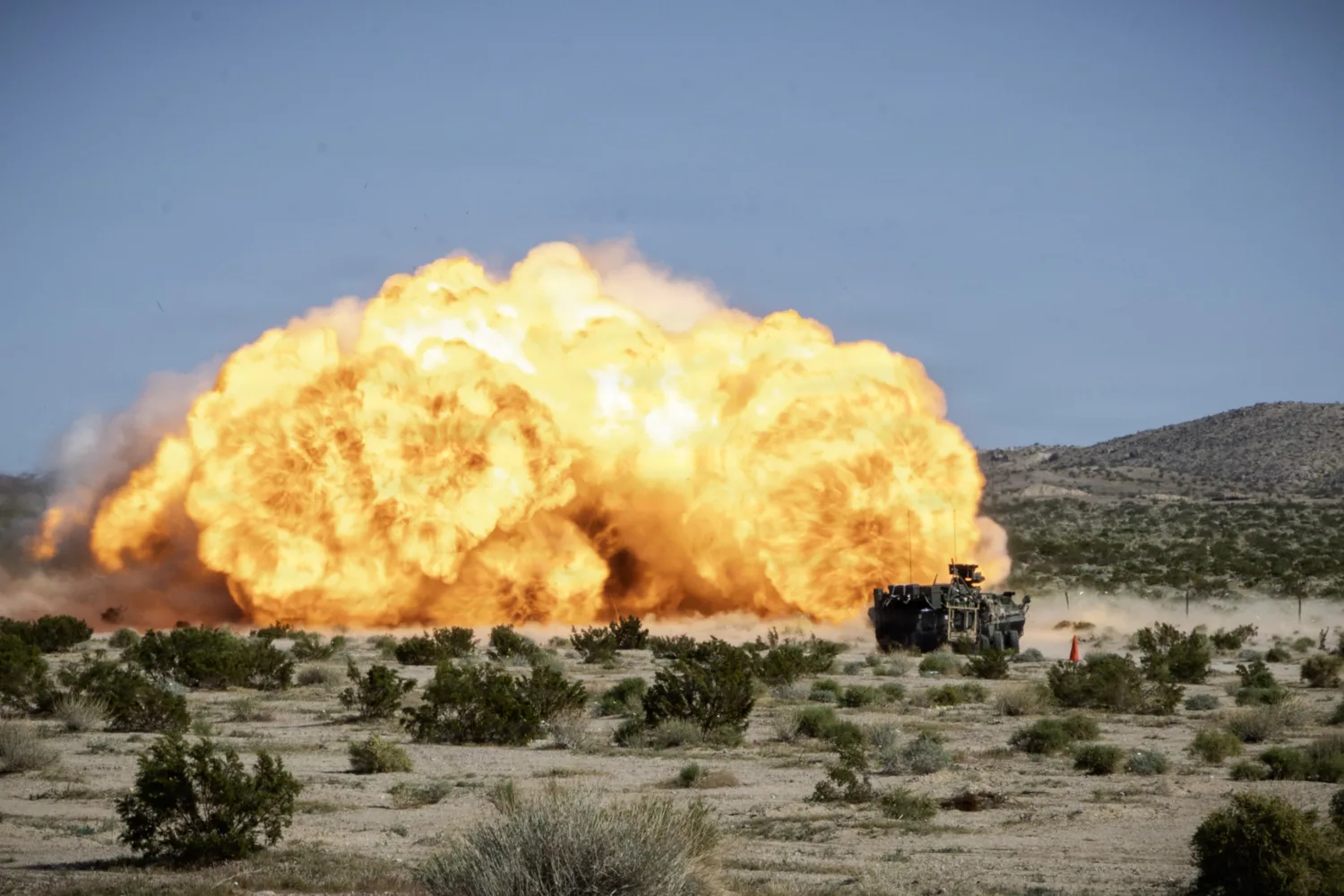
Common examples include injuries caused by IED blasts, military vehicle accidents, and exposure to fumes, gases, or explosions from military ordnance. The medical evidence linking the injury to the source is paramount. An injury that occurs near a military vehicle but is not caused by it does not qualify. The DoD FMR is specific: if an Army soldier is engaged in a sporting activity and falls and strikes an armored vehicle, the injury does not qualify because the sporting activity — not the vehicle — was the cause. But if the vehicle struck the soldier, it qualifies.
2. Hazardous Service
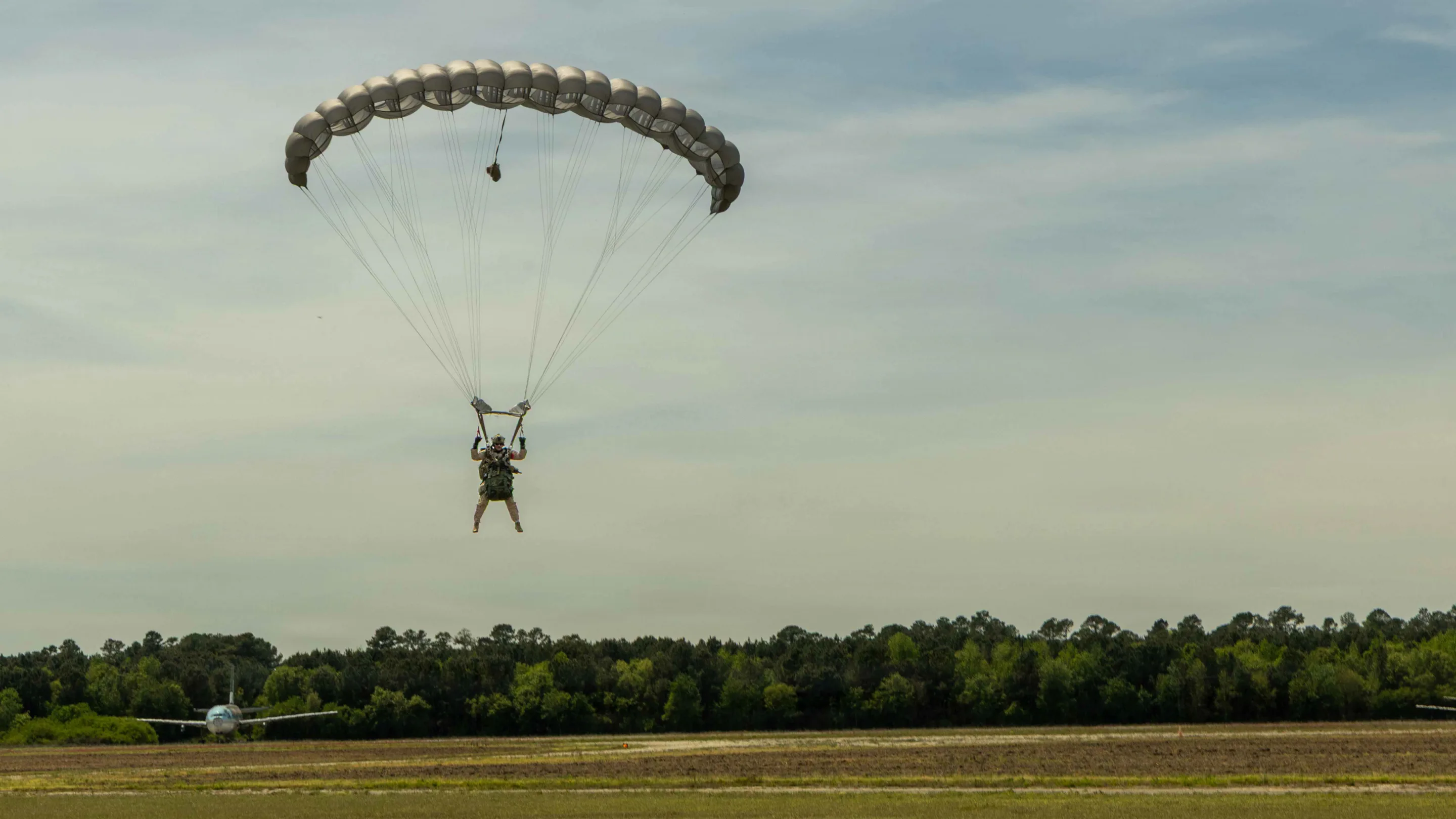
This category covers injuries sustained during officially designated hazardous duty assignments, including aerial flight, parachute duty, demolition duty, experimental stress duty, and diving duty. The injury must be a direct result of the hazardous service itself.
Two important points Army retirees frequently miss:
- Deployment is not required. Domestic training injuries during officially designated hazardous duty qualify.
- Travel to and from hazardous duty does not qualify. The injury must occur during the hazardous service itself, not incidentally to it.
3. Armed Conflict
This category requires a definite causal relationship between the armed conflict and the resulting disability. Importantly, it is not sufficient to simply establish that you were in a combat zone, deployed during a period of war, or participated in combat operations generally. This is one of the most common reasons for denial — Soldiers report being in the combat area of indirect fire. The FMR requires that the disability be the direct result of armed conflict.
Armed conflict under the FMR includes wars, expeditions, occupations, battles, skirmishes, raids, invasions, guerrilla actions, riots, and any other engagement with a hostile or belligerent force — as well as incidents involving a prisoner of war or escape from enemy custody.
When framing the cause of the injury, it may be beneficial to speak with a CRSC attorney before applying to avoid poorly worded applications.
4. In the Performance of Duty Under Conditions Simulating War
This is the most frequently overlooked category — and one of the most important for Army retirees.
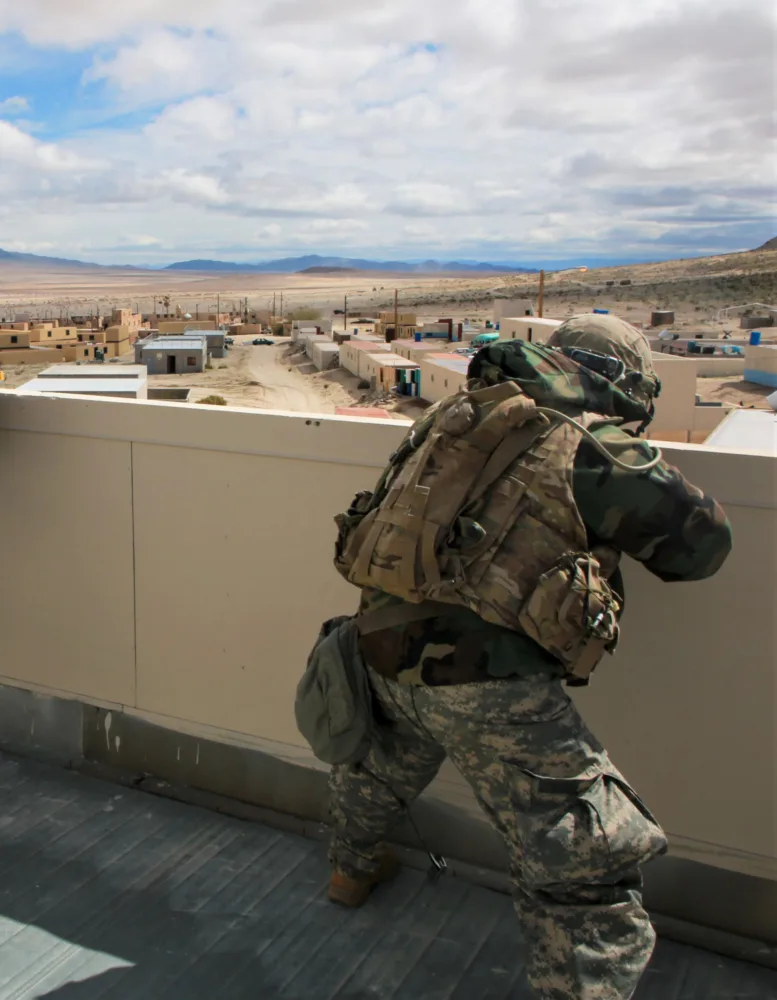
The DoD FMR defines simulated war broadly. It covers disabilities resulting from military training such as war games, practice alerts, tactical exercises, airborne operations, leadership reaction courses, grenade and live-fire weapons practice, bayonet training, hand-to-hand combat training, rappelling, and negotiation of combat confidence and obstacle courses.
What it does not cover: physical training activities such as calisthenics, jogging, formation running, or supervised sport activities.
Many Army retirees with acute injuries occurring over years of field exercises, live-fire training, and combat simulations assume their injuries don’t qualify for CRSC because they occurred during training rather than deployed combat. That assumption is wrong, and it costs retirees real money. If the medical records notate an injury, or it can be corroborated with additional documentation, Army retirees may qualify for CRSC.
The Evidentiary Standard — and Where the Army’s CRSC Process Falls Short
This section matters more than any other part of your application. Understanding what the law requires — and how the Army HRC has been applying it in practice — can be the difference between a denial and an approval.
What the DoD FMR Actually Requires
The DoD FMR (section 10.1.1.) sets a weight-of-the-evidence standard. The Army must evaluate whether the totality of available evidence establishes a sufficient causal relationship between a VA-rated disability and a qualifying combat-related event. The FMR states that an uncorroborated statement alone is not determinative — but nowhere does it require that evidence come from an officer or senior NCO. The standard is causal sufficiency, not rank of the witness.
What the Army HRC Has Required in Practice — and Why It Falls Short
The Army HRC FAQ page explicitly lists “Personal or Buddy statements” among documents it will not accept to support a CRSC claim — alongside EKGs, lab slips, and dental records. HRC’s stated rationale is that buddy statements cannot be independently corroborated.
That rationale has a significant flaw. A junior enlisted soldier who was standing next to a fellow servicemember when the injury occurred has the most probative firsthand account available — but under HRC’s approach, that statement will not be considered. Meanwhile, a commander or first sergeant who learned of the incident through the chain of command may be the only witness HRC will credit, even if that leader has no direct knowledge of what happened. Secondhand knowledge from a senior leader is not more corroborated than a firsthand account from a junior one — it is less so.
Nothing in 10 U.S.C. § 1413a or DoD FMR Vol. 7B, Ch. 63 imposes a rank threshold for witnesses or categorically excludes buddy statements. HRC’s exclusion is an administrative practice, not a statutory or regulatory requirement. It creates a system where a retiree can be denied CRSC not because the evidence is weak, but because the most credible eyewitness to their injury didn’t hold a high enough rank.
What This Means for Army CRSC Claims
If you have a firsthand witness account from any servicemember who was present at the qualifying event, that statement has evidentiary value under the governing regulation; a corroborated statement is even more valuable. A denial from HRC is not the end of the road.
- Reconsideration can be requested from the Army HRC CRSC Division with new or additional evidence
- If reconsideration is denied, you can appeal to the Army Board for Correction of Military Records (ABCMR)
- The ABCMR should apply the DoD FMR’s weight-of-the-evidence framework — not HRC’s administrative preference for senior signatories
- The ABCMR can order changes to your military records, including documentation of qualifying combat activities
How Army Retirees Can Get Their Records
The nexus between your VA-rated disability and a qualifying CRSC event must be documented. Here is how Army retirees request the records that support that documentation.
Military Service Records
Army retirees discharged or retired after October 2002 can access their Army Military Human Resource Record (AMHRR) online through the Primary Records Center at iperms.hrc.army.mil.
For records from prior to October 2002, submit a Standard Form 180 (SF-180) or written request to the National Personnel Records Center (NPRC) at eVetRecs.
Request specifically: deployment orders, line-of-duty (LOD) determinations, safety mishap and accident reports, awards citations, morning reports, casualty reports, and duty status reports. These contemporaneous records carry significant evidentiary weight because they document what happened at the time — before any claim was ever contemplated.
Military Medical Records
Service treatment records document the injury and, critically, its causation. For Army retirees, medical records requests can be submitted through the Army’s medical records repository or the VA — depending on when the retiree’s service ended.
Focus on records that document how the injury occurred — not just treatment records showing the extent of the condition. The Army HRC specifically notes that medical records stating only “hurt right knee” with no causation history are not useful for CRSC purposes.
VA Records
Request your VA claims file (C-file) through VA Form 20-10206 (a FOIA request) or through the VA’s online portal. Your C-file contains the VA rating decisions, diagnostic codes, and examination reports that the Army HRC will use as the foundation of its CRSC determination.
Understanding your C-file before you apply allows you to identify gaps and address them proactively rather than discovering them after a denial.
Why Records Matter for Army CRSC
The nexus between your VA-rated disability and a qualifying Army CRSC event must be established through documentary evidence. The more contemporaneous records you can gather — LOD determinations, accident reports, morning reports — the stronger the causal connection. Knowing what you have before you submit shapes how you frame the claim and which Army CRSC category you can credibly support.
The Army CRSC Application Process
Applying for Army CRSC is a multi-step process handled exclusively through the Army HRC, not through the VA or DFAS.
Step 1: Confirm retired status and VA waiver. You must be on the Army’s retired rolls and have an active VA waiver with DFAS reducing your retired pay.
Step 2: Gather your records. Relevant documentation includes your VA rating decision letters, VA code sheets, VA narrative summary, service medical records showing causation, personnel file records, LOD determinations, accident and mishap reports, and any prior disability board decisions.
Step 3: Identify which of the four CRSC categories applies. This determination shapes every other aspect of your application. The Army HRC notes that the most common reason claims fail is that the application does not identify how the injury occurred within a qualifying CRSC category.
Step 4: Complete DD Form 2860 and submit to Army HRC.
Mailing address: Department of the Army U.S. Army Human Resources Command ATTN: AHRC-PDP-C (CRSC), Dept 480 1600 Spearhead Division Avenue Fort Knox, KY 40122-5408
Email: usarmy.knox.hrc.mbx.tagd-crsc-claims@army.mil
Processing time: Army CRSC applications typically take 90 to 120 days.
Retroactive pay: CRSC is payable retroactively. Filing promptly preserves the full retroactive period.
Frequently Asked Questions About Army CRSC
Do I qualify for CRSC if I separated from the Army but did not retire? No. CRSC is available only to military retirees on the retired rolls who are receiving — or entitled to receive — military retired pay. Veterans who separated without retiring, including those who received an honorable discharge at the end of a service commitment, do not qualify for CRSC. Other programs, including standard VA disability compensation, may be available, but CRSC is not.
Can I receive CRSC with less than a 50% VA rating? Yes. CRSC requires only a 10% or greater VA disability rating — with at least that portion determined to be combat-related. This is one of CRSC’s advantages over CRDP, which requires a 50% rating minimum.
My disability is service-connected. Doesn’t that automatically make it combat-related? No. Service connection and combat-relatedness are separate legal determinations made by separate agencies. The VA determines service connection. The Army HRC determines combat-relatedness under the CRSC criteria. A disability that the VA has service-connected — even under a presumptive theory in some cases— is not automatically combat-related for CRSC purposes. It simply means the injury occurred while serving.
I was injured during training at a domestic installation. Can I still qualify? Possibly yes, under the Instrumentality of War, Hazardous Service, or Simulated War categories. Domestic training injuries sustained during parachute operations, live-fire training, demolitions, tactical exercises, or combat simulations can all qualify. The fact that no deployment was involved does not disqualify the claim.
The Army HRC rejected my buddy statement. Is that the end of the road? Not necessarily. The Army HRC’s exclusion of personal and buddy statements is an administrative practice, not a requirement of 10 U.S.C. § 1413a or the DoD FMR. On appeal to the ABCMR, the governing standard is the weight-of-the-evidence test set out in DoD FMR Vol. 7B, Ch. 63 — and a firsthand account from a witness present at the qualifying event carries probative weight under that standard, regardless of rank.
Is CRSC divisible in a divorce? No. CRSC is not military retired pay. It is not subject to 10 U.S.C. § 1408 (the Uniformed Services Former Spouses’ Protection Act) and cannot be divided as marital property in a divorce proceeding. (DoD FMR Vol. 7B, Ch. 63, § 1.1.3)
What happens if my Army CRSC application is denied? You can request reconsideration from the Army HRC CRSC Division by submitting new or additional evidence. If reconsideration is denied, you may appeal to the Army Board for Correction of Military Records (ABCMR). The ABCMR has the authority to correct military records and order CRSC entitlements where the evidence supports it.
Additional Army CRSC Questions
How does CRSC interact with my Survivor Benefit Plan (SBP)? If your retired pay is not adequate to cover your SBP premium, the premium may be deducted from your CRSC payment. (DoD FMR Vol. 7B, Ch. 63, § 1.1.3.2)
What Army Retirees in Southern California Should Know
Southern California has one of the largest concentrations of Army military retirees in the country. Many reside near Fort Irwin — the National Training Center in the Mojave Desert — or throughout Los Angeles, San Diego, Riverside, and San Bernardino counties after retiring from installations across the region and nationwide. For Navy and Marine Corps retirees, see the four Navy and Marine Corps CRSC categories.
Why California Makes Army CRSC Worth Examining Closely
For these retirees, two factors make Army CRSC particularly worth examining:
First, California taxes military retired pay. Unlike a number of other states, California does not exempt military retirement income from state income tax. Because CRSC is tax-free at both the federal and state level, the after-tax value of CRSC is materially higher for California residents than the gross dollar amount suggests.
Second, the sheer number of Army combat veterans in Southern California — many of whom deployed multiple times to Iraq and Afghanistan — means that a significant portion of this community has combat-related disabilities that could qualify under one or more of the four CRSC categories. The simulated war category alone encompasses years of training at the National Training Center and other installations that produced chronic musculoskeletal injuries, hearing loss, and other conditions now rated by the VA.
If you are an Army retiree living in Southern California and you have VA-rated disabilities connected to your service, it is worth understanding whether CRSC applies to your situation.
The Bottom Line
CRSC is a federal entitlement, not a discretionary benefit. If your VA-rated disability qualifies under one of the four categories — instrumentality of war, hazardous service, armed conflict, or simulated war — and you meet the retirement status requirements, you are entitled to it.
The Army’s application process is demanding, and the Army HRC’s evidentiary practices do not always reflect the weight-of-the-evidence standard that the DoD FMR actually requires. A denial from HRC is often the beginning of the process, not the end.
If you are an Army retiree who has been denied CRSC, or if you are building an initial claim and want to make sure it is framed correctly from the start, speaking with a military attorney who understands both the governing regulation and how the Army HRC applies it can make a significant difference in the outcome.
Kevin Courtney, Esq. is the Founding Member of Courtney Military Law Group, P.C., a boutique military law firm based in Southern California focused primarily on military law. A former USMC Captain and Judge Advocate, he represents military retirees, servicemembers, and veterans nationwide. For questions about Army CRSC or related military legal matters, please request a consultation.
This post is for informational purposes only and does not constitute legal or tax advice. CRSC eligibility is fact-specific. Consult a qualified CRSC attorney before making decisions about your benefits.