Blog

If a CBD oil or a delta-8 gummy caused the positive THC test that ended your military career, a CBD discharge upgrade may now be within reach. In June 2026, the military’s highest court decided United States v. Bass. The court held that a positive urinalysis for hemp-derived THC, standing alone, cannot rationally prove a service member knowingly used a hemp product. That is the exact assumption many drug-related separations were built on. This article explains what the court decided, what it changes, and how to use it in your petition.

By Kevin Courtney, Esq.  |  Former USMC Judge Advocate  |  California Attorney
In 2018, Congress legalized industrial hemp in the Agriculture Improvement Act. Hemp with up to 0.3 percent delta-9 THC no longer counts as marijuana under federal law. Overnight, gas stations, grocery stores, and supplement shops began selling CBD oils, delta-8 gummies, vapes, and hemp-infused drinks. The problem is that the FDA does not certify the THC content of these products. Mislabeling is pervasive. A product marked “THC-free” can still contain enough THC to fail the military’s highly sensitive urinalysis.

The services saw this coming. The Navy and Marine Corps banned all hemp products in ALNAV 074/20, and the other branches issued similar prohibitions. Notably, the Navy’s own order admits that service members “cannot rely on the packaging and labeling of hemp products.” The same order exempts use where the member reasonably did not know the product came from hemp. In other words, the government wrote unknowing ingestion into the rule itself. Yet thousands of service members have been processed for separation on the strength of a single positive test.

Delta-8 vs. Delta-9: Why the Chemistry Matters to Your Case

Two different scenarios get lumped together, and they matter for strategy:

  • Delta-8 (THC-8) positives. Delta-8 THC is derived from hemp. It is not a federally controlled substance, so the military cannot charge its use under Article 112a, UCMJ — the drug article. Instead, commands rely on Article 92 (violating an order such as ALNAV 074/20). Bass speaks directly to these cases.
  • Delta-9 THC positives attributed to CBD. The standard urinalysis targets the delta-9 THC metabolite — the marijuana compound. But mislabeled or contaminated CBD products can contain delta-9 well above the legal limit. The resulting positive looks identical to marijuana use. Bass does not directly control these cases, but its reasoning about the lawful hemp marketplace supports the same unknowing-ingestion argument. If your test instead reflected knowing marijuana use, start with my guide on upgrading a general discharge for drug use.

If you are not sure which compound you tested positive for, your separation paperwork and the drug lab documentation will say. That detail shapes the entire petition.

What the Court Actually Held in United States v. Bass

As the Court of Appeals for the Armed Forces (CAAF) wrote: Gunnery Sergeant James Bass, a Marine, tested positive twice for THC-8 in 2022. A special court-martial convicted him of violating ALNAV 074/20, reduced him in rank, and reprimanded him. On June 24, 2026, the CAAF set aside his convictions. You can read the slip opinion in United States v. Bass yourself. The court made two rulings that matter here.

First, a positive test alone proves less than the government assumed. For decades, a positive test for a controlled substance like marijuana let the factfinder infer knowing, wrongful use. The government asked the court to extend that inference to hemp-derived THC-8. CAAF refused. Hemp products are legal, sold in mainstream stores, and routinely mislabeled. Therefore, a positive THC-8 result, standing alone, cannot rationally show the member knew he used a hemp product. The government’s own expert conceded the point: the test cannot reveal the route of ingestion, the dose, or whether the member felt any effect.

Second, prior positive tests cannot be recycled as character evidence. Bass had been acquitted in an earlier court-martial where he testified he unknowingly ate THC-laced vitamin gummies. At the second trial, the judge let the government use those old test results against him anyway. CAAF held that was an abuse of discretion. Without a repeated, fact-specific innocent-ingestion story, prior positives serve only as forbidden propensity evidence — “he tested positive before, so he must have done it again.”

One honest caveat: the court was divided, and the opinion remains subject to revision before official publication. The court also authorized a rehearing in Bass’s own case. The core holdings, however, each carried a majority of the court.

Why Bass Matters for Your CBD Discharge Upgrade

Here is the straight answer. Bass is a court-martial evidence decision. It does not order any review board to upgrade anyone, and it does not bind the discharge review boards or the correction boards. So a CBD discharge upgrade does not become automatic because of it. What Bass provides is something these petitions have lacked. The military’s highest court has now squarely rejected the inference that a positive hemp-THC test equals knowing drug use.

That supports two distinct arguments boards recognize:

  • Propriety — the separation rested on flawed reasoning. Suppose your command processed you for “drug abuse” based on nothing more than a positive test. Your petition can now argue that the factual predicate — knowing use — was never established. CAAF has held the bare inference irrational in the hemp context. Additionally, if your board heard about earlier positive tests or prior allegations, Bass’s propensity holding adds a second layer. Again, not dispositive because the rules of evidence do not apply to ADSEP Boards or BOIs, but the logical reasoning can help.
  • Equity — the punishment did not fit the conduct. Even where the separation was procedurally proper, a General or Other Than Honorable characterization over a legal, mislabeled consumer product is a strong unfairness argument. That argument gets stronger when the government’s own regulations concede that labels cannot be trusted.

Timing matters too. If your use occurred before your service banned hemp products in 2020, or your paperwork mislabels an orders violation as drug abuse, those are additional propriety issues worth developing with counsel.

Where to File a CBD Discharge Upgrade: DRB or Correction Board

Two forums handle a CBD discharge upgrade, and the right one depends mostly on your dates. Within 15 years of separation, you apply to your service’s Discharge Review Board (DRB) on DD Form 293. Beyond 15 years, you apply to the Board for Correction of Military Records (BCMR, or BCNR for the Navy and Marine Corps) on DD Form 149. The correction board is also the forum when the DRB has already denied you, or when you need relief the DRB cannot grant — such as reinstatement or constructive service credit. If you are unsure what your characterization even means for benefits and employment, start with my plain-English guide to the types of military discharge.

Building the Evidence for a CBD Discharge Upgrade

Bass gives you the legal framing. Evidence still decides the case. Boards apply a preponderance standard and presume regularity in your original proceedings, so a persuasive CBD discharge upgrade petition typically assembles:

  • Proof you used a hemp product. Purchase receipts, online order history, credit card records, photos of the product and its label, or the product itself.
  • Proof the product was mislabeled or contaminated — independent lab testing of the same product or lot, recall notices, or published testing showing that brand exceeded its labeled THC content.
  • A detailed, consistent personal statement. When you bought it, why, how you used it, and when you learned of the positive test. Consistency with what you said at the time is critical.
  • Contemporaneous corroboration. Texts, emails, statements you made to your command, board testimony, or witnesses who saw you use the product.
  • Service and character evidence. Your record before the test, awards and evaluations, and post-service conduct and employment.

I walk through how boards weigh these materials in my guide to the best evidence for a discharge upgrade.

Common Mistakes That Sink These Petitions

I see the same handful of errors defeat CBD discharge upgrade petitions again and again:

  • Assuming the board knows Bass. Boards read thousands of petitions. Cite the decision, attach it, and explain precisely how its reasoning applies to your facts.
  • Arguing law without evidence. A petition that quotes CAAF but never documents the hemp product asks the board to take your word for it. Boards rarely do.
  • Inconsistent stories. If you told your command one thing and your petition says another, expect the board to notice. Address discrepancies head-on rather than hoping they go unread.
  • Going it alone after a denial. A second petition that repeats the first one almost always meets the same result. New evidence and new argument — like Bass — are what reopen doors.

Still Serving and Facing a Board Right Now?

If you are still in uniform and facing separation over a hemp-related positive, the analysis is different — and the timeline is short. Innocent ingestion is a complete defense at an administrative separation board, and Bass arms your counsel with powerful authority. Start with my guide on writing an administrative separation board rebuttal, and get counsel involved before the board convenes, not after.

When to Talk With an Attorney

You can file a DD 293 or DD 149 yourself, and some veterans with strong documentation succeed pro se. Where counsel changes the outcome is in building the record. That means obtaining and testing product evidence, drafting a declaration that survives scrutiny, framing Bass and the service regulations correctly, and rebutting the advisory opinion the board will likely obtain. If your discharge followed a positive THC test you attribute to a hemp product, a military discharge upgrade attorney can tell you candidly whether your facts support a petition — and whether the investment makes sense.

CBD Discharge Upgrade FAQs

Can I get a discharge upgrade if CBD caused my positive THC test?

Possibly, depending on the facts. You will need to persuade the board that your ingestion was unknowing or that your characterization was unjust. Bass strengthens the legal argument, but documentation of the product and your credibility carry the petition.

Does United States v. Bass automatically upgrade my discharge?

No. Bass is a court-martial decision and does not bind the review boards. It is persuasive authority you must present and apply to your own facts in a DRB or BCMR/BCNR petition.

Does it matter whether I tested positive for delta-8 or delta-9?

Yes. Delta-8 is hemp-derived and not federally controlled, so Bass applies directly. A delta-9 positive attributed to mislabeled CBD is a harder case, but the same marketplace realities support an unknowing-ingestion argument.

Where do I apply for the upgrade?

Generally, the Discharge Review Board (DD Form 293) within 15 years of separation, and the BCMR or BCNR (DD Form 149) after that, or when you need relief the DRB cannot grant.

What if I knowingly used CBD but did not know it contained THC?

This is where the details matter most. Since 2020, service regulations have prohibited hemp products themselves, including CBD. Knowing CBD use after the ban can therefore violate an order even without knowledge of THC. But an orders violation is not the same thing as drug abuse, and whether your paperwork fairly reflects that difference is a question a board can review. Timing and the precise basis for your separation are critical.

If you knowingly used CBD to deal with a mental health condition, liberal consideration may apply to your case.

What if the board already denied my petition?

A denial is not necessarily the end. Bass is new authority, and a petition supported by new evidence can be reconsidered. A repeat of your first filing, however, will almost certainly fail again.

When I first found myself in the office for a failed drug test I knew it was coming because of the situation that unfolded. What happened was not my fault but I felt helpless…He very well might’ve saved my life and I hope if you get the chance to work with him you don’t have a doubt in your mind that it will be the best decision you’ve ever made to work with him. Thank you Kevin.

Verified client review, Avvo, October 26, 2023. Read more client reviews. Every case is different, and past results do not guarantee future outcomes.

This article is general information and is not legal advice. Every case is different, and outcomes depend on the record, the requested relief, the applicable board, and the strength of the evidence. Past results do not guarantee future outcomes. If you have questions about your situation, speak with a qualified military law attorney.

Get a Candid Assessment of Your Case

For years, service members separated over hemp products had to argue against an assumption the system treated as common sense. CAAF has now rejected that assumption. If a legal product cost you your characterization, your benefits, or your reputation, this is a better moment to act than any point since the hemp bans began. I am a former Marine Corps judge advocate, and I represent veterans nationwide before the review boards and correction boards. Request a case review, and I will give you a straight answer about whether a CBD discharge upgrade petition is worth pursuing on your facts.
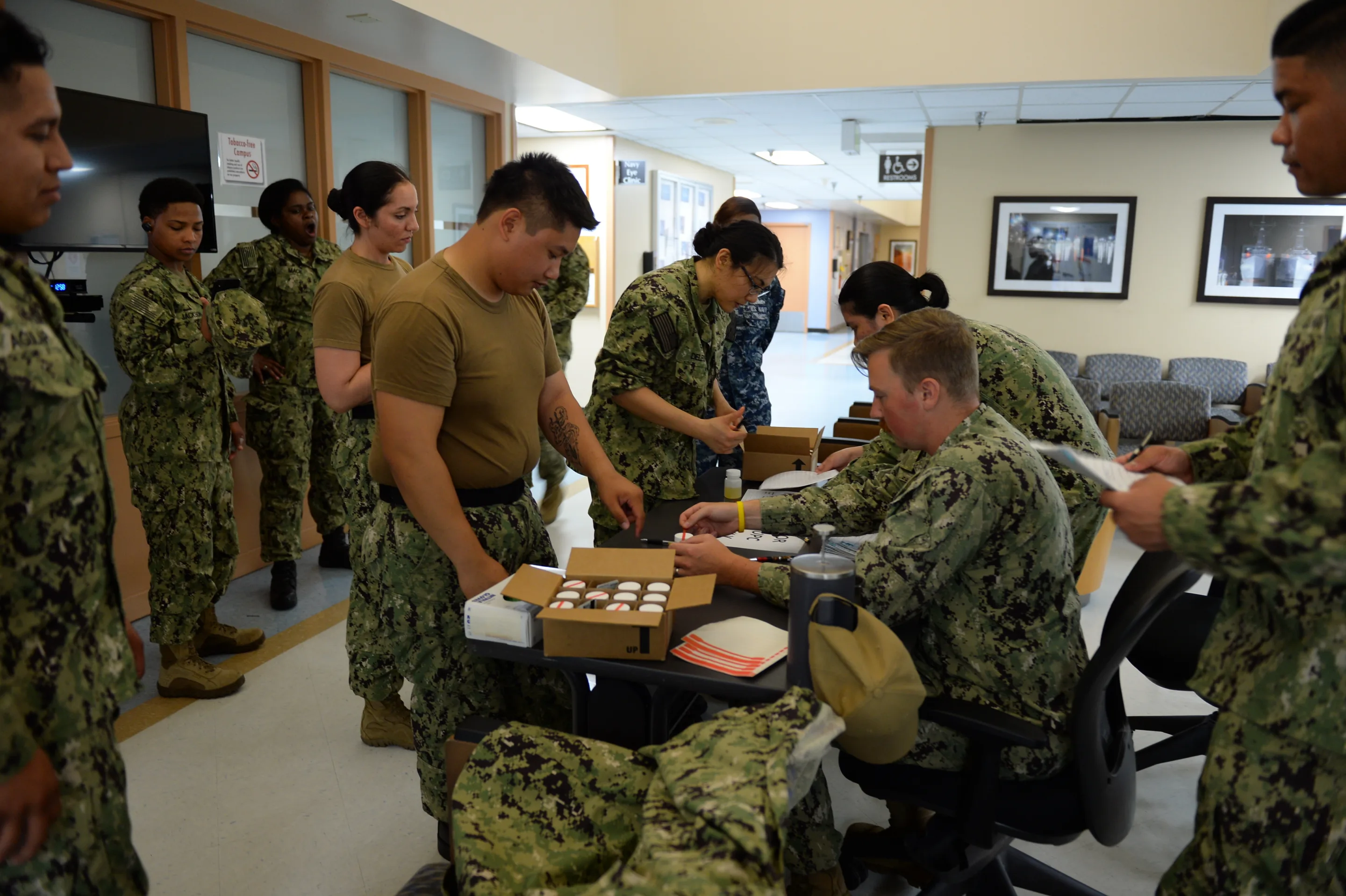
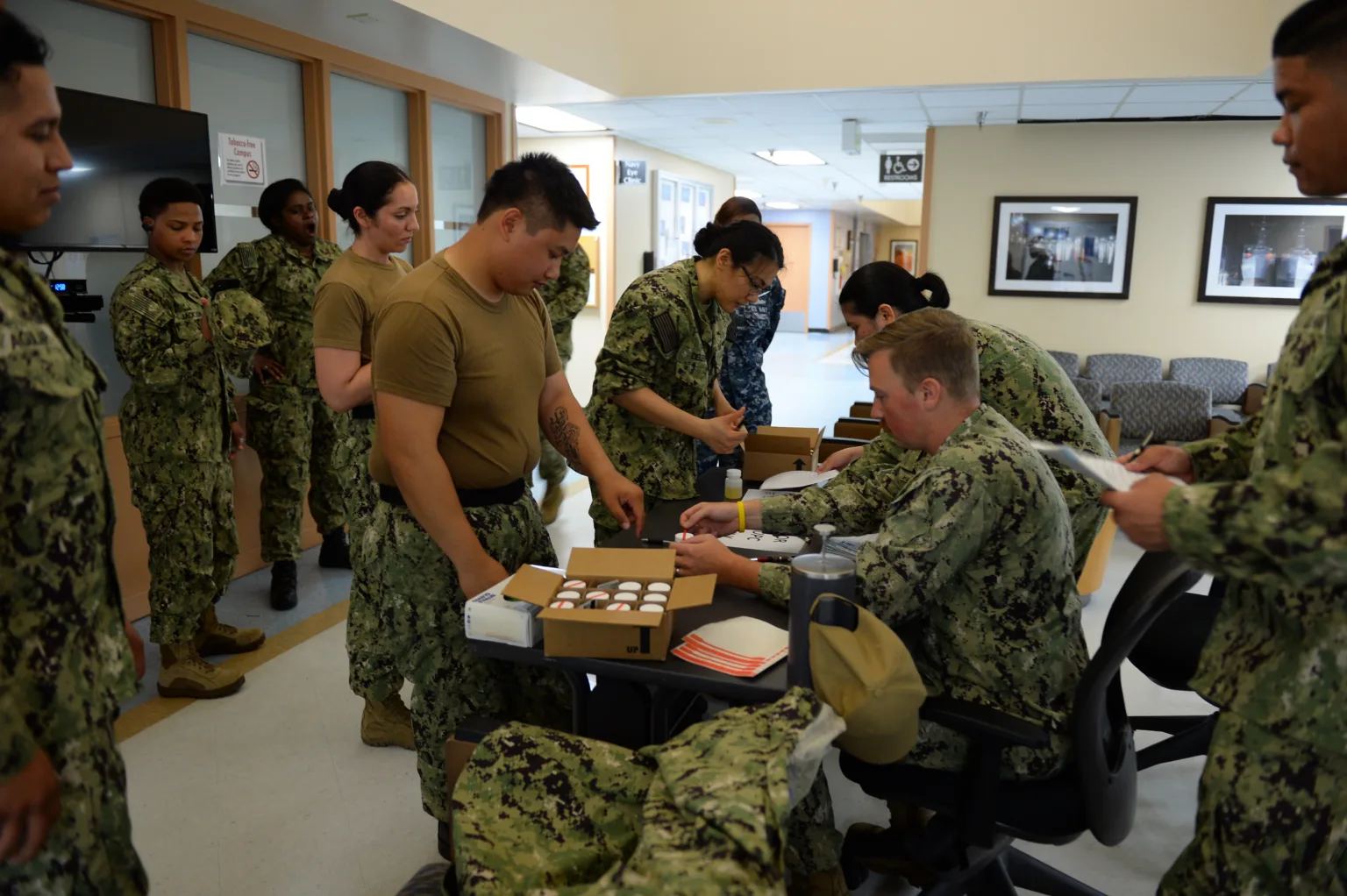
Sailors getting drug tested before a CBD discharge upgrade
CBD Discharge Upgrade: What the New Bass Decision Means If a Legal Product Ended Your Career

If a CBD oil or a delta-8 gummy caused the positive THC test that ended your military career, a CBD discharge upgrade may now be within reach. In June 2026, the military’s highest court decided United States v. Bass. The court held that a positive urinalysis for hemp-derived THC, standing alone, cannot rationally prove a service member knowingly used a hemp product. That is the exact assumption many drug-related separations were built on. This article explains what the court decided, what it changes, and how to use it in your petition.

By Kevin Courtney, Esq.  |  Former USMC Judge Advocate  |  California Attorney

In 2018, Congress legalized industrial hemp in the Agriculture Improvement Act. Hemp with up to 0.3 percent delta-9 THC no longer counts as marijuana under federal law. Overnight, gas stations, grocery stores, and supplement shops began selling CBD oils, delta-8 gummies, vapes, and hemp-infused drinks. The problem is that the FDA does not certify the THC content of these products. Mislabeling is pervasive. A product marked “THC-free” can still contain enough THC to fail the military’s highly sensitive urinalysis.

The services saw this coming. The Navy and Marine Corps banned all hemp products in ALNAV 074/20, and the other branches issued similar prohibitions. Notably, the Navy’s own order admits that service members “cannot rely on the packaging and labeling of hemp products.” The same order exempts use where the member reasonably did not know the product came from hemp. In other words, the government wrote unknowing ingestion into the rule itself. Yet thousands of service members have been processed for separation on the strength of a single positive test.

Delta-8 vs. Delta-9: Why the Chemistry Matters to Your Case

Two different scenarios get lumped together, and they matter for strategy:

  • Delta-8 (THC-8) positives. Delta-8 THC is derived from hemp. It is not a federally controlled substance, so the military cannot charge its use under Article 112a, UCMJ — the drug article. Instead, commands rely on Article 92 (violating an order such as ALNAV 074/20). Bass speaks directly to these cases.
  • Delta-9 THC positives attributed to CBD. The standard urinalysis targets the delta-9 THC metabolite — the marijuana compound. But mislabeled or contaminated CBD products can contain delta-9 well above the legal limit. The resulting positive looks identical to marijuana use. Bass does not directly control these cases, but its reasoning about the lawful hemp marketplace supports the same unknowing-ingestion argument. If your test instead reflected knowing marijuana use, start with my guide on upgrading a general discharge for drug use.

If you are not sure which compound you tested positive for, your separation paperwork and the drug lab documentation will say. That detail shapes the entire petition.

What the Court Actually Held in United States v. Bass

As the Court of Appeals for the Armed Forces (CAAF) wrote: Gunnery Sergeant James Bass, a Marine, tested positive twice for THC-8 in 2022. A special court-martial convicted him of violating ALNAV 074/20, reduced him in rank, and reprimanded him. On June 24, 2026, the CAAF set aside his convictions. You can read the slip opinion in United States v. Bass yourself. The court made two rulings that matter here.

First, a positive test alone proves less than the government assumed. For decades, a positive test for a controlled substance like marijuana let the factfinder infer knowing, wrongful use. The government asked the court to extend that inference to hemp-derived THC-8. CAAF refused. Hemp products are legal, sold in mainstream stores, and routinely mislabeled. Therefore, a positive THC-8 result, standing alone, cannot rationally show the member knew he used a hemp product. The government’s own expert conceded the point: the test cannot reveal the route of ingestion, the dose, or whether the member felt any effect.

Second, prior positive tests cannot be recycled as character evidence. Bass had been acquitted in an earlier court-martial where he testified he unknowingly ate THC-laced vitamin gummies. At the second trial, the judge let the government use those old test results against him anyway. CAAF held that was an abuse of discretion. Without a repeated, fact-specific innocent-ingestion story, prior positives serve only as forbidden propensity evidence — “he tested positive before, so he must have done it again.”

One honest caveat: the court was divided, and the opinion remains subject to revision before official publication. The court also authorized a rehearing in Bass’s own case. The core holdings, however, each carried a majority of the court.

Why Bass Matters for Your CBD Discharge Upgrade

Here is the straight answer. Bass is a court-martial evidence decision. It does not order any review board to upgrade anyone, and it does not bind the discharge review boards or the correction boards. So a CBD discharge upgrade does not become automatic because of it. What Bass provides is something these petitions have lacked. The military’s highest court has now squarely rejected the inference that a positive hemp-THC test equals knowing drug use.

That supports two distinct arguments boards recognize:

  • Propriety — the separation rested on flawed reasoning. Suppose your command processed you for “drug abuse” based on nothing more than a positive test. Your petition can now argue that the factual predicate — knowing use — was never established. CAAF has held the bare inference irrational in the hemp context. Additionally, if your board heard about earlier positive tests or prior allegations, Bass’s propensity holding adds a second layer. Again, not dispositive because the rules of evidence do not apply to ADSEP Boards or BOIs, but the logical reasoning can help.
  • Equity — the punishment did not fit the conduct. Even where the separation was procedurally proper, a General or Other Than Honorable characterization over a legal, mislabeled consumer product is a strong unfairness argument. That argument gets stronger when the government’s own regulations concede that labels cannot be trusted.

Timing matters too. If your use occurred before your service banned hemp products in 2020, or your paperwork mislabels an orders violation as drug abuse, those are additional propriety issues worth developing with counsel.

Where to File a CBD Discharge Upgrade: DRB or Correction Board

Two forums handle a CBD discharge upgrade, and the right one depends mostly on your dates. Within 15 years of separation, you apply to your service’s Discharge Review Board (DRB) on DD Form 293. Beyond 15 years, you apply to the Board for Correction of Military Records (BCMR, or BCNR for the Navy and Marine Corps) on DD Form 149. The correction board is also the forum when the DRB has already denied you, or when you need relief the DRB cannot grant — such as reinstatement or constructive service credit. If you are unsure what your characterization even means for benefits and employment, start with my plain-English guide to the types of military discharge.

Building the Evidence for a CBD Discharge Upgrade

Bass gives you the legal framing. Evidence still decides the case. Boards apply a preponderance standard and presume regularity in your original proceedings, so a persuasive CBD discharge upgrade petition typically assembles:

  • Proof you used a hemp product. Purchase receipts, online order history, credit card records, photos of the product and its label, or the product itself.
  • Proof the product was mislabeled or contaminated — independent lab testing of the same product or lot, recall notices, or published testing showing that brand exceeded its labeled THC content.
  • A detailed, consistent personal statement. When you bought it, why, how you used it, and when you learned of the positive test. Consistency with what you said at the time is critical.
  • Contemporaneous corroboration. Texts, emails, statements you made to your command, board testimony, or witnesses who saw you use the product.
  • Service and character evidence. Your record before the test, awards and evaluations, and post-service conduct and employment.

I walk through how boards weigh these materials in my guide to the best evidence for a discharge upgrade.

Common Mistakes That Sink These Petitions

I see the same handful of errors defeat CBD discharge upgrade petitions again and again:

  • Assuming the board knows Bass. Boards read thousands of petitions. Cite the decision, attach it, and explain precisely how its reasoning applies to your facts.
  • Arguing law without evidence. A petition that quotes CAAF but never documents the hemp product asks the board to take your word for it. Boards rarely do.
  • Inconsistent stories. If you told your command one thing and your petition says another, expect the board to notice. Address discrepancies head-on rather than hoping they go unread.
  • Going it alone after a denial. A second petition that repeats the first one almost always meets the same result. New evidence and new argument — like Bass — are what reopen doors.

Still Serving and Facing a Board Right Now?

If you are still in uniform and facing separation over a hemp-related positive, the analysis is different — and the timeline is short. Innocent ingestion is a complete defense at an administrative separation board, and Bass arms your counsel with powerful authority. Start with my guide on writing an administrative separation board rebuttal, and get counsel involved before the board convenes, not after.

When to Talk With an Attorney

You can file a DD 293 or DD 149 yourself, and some veterans with strong documentation succeed pro se. Where counsel changes the outcome is in building the record. That means obtaining and testing product evidence, drafting a declaration that survives scrutiny, framing Bass and the service regulations correctly, and rebutting the advisory opinion the board will likely obtain. If your discharge followed a positive THC test you attribute to a hemp product, a military discharge upgrade attorney can tell you candidly whether your facts support a petition — and whether the investment makes sense.

CBD Discharge Upgrade FAQs

Can I get a discharge upgrade if CBD caused my positive THC test?

Possibly, depending on the facts. You will need to persuade the board that your ingestion was unknowing or that your characterization was unjust. Bass strengthens the legal argument, but documentation of the product and your credibility carry the petition.

Does United States v. Bass automatically upgrade my discharge?

No. Bass is a court-martial decision and does not bind the review boards. It is persuasive authority you must present and apply to your own facts in a DRB or BCMR/BCNR petition.

Does it matter whether I tested positive for delta-8 or delta-9?

Yes. Delta-8 is hemp-derived and not federally controlled, so Bass applies directly. A delta-9 positive attributed to mislabeled CBD is a harder case, but the same marketplace realities support an unknowing-ingestion argument.

Where do I apply for the upgrade?

Generally, the Discharge Review Board (DD Form 293) within 15 years of separation, and the BCMR or BCNR (DD Form 149) after that, or when you need relief the DRB cannot grant.

What if I knowingly used CBD but did not know it contained THC?

This is where the details matter most. Since 2020, service regulations have prohibited hemp products themselves, including CBD. Knowing CBD use after the ban can therefore violate an order even without knowledge of THC. But an orders violation is not the same thing as drug abuse, and whether your paperwork fairly reflects that difference is a question a board can review. Timing and the precise basis for your separation are critical.

If you knowingly used CBD to deal with a mental health condition, liberal consideration may apply to your case.

What if the board already denied my petition?

A denial is not necessarily the end. Bass is new authority, and a petition supported by new evidence can be reconsidered. A repeat of your first filing, however, will almost certainly fail again.

When I first found myself in the office for a failed drug test I knew it was coming because of the situation that unfolded. What happened was not my fault but I felt helpless…He very well might’ve saved my life and I hope if you get the chance to work with him you don’t have a doubt in your mind that it will be the best decision you’ve ever made to work with him. Thank you Kevin.

Verified client review, Avvo, October 26, 2023. Read more client reviews. Every case is different, and past results do not guarantee future outcomes.

This article is general information and is not legal advice. Every case is different, and outcomes depend on the record, the requested relief, the applicable board, and the strength of the evidence. Past results do not guarantee future outcomes. If you have questions about your situation, speak with a qualified military law attorney.

Get a Candid Assessment of Your Case

For years, service members separated over hemp products had to argue against an assumption the system treated as common sense. CAAF has now rejected that assumption. If a legal product cost you your characterization, your benefits, or your reputation, this is a better moment to act than any point since the hemp bans began. I am a former Marine Corps judge advocate, and I represent veterans nationwide before the review boards and correction boards. Request a case review, and I will give you a straight answer about whether a CBD discharge upgrade petition is worth pursuing on your facts.

Ask AI about Courtney Military Law Group

Get an instant, plain-English summary of the firm from the AI assistant you trust. Opens in a new tab with the question already typed.

Gemini doesn't accept a pre-filled link — we'll copy the question to your clipboard so you can paste it.

Website developed in accordance with Web Content Accessibility Guidelines 2.2.
If you encounter any issues while using this site, please contact us: 949.987.8385