Blog

By Kevin Courtney, Esq.  |  Former USMC Judge Advocate  |  California Attorney

Your administrative separation board rebuttal may be the most consequential document you ever submit. In most cases, you have only days to prepare it. When a command initiates separation proceedings, you receive a formal notification identifying the separation grounds and the evidence supporting them. What you put in your response shapes whether you stay in uniform, what characterization appears on your DD-214, and whether you keep the benefits you earned. This post explains how the rebuttal process works, what your response should include, and how to approach each step correctly from the start.

Why Your Rebuttal Can Make or Break Your Case

Many service members receive a separation notification and either sign the acknowledgment without responding or submit nothing at all. That is the single most costly mistake in this process. If you submit nothing, the separation authority decides your case based exclusively on the command’s packet — the documentation the command assembled to justify removing you from service.

Your rebuttal changes that equation. It puts your version of events, your service record, your mitigating circumstances, and your supporting evidence directly in front of the decision-maker. In notification procedure cases, the written rebuttal is your only formal opportunity to be heard before the separation authority decides. In board hearing cases, the rebuttal is one component of a broader defense strategy — but it still shapes how decision-makers interpret your case from the beginning.

Two Paths: Notification Procedure vs. Board Hearing

Before you write anything, understand which process applies to you. That distinction determines what your rebuttal must accomplish and what rights you can exercise.

Notification Procedure — When the Rebuttal Is Your Entire Case

The notification procedure applies when the command seeks separation with an Honorable or General (Under Honorable Conditions) characterization and you have fewer than six years of combined active and reserve service. Under this procedure, the command provides written notice, attaches supporting evidence, and gives you a minimum period to respond. Service-specific regulations set the exact timeframe, which varies by branch. Contact legal counsel immediately after receiving notification so you understand your deadline.

In notification procedure cases, there is no formal hearing. The separation authority reviews the command’s packet and your rebuttal, then decides. Your written response must therefore do everything: tell your story, address each allegation, present mitigation, and include supporting documentation. Think of it as a brief you file before a ruling that affects the rest of your life.

Board Hearing — When You Have the Right to Appear

You are entitled to request a formal separation board under DoD Instruction 1332.14 in two situations: you have six or more years of combined active and reserve service, or the command seeks to characterize your service as Other Than Honorable (OTH). In those cases, you appear before a panel of at least three military service members, present evidence, call witnesses, and cross-examine the government’s witnesses.

In a board case, you are not often going to be submitting a written rebuttal before your hearing. However, if you do, your written rebuttal becomes one part of a larger defense strategy. After the board issues its findings, both sides may also submit written matters to the General Court-Martial Convening Authority (GCMCA) before the GCMCA takes final action. That post-board submission is a second formal opportunity to argue for a better outcome — especially on characterization. More on that below.

What to Include in Your Administrative Separation Board Rebuttal

The strongest administrative separation board rebuttals share a common structure. They address every allegation specifically, provide honest context, and support every claim with documentation. Here is how to approach each element.

Address Each Allegation Directly

Do not skip an allegation because you consider it weak or unfair. Address every single one. For each allegation in the command’s notification packet, either explain why the facts are inaccurate, provide context that changes how a reviewer should interpret them, or acknowledge the conduct while explaining the circumstances and what you have done since.

Silence on an allegation reads as agreement. Even a brief, factual response is better than nothing. Keep your tone professional and measured throughout. The separation authority reads many of these packets; a clear, organized response stands out immediately.

Deciding whether to admit to the misconduct or not is an important choice. Many service members seek legal counsel before doing so.

Present Mitigating Circumstances

Mitigation is not about making excuses. It is about providing context that helps a decision-maker understand why the conduct occurred and why retention — or at minimum a favorable characterization — is appropriate. Relevant mitigating factors commonly include:

  • Combat-related stress, PTSD, TBI, or military sexual trauma (MST) that contributed to the conduct at issue
  • A strong overall service record — deployments, awards, evaluations — that reflects the genuine character of your service
  • Concrete steps you have taken since the incident: treatment, counseling, rehabilitation, or community service
  • Family hardship or personal circumstances the command may not have weighed fully
  • An isolated incident in an otherwise clean disciplinary record

If PTSD, TBI, or MST contributed to your conduct, raise it explicitly. If you are ultimately separated and choose to upgrade your discharge, federal law requires discharge review boards to apply “liberal consideration” to cases where a mental health condition may have driven the behavior at issue. Under 10 U.S.C. § 1553, discharge review boards must also include a mental health professional when PTSD or TBI is raised. However, these protections only apply if you raise the issue. A rebuttal that discusses mental health gives the board more facts to work with to apply those standards.

Gather and Attach Supporting Documentation

Your rebuttal is only as strong as the evidence behind it. Attach all relevant documentation, including performance evaluations (NCOERs, OERs, fitness reports), awards and decorations, letters of commendation, medical or mental health records you choose to release, and any documentation that corrects factual errors in the command’s packet.

Documented facts persuade reviewers far more than unsupported statements. If your rebuttal states you received a commendation for your last deployment, attach it. If it states you completed a treatment program, provide proof of completion. Every exhibit you attach strengthens the credibility of what you write.
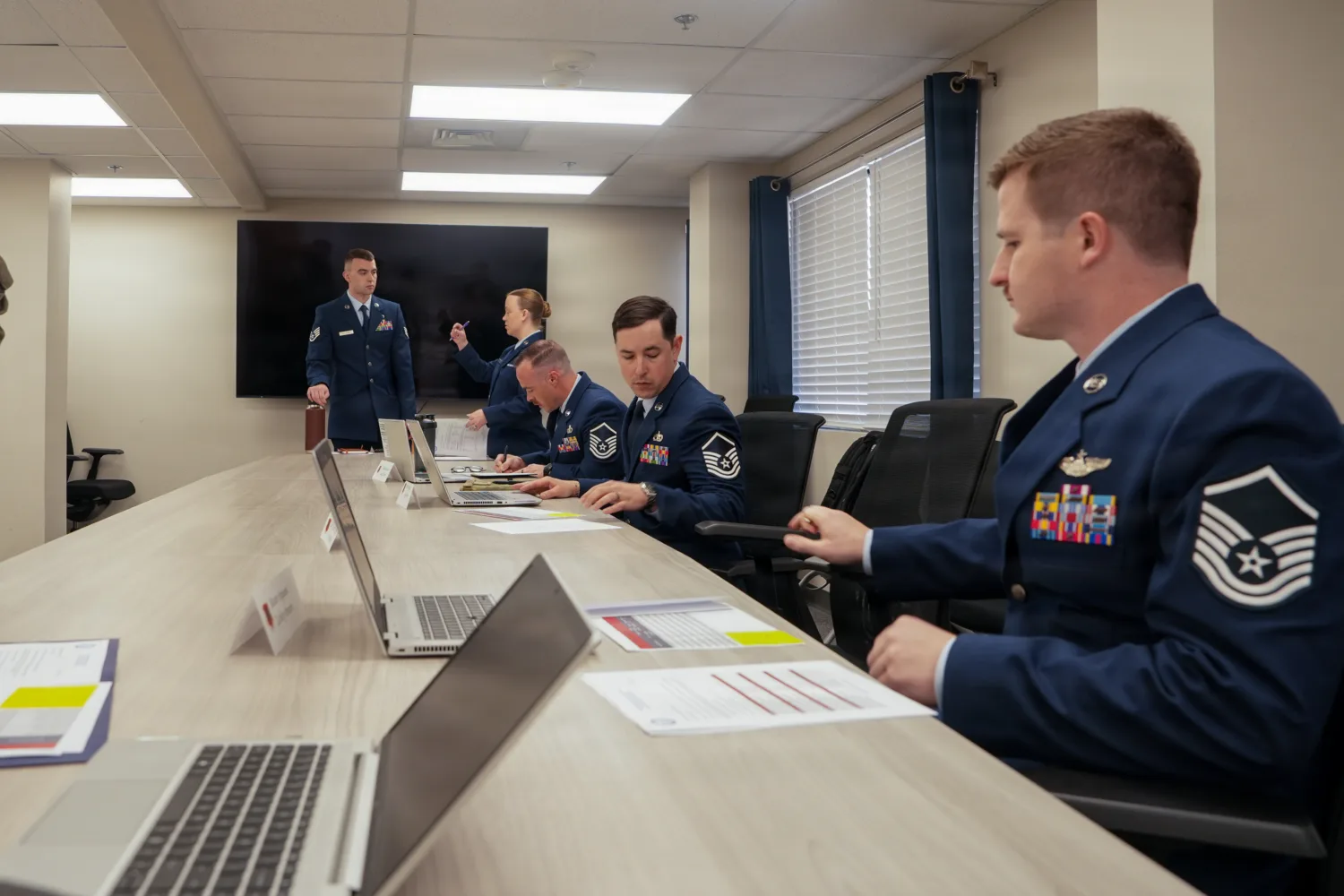
Airmen writing administrative separation board rebuttal while in uniform

If you are preparing a rebuttal and want help building the strongest possible response, our administrative separation board attorneys at Courtney Military Law Group can evaluate your packet, identify weaknesses in the command’s case, and help you develop a strategy before your deadline.

“Kevin is an incredibly sharp and genuine attorney who took the time to understand my legal situation, my family dynamics, and me as a man. His counsel was timely and matter-of-fact, which helped me provide legally sound responses to the organization that I was dealing with. I am convinced that he is one of the best attorneys, especially when it comes to military law.” – Michael, USMC

Character Statements — Who to Ask and What to Request

Character statements are one of the most underused tools in the administrative separation process. A strong statement from someone who knows your work and character can meaningfully shift how a separation authority or board reads your case.

Ask people who have observed your service directly: former commanding officers, senior NCOs who supervised you, chaplains, unit members who served beside you in combat, or community supervisors who know your civilian conduct. The closer the relationship to your actual military performance, the more weight the statement carries.

When you ask someone to write a statement, give them specific direction. Ask them to describe what they personally observed — not just general praise. A statement that says “Corporal Jones maintained steady performance and took care of her Marines during our 2021 deployment to Iraq” carries far more weight than “she is a good person.” Attach completed (signed and dated) statements as numbered exhibits to your rebuttal.

You Have a Short Window — Act Immediately

DoD Instruction 1332.14 establishes a minimum response period after you receive the notification packet, and service-specific regulations may extend that window. Even so, the timeframe is often shorter than service members expect. If you need more time to gather evidence, ask for a continuance in writing and justify why you need it. Do not wait until the last day to start gathering evidence and organizing your response.

The moment you receive a separation notification, begin pulling your records: performance evaluations, awards, training certificates, and everything else that documents your service. At the same time, contact Trial Defense Service immediately. You have the right to free military legal counsel, and your communications with a TDS attorney are privileged. In cases where an OTH is on the table or significant benefits are at stake, also consider whether civilian military defense counsel would better serve your interests.

After the Board: Submitting Matters to the Separation Authority

Most service members are unaware that the process includes an important step after the board hearing. After the separation board issues its findings and recommendations, the service member may submit additional written matters to the General Court-Martial Convening Authority before the GCMCA takes final action on the case.

This post-board submission is a genuine second opportunity. If the board recommended separation with a General discharge, you can submit written arguments to the GCMCA explaining why an Honorable characterization is appropriate given the totality of your service. The GCMCA cannot direct a less favorable outcome than the board recommended — but the GCMCA can grant something more favorable. Use every formal opportunity this process provides.

Should You Waive the Board?

If you are entitled to a board hearing, you may waive it in writing after consulting with counsel. Some service members choose to waive because they want to move through the process faster, avoid the stress of a formal hearing, or negotiate a specific outcome directly with the command.

However, waiving the board is a serious decision that deserves careful analysis. In many cases, the board hearing is your best opportunity to present evidence, challenge the government’s case through cross-examination, and argue directly before a panel that can recommend retention. Waiving also makes your discharge upgrade opportunities more challenging due to the presumption of regularity in government affairs.

Once you waive, the separation authority decides on the paper record alone. Before you sign anything, consult with a qualified military defense attorney who can assess whether a board gives you a meaningful advantage in your specific situation.

If Separation Proceeds: Your Discharge Upgrade Options

Even if the administrative separation goes forward, the outcome is not necessarily permanent. Service members who receive a General or Other Than Honorable discharge can pursue an upgrade through two separate paths.

First, the Discharge Review Board (DRB) can review discharges issued within the past 15 years on both propriety and equity grounds. Second, if more than 15 years have passed — or if the DRB does not grant full relief — the Board for Correction of Military Records (BCMR or BCNR, depending on your branch) has broader authority. That board can correct errors and injustices in military records, including changing a discharge characterization.

For veterans whose PTSD, TBI, or MST contributed to the conduct behind their separation, recent policy changes have opened meaningful upgrade pathways. A military discharge upgrade attorney can help you evaluate whether a post-separation upgrade is viable. You can also learn more about correcting your military record through the BCMR or BCNR.

This article is general information and is not legal advice. Every case is different. If you have questions about your specific situation, speak with a qualified military law attorney.

Working with a Military Defense Attorney

Every service member facing administrative separation has the right to free representation from Trial Defense Service. TDS provides qualified counsel, and your communications with a TDS attorney are privileged. Use that resource, especially in the first hours after you receive notification.

In cases where an OTH discharge is possible — or where VA disability benefits, retirement pay, or a security clearance are at stake — also consider civilian military defense counsel. A civilian attorney works exclusively for you, without any competing command structure, and brings independent judgment to your defense strategy from day one.

As a former Marine Corps Judge Advocate, I have seen how the quality of a service member’s rebuttal shapes not just the command’s decision but everything that follows. The administrative separation process moves fast, and the decisions made in the first days after notification often determine the final outcome. If you are facing separation proceedings and want a candid assessment of your situation and options, contact Courtney Military Law Group for a consultation.

Service member writing their ADSEP Board Rebuttal
How to Write an Administrative Separation Board Rebuttal

By Kevin Courtney, Esq.  |  Former USMC Judge Advocate  |  California Attorney

Your administrative separation board rebuttal may be the most consequential document you ever submit. In most cases, you have only days to prepare it. When a command initiates separation proceedings, you receive a formal notification identifying the separation grounds and the evidence supporting them. What you put in your response shapes whether you stay in uniform, what characterization appears on your DD-214, and whether you keep the benefits you earned. This post explains how the rebuttal process works, what your response should include, and how to approach each step correctly from the start.

Why Your Rebuttal Can Make or Break Your Case

Many service members receive a separation notification and either sign the acknowledgment without responding or submit nothing at all. That is the single most costly mistake in this process. If you submit nothing, the separation authority decides your case based exclusively on the command’s packet — the documentation the command assembled to justify removing you from service.

Your rebuttal changes that equation. It puts your version of events, your service record, your mitigating circumstances, and your supporting evidence directly in front of the decision-maker. In notification procedure cases, the written rebuttal is your only formal opportunity to be heard before the separation authority decides. In board hearing cases, the rebuttal is one component of a broader defense strategy — but it still shapes how decision-makers interpret your case from the beginning.

Two Paths: Notification Procedure vs. Board Hearing

Before you write anything, understand which process applies to you. That distinction determines what your rebuttal must accomplish and what rights you can exercise.

Notification Procedure — When the Rebuttal Is Your Entire Case

The notification procedure applies when the command seeks separation with an Honorable or General (Under Honorable Conditions) characterization and you have fewer than six years of combined active and reserve service. Under this procedure, the command provides written notice, attaches supporting evidence, and gives you a minimum period to respond. Service-specific regulations set the exact timeframe, which varies by branch. Contact legal counsel immediately after receiving notification so you understand your deadline.

In notification procedure cases, there is no formal hearing. The separation authority reviews the command’s packet and your rebuttal, then decides. Your written response must therefore do everything: tell your story, address each allegation, present mitigation, and include supporting documentation. Think of it as a brief you file before a ruling that affects the rest of your life.

Board Hearing — When You Have the Right to Appear

You are entitled to request a formal separation board under DoD Instruction 1332.14 in two situations: you have six or more years of combined active and reserve service, or the command seeks to characterize your service as Other Than Honorable (OTH). In those cases, you appear before a panel of at least three military service members, present evidence, call witnesses, and cross-examine the government’s witnesses.

In a board case, you are not often going to be submitting a written rebuttal before your hearing. However, if you do, your written rebuttal becomes one part of a larger defense strategy. After the board issues its findings, both sides may also submit written matters to the General Court-Martial Convening Authority (GCMCA) before the GCMCA takes final action. That post-board submission is a second formal opportunity to argue for a better outcome — especially on characterization. More on that below.

What to Include in Your Administrative Separation Board Rebuttal

The strongest administrative separation board rebuttals share a common structure. They address every allegation specifically, provide honest context, and support every claim with documentation. Here is how to approach each element.

Address Each Allegation Directly

Do not skip an allegation because you consider it weak or unfair. Address every single one. For each allegation in the command’s notification packet, either explain why the facts are inaccurate, provide context that changes how a reviewer should interpret them, or acknowledge the conduct while explaining the circumstances and what you have done since.

Silence on an allegation reads as agreement. Even a brief, factual response is better than nothing. Keep your tone professional and measured throughout. The separation authority reads many of these packets; a clear, organized response stands out immediately.

Deciding whether to admit to the misconduct or not is an important choice. Many service members seek legal counsel before doing so.

Present Mitigating Circumstances

Mitigation is not about making excuses. It is about providing context that helps a decision-maker understand why the conduct occurred and why retention — or at minimum a favorable characterization — is appropriate. Relevant mitigating factors commonly include:

  • Combat-related stress, PTSD, TBI, or military sexual trauma (MST) that contributed to the conduct at issue
  • A strong overall service record — deployments, awards, evaluations — that reflects the genuine character of your service
  • Concrete steps you have taken since the incident: treatment, counseling, rehabilitation, or community service
  • Family hardship or personal circumstances the command may not have weighed fully
  • An isolated incident in an otherwise clean disciplinary record

If PTSD, TBI, or MST contributed to your conduct, raise it explicitly. If you are ultimately separated and choose to upgrade your discharge, federal law requires discharge review boards to apply “liberal consideration” to cases where a mental health condition may have driven the behavior at issue. Under 10 U.S.C. § 1553, discharge review boards must also include a mental health professional when PTSD or TBI is raised. However, these protections only apply if you raise the issue. A rebuttal that discusses mental health gives the board more facts to work with to apply those standards.

Gather and Attach Supporting Documentation

Your rebuttal is only as strong as the evidence behind it. Attach all relevant documentation, including performance evaluations (NCOERs, OERs, fitness reports), awards and decorations, letters of commendation, medical or mental health records you choose to release, and any documentation that corrects factual errors in the command’s packet.

Documented facts persuade reviewers far more than unsupported statements. If your rebuttal states you received a commendation for your last deployment, attach it. If it states you completed a treatment program, provide proof of completion. Every exhibit you attach strengthens the credibility of what you write.

Airmen writing administrative separation board rebuttal while in uniform

If you are preparing a rebuttal and want help building the strongest possible response, our administrative separation board attorneys at Courtney Military Law Group can evaluate your packet, identify weaknesses in the command’s case, and help you develop a strategy before your deadline.

“Kevin is an incredibly sharp and genuine attorney who took the time to understand my legal situation, my family dynamics, and me as a man. His counsel was timely and matter-of-fact, which helped me provide legally sound responses to the organization that I was dealing with. I am convinced that he is one of the best attorneys, especially when it comes to military law.” – Michael, USMC

Character Statements — Who to Ask and What to Request

Character statements are one of the most underused tools in the administrative separation process. A strong statement from someone who knows your work and character can meaningfully shift how a separation authority or board reads your case.

Ask people who have observed your service directly: former commanding officers, senior NCOs who supervised you, chaplains, unit members who served beside you in combat, or community supervisors who know your civilian conduct. The closer the relationship to your actual military performance, the more weight the statement carries.

When you ask someone to write a statement, give them specific direction. Ask them to describe what they personally observed — not just general praise. A statement that says “Corporal Jones maintained steady performance and took care of her Marines during our 2021 deployment to Iraq” carries far more weight than “she is a good person.” Attach completed (signed and dated) statements as numbered exhibits to your rebuttal.

You Have a Short Window — Act Immediately

DoD Instruction 1332.14 establishes a minimum response period after you receive the notification packet, and service-specific regulations may extend that window. Even so, the timeframe is often shorter than service members expect. If you need more time to gather evidence, ask for a continuance in writing and justify why you need it. Do not wait until the last day to start gathering evidence and organizing your response.

The moment you receive a separation notification, begin pulling your records: performance evaluations, awards, training certificates, and everything else that documents your service. At the same time, contact Trial Defense Service immediately. You have the right to free military legal counsel, and your communications with a TDS attorney are privileged. In cases where an OTH is on the table or significant benefits are at stake, also consider whether civilian military defense counsel would better serve your interests.

After the Board: Submitting Matters to the Separation Authority

Most service members are unaware that the process includes an important step after the board hearing. After the separation board issues its findings and recommendations, the service member may submit additional written matters to the General Court-Martial Convening Authority before the GCMCA takes final action on the case.

This post-board submission is a genuine second opportunity. If the board recommended separation with a General discharge, you can submit written arguments to the GCMCA explaining why an Honorable characterization is appropriate given the totality of your service. The GCMCA cannot direct a less favorable outcome than the board recommended — but the GCMCA can grant something more favorable. Use every formal opportunity this process provides.

Should You Waive the Board?

If you are entitled to a board hearing, you may waive it in writing after consulting with counsel. Some service members choose to waive because they want to move through the process faster, avoid the stress of a formal hearing, or negotiate a specific outcome directly with the command.

However, waiving the board is a serious decision that deserves careful analysis. In many cases, the board hearing is your best opportunity to present evidence, challenge the government’s case through cross-examination, and argue directly before a panel that can recommend retention. Waiving also makes your discharge upgrade opportunities more challenging due to the presumption of regularity in government affairs.

Once you waive, the separation authority decides on the paper record alone. Before you sign anything, consult with a qualified military defense attorney who can assess whether a board gives you a meaningful advantage in your specific situation.

If Separation Proceeds: Your Discharge Upgrade Options

Even if the administrative separation goes forward, the outcome is not necessarily permanent. Service members who receive a General or Other Than Honorable discharge can pursue an upgrade through two separate paths.

First, the Discharge Review Board (DRB) can review discharges issued within the past 15 years on both propriety and equity grounds. Second, if more than 15 years have passed — or if the DRB does not grant full relief — the Board for Correction of Military Records (BCMR or BCNR, depending on your branch) has broader authority. That board can correct errors and injustices in military records, including changing a discharge characterization.

For veterans whose PTSD, TBI, or MST contributed to the conduct behind their separation, recent policy changes have opened meaningful upgrade pathways. A military discharge upgrade attorney can help you evaluate whether a post-separation upgrade is viable. You can also learn more about correcting your military record through the BCMR or BCNR.

This article is general information and is not legal advice. Every case is different. If you have questions about your specific situation, speak with a qualified military law attorney.

Working with a Military Defense Attorney

Every service member facing administrative separation has the right to free representation from Trial Defense Service. TDS provides qualified counsel, and your communications with a TDS attorney are privileged. Use that resource, especially in the first hours after you receive notification.

In cases where an OTH discharge is possible — or where VA disability benefits, retirement pay, or a security clearance are at stake — also consider civilian military defense counsel. A civilian attorney works exclusively for you, without any competing command structure, and brings independent judgment to your defense strategy from day one.

As a former Marine Corps Judge Advocate, I have seen how the quality of a service member’s rebuttal shapes not just the command’s decision but everything that follows. The administrative separation process moves fast, and the decisions made in the first days after notification often determine the final outcome. If you are facing separation proceedings and want a candid assessment of your situation and options, contact Courtney Military Law Group for a consultation.

Website developed in accordance with Web Content Accessibility Guidelines 2.2.
If you encounter any issues while using this site, please contact us: 949.987.8385