Blog

By Kevin Courtney, Esq.  |  Former USMC Judge Advocate  |  California Attorney

If you failed a military drug test, it can feel like your career is already over. It is not. A positive result starts a process, but it does not end your career by itself. The command can move to separate you, yet a board still decides whether you stay and how the military characterizes your service. This guide explains what a failed military drug test actually triggers, which defenses really work, and how to fight the separation board that follows.

The biggest mistake is treating the result as the final word. The process has several stages, and you have real leverage at each one. But you have to act fast.

What a Failed Military Drug Test Actually Triggers

A positive test can set off more than one track at the same time. Your command may pursue nonjudicial punishment, a court-martial, an administrative separation, or some combination. Each path has different rules and different stakes.

This article focuses on the administrative separation board, because that is where the military resolves most enlisted drug cases. An administrative separation board is a hearing that decides whether you should be involuntarily discharged. It uses a preponderance standard, which means “more likely than not.” That is a far lower bar than the proof required at a court-martial.

One more point matters up front. An acquittal at court-martial, or a decision not to prosecute, does not stop a separation board. The command can still pursue it on the same underlying facts.
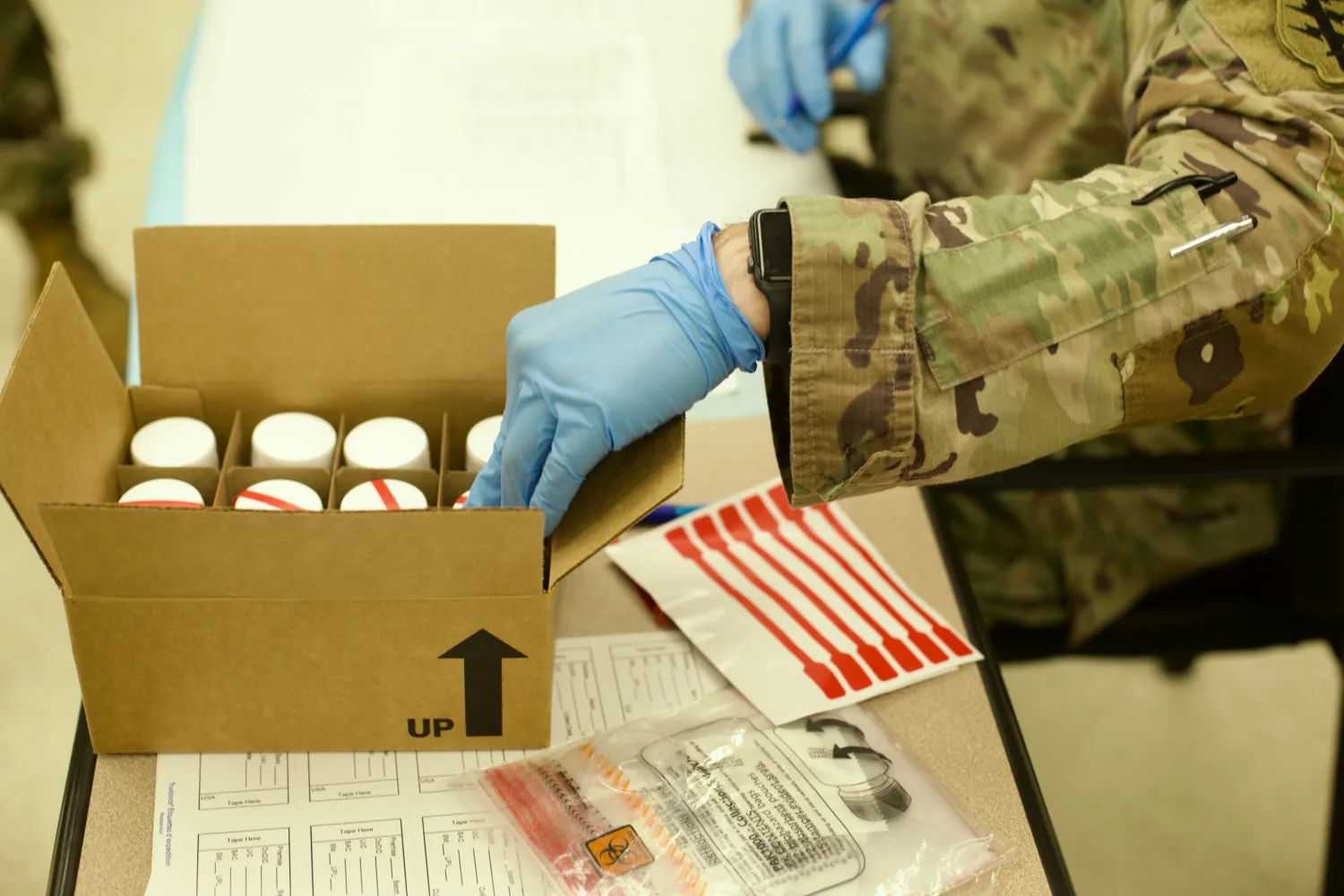
Army urinalysis coordinator reviewing the failed Army drug test bottles.

Mandatory Processing Does Not Mean Automatic Separation

Here is a distinction that trips up almost everyone. In many branches, a positive drug test requires the command to start separation processing under Department of Defense separation rules. That sounds final, but it is not.

Required processing means the paperwork begins. It does not mean you are automatically discharged. The board still has to weigh the evidence and decide. So “mandatory” describes the start of the process, not the outcome. Plenty of service members are processed for a positive test and still retained.

How a Failed Military Drug Test Is Proven

Understanding how the lab reports a positive helps you see where the defenses live. The testing happens in two steps.

First, the lab runs a screening test on your sample. If that screen flags the sample, the lab then runs a confirmation test using a more precise method that identifies and measures the specific substance. The lab reports a positive only when the confirmed amount rises above the Department of Defense cutoff for that substance. The exact cutoffs vary by drug, so do not assume a number you read online applies to your case.

A confirmed positive carries weight, but it is not the end of the analysis. The law lets the board infer that the use was knowing and wrongful. You can rebut that inference. In other words, the result raises a presumption you are allowed to challenge with evidence.

Real Defenses to a Failed Military Drug Test

Some defenses genuinely work in the right case. Others are myths that can hurt you. An honest assessment matters more than a hopeful one.

These are the defenses that can carry real weight:

  • Unknowing or innocent ingestion. The government must show the use was wrongful. If someone spiked your food or drink, or you took something without knowing what it contained, that can defeat wrongfulness. This defense is real, but it is hard. It needs a credible story, a workable timeline, and supporting evidence — not just your word.
  • A lawful prescription. A valid prescription for the medication can explain the result. But using someone else’s medication, or taking more than prescribed, can still count as wrongful.
  • Chain-of-custody and lab errors. Many hands touch each sample. Mislabeling, gaps in the paperwork, and collection or testing mistakes can all undermine the result.

Be careful with two common claims. Passive exposure — arguing you were merely near others using a drug — rarely holds up. And “it was legal CBD” is usually not a clean defense, because the Department of Defense restricts hemp and CBD products for service members. However, a 2026 Court of Appeals Armed Forces case just held that “a positive THC-8 urinalysis result alone cannot rationally support a permissive inference that a servicemember knowingly used hemp or a hemp-derive product.” If a supplement is the real explanation, that argument needs careful, evidence-based development.

Winning Your Board After a Failed Military Drug Test

Here is the part most service members miss. You can lose the fight over the test and still win the board. That is because the board answers three separate questions, and you can prevail on any of them.

First, did the misconduct occur? This is where you attack the test, the inference, and the government’s proof. Second, does the conduct warrant separation? Even if the positive test stands, the board can vote to keep you. This is the retention fight, built on your record, your character, and your potential. Third, what characterization do you deserve? If the board recommends separation, it still chooses between Honorable, General, and Other Than Honorable.

So a single positive does not decide everything. A strong case on Questions 2 and 3 can mean retention, or at least a characterization that protects your benefits.

What Is Really at Stake: Your Characterization

The characterization of your discharge follows you for life. It often matters more than the separation itself.

An Other Than Honorable discharge can strip most VA benefits, including healthcare, disability compensation, and the GI Bill. A General discharge usually preserves more of them. That gap can be worth hundreds of thousands of dollars over a career. So even when retention is out of reach, fighting for a better characterization is rarely a wasted effort. And if you are separated, you may later be able to upgrade a discharge from a drug case or upgrade an Other Than Honorable discharge through the review boards.

Move Fast: The Election Window Is Short

After notification, you get a short window to make elections. You decide whether to demand a board, waive it, or submit written matters. These deadlines are strict, and a missed one can cost you the hearing.

You are entitled to a board if you have six or more years of service, or if the command seeks an Other Than Honorable discharge. If a board is not available, a written response still matters. Learning how to write a strong separation board rebuttal can shape both the decision to separate and your characterization. Either way, do not make any election before you speak with counsel.

When I first found myself in the office for a failed drug test I knew it was coming because of the situation that unfolded. What happened was not my fault but I felt helpless. We were always told 0 tolerance if you fail a piss test you’re out. When I first got to the military lawyers office (jags) I was told by more than one of them to just accept my NJP leaving me little room for hope of staying in. That is until I met with Kevin (Capt Courtney at the time), he was the first person to give me the benefit of doubt and believed me. He was the first one to help me believe that I could fight, not only fight but win. He made me feel more secure and gave me resources, numbers, ideas, and tasks I could do to all help my case. He made me feel secure I took all of his advice after he truly made me believe in my own case and the chance that I could win and have my case dismissed. I continued to fight while my anxiety rose every time I left his office I felt better even though I knew that while he was in the USMC he was very busy with many cases but still made every effort to help me. Upon the hearing he spoke on my behalf with confidence and a certain swagger I was amazed a man that barely knew me was willing to fight like that simply because I was his client. When we left for the ADSEP board to discuss my innocence I’ll never forget the fact that they took 5 minutes to call us back in. Kevin left 0 room for debate we absolutely conquered my case and by a landslide at that. I believe now that Kevin is out he will only have more time to be an even greater attorney/ lawyer. I will never forget this man or not be grateful for what he did for me. He very well might’ve saved my life and I hope if you get the chance to work with him you don’t have a doubt in your mind that it will be the best decision you’ve ever made to work with him. Thank you Kevin.
Verified Review, Avvo.com, October 2023.

Talk to an Administrative Separation Board Attorney

A failed military drug test is a serious moment, but it is not a verdict. The test, the inference, the retention case, and the characterization are all still in play. The earlier you build your defense, the more of them you can win.

Kevin Courtney is a former Marine Corps Judge Advocate who conducted these boards on active duty, so he knows how the government builds a drug case and how to take it apart. If you are facing separation after a positive test, request a case review before your election deadline runs.

Disclaimer

This article is general information and is not legal advice. Every case is different, and outcomes depend on the record, the requested relief, the applicable board, and the strength of the evidence. Past results do not guarantee future outcomes. If you have questions about your situation, speak with a qualified military law attorney.

Frequently Asked Questions

Can I be separated for a positive drug test even if I was not court-martialed?

Yes. A positive test can lead to administrative separation on its own, with no criminal charge. The separation board uses a preponderance standard, which is lower than the proof required at a court-martial. An acquittal or a decision not to prosecute does not stop a board.

Does a failed military drug test mean an automatic discharge?

No. In many branches the command must start separation processing, but that is not the same as an automatic discharge. The board still weighs the evidence and can vote to retain you. Many service members are processed for a positive test and stay in.

What defenses work against a positive urinalysis?

The defenses that carry real weight include unknowing or innocent ingestion, a lawful prescription, and chain-of-custody or lab errors. Each requires evidence, not just an explanation. Passive exposure and “legal CBD” claims usually do not succeed, in part because the Department of Defense restricts hemp and CBD products for service members.

Can I still win if the drug test result holds up?

Yes. The board answers three questions: whether the misconduct occurred, whether it warrants separation, and what characterization you deserve. Even if the positive result stands, a strong retention case can keep you in, and a strong showing can protect your characterization of service.

What discharge will I get if the board separates me?

If the board recommends separation, it recommends a characterization of Honorable, General, or Other Than Honorable. The difference is significant, because an Other Than Honorable discharge can cost you most VA benefits and the GI Bill – worth hundreds of thousands of dollars combined. Fighting for the best characterization is often the most important part of the case.

How quickly do I need to act after a positive test?

Immediately. Your election window after notification is short, and missing it can forfeit your right to a board. Speak with counsel before you elect anything, so you do not give up a right you cannot get back.
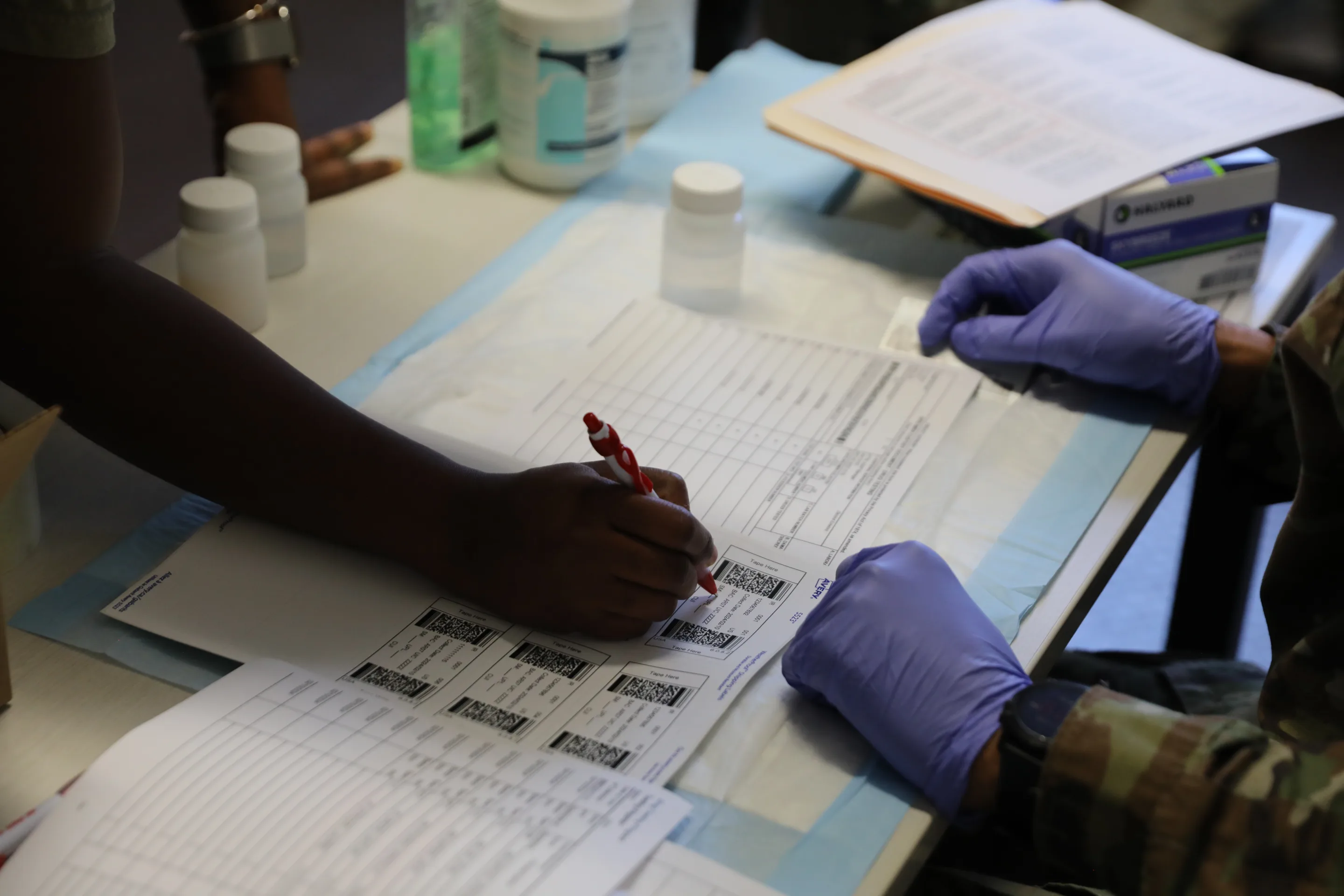
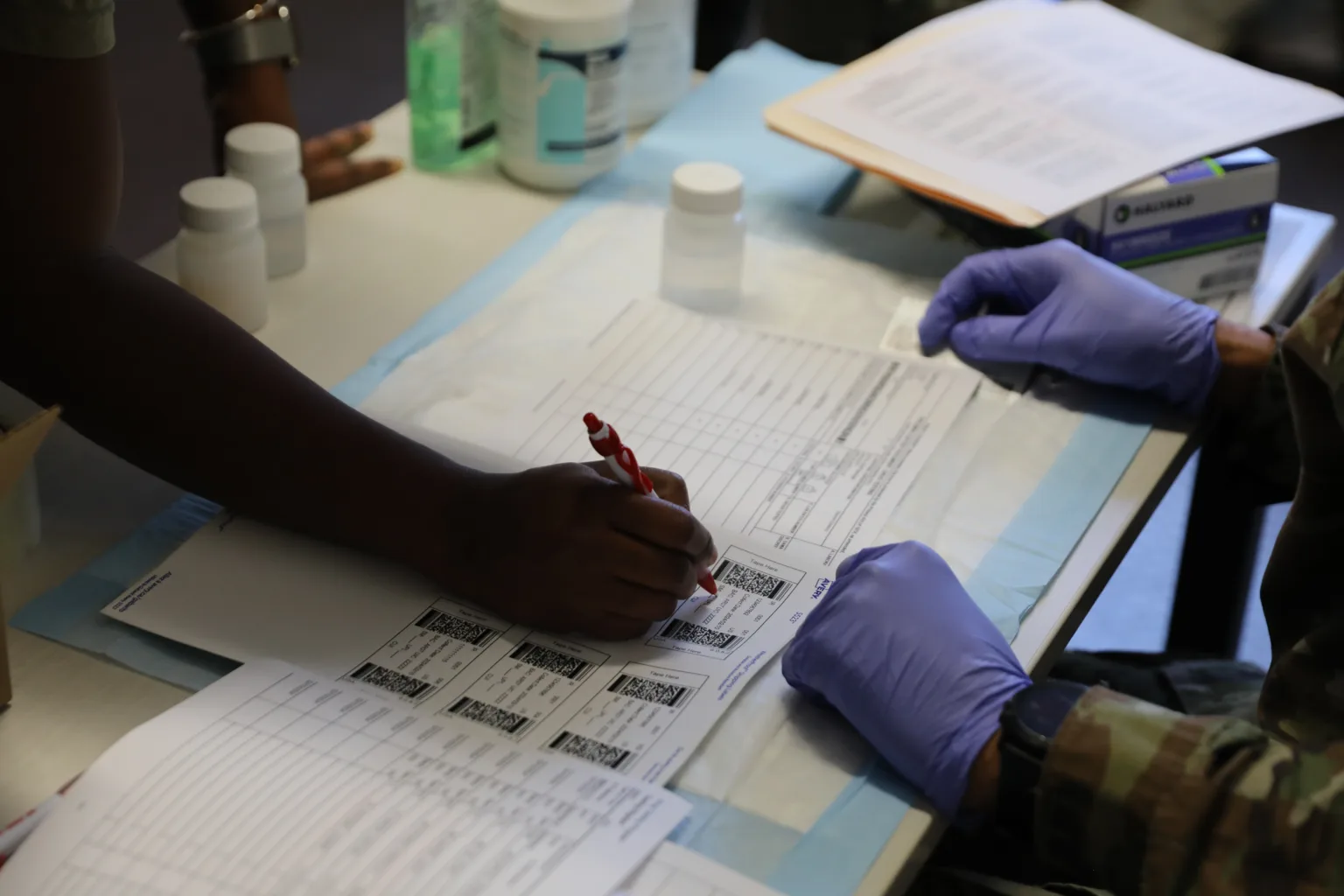
Soldier signing into to urinalysis minutes before they failed a military drug test.
Failed a Military Drug Test? How to Fight Your Separation Board

By Kevin Courtney, Esq.  |  Former USMC Judge Advocate  |  California Attorney

If you failed a military drug test, it can feel like your career is already over. It is not. A positive result starts a process, but it does not end your career by itself. The command can move to separate you, yet a board still decides whether you stay and how the military characterizes your service. This guide explains what a failed military drug test actually triggers, which defenses really work, and how to fight the separation board that follows.

The biggest mistake is treating the result as the final word. The process has several stages, and you have real leverage at each one. But you have to act fast.

What a Failed Military Drug Test Actually Triggers

A positive test can set off more than one track at the same time. Your command may pursue nonjudicial punishment, a court-martial, an administrative separation, or some combination. Each path has different rules and different stakes.

This article focuses on the administrative separation board, because that is where the military resolves most enlisted drug cases. An administrative separation board is a hearing that decides whether you should be involuntarily discharged. It uses a preponderance standard, which means “more likely than not.” That is a far lower bar than the proof required at a court-martial.

One more point matters up front. An acquittal at court-martial, or a decision not to prosecute, does not stop a separation board. The command can still pursue it on the same underlying facts.

Army urinalysis coordinator reviewing the failed Army drug test bottles.

Mandatory Processing Does Not Mean Automatic Separation

Here is a distinction that trips up almost everyone. In many branches, a positive drug test requires the command to start separation processing under Department of Defense separation rules. That sounds final, but it is not.

Required processing means the paperwork begins. It does not mean you are automatically discharged. The board still has to weigh the evidence and decide. So “mandatory” describes the start of the process, not the outcome. Plenty of service members are processed for a positive test and still retained.

How a Failed Military Drug Test Is Proven

Understanding how the lab reports a positive helps you see where the defenses live. The testing happens in two steps.

First, the lab runs a screening test on your sample. If that screen flags the sample, the lab then runs a confirmation test using a more precise method that identifies and measures the specific substance. The lab reports a positive only when the confirmed amount rises above the Department of Defense cutoff for that substance. The exact cutoffs vary by drug, so do not assume a number you read online applies to your case.

A confirmed positive carries weight, but it is not the end of the analysis. The law lets the board infer that the use was knowing and wrongful. You can rebut that inference. In other words, the result raises a presumption you are allowed to challenge with evidence.

Real Defenses to a Failed Military Drug Test

Some defenses genuinely work in the right case. Others are myths that can hurt you. An honest assessment matters more than a hopeful one.

These are the defenses that can carry real weight:

  • Unknowing or innocent ingestion. The government must show the use was wrongful. If someone spiked your food or drink, or you took something without knowing what it contained, that can defeat wrongfulness. This defense is real, but it is hard. It needs a credible story, a workable timeline, and supporting evidence — not just your word.
  • A lawful prescription. A valid prescription for the medication can explain the result. But using someone else’s medication, or taking more than prescribed, can still count as wrongful.
  • Chain-of-custody and lab errors. Many hands touch each sample. Mislabeling, gaps in the paperwork, and collection or testing mistakes can all undermine the result.

Be careful with two common claims. Passive exposure — arguing you were merely near others using a drug — rarely holds up. And “it was legal CBD” is usually not a clean defense, because the Department of Defense restricts hemp and CBD products for service members. However, a 2026 Court of Appeals Armed Forces case just held that “a positive THC-8 urinalysis result alone cannot rationally support a permissive inference that a servicemember knowingly used hemp or a hemp-derive product.” If a supplement is the real explanation, that argument needs careful, evidence-based development.

Winning Your Board After a Failed Military Drug Test

Here is the part most service members miss. You can lose the fight over the test and still win the board. That is because the board answers three separate questions, and you can prevail on any of them.

First, did the misconduct occur? This is where you attack the test, the inference, and the government’s proof. Second, does the conduct warrant separation? Even if the positive test stands, the board can vote to keep you. This is the retention fight, built on your record, your character, and your potential. Third, what characterization do you deserve? If the board recommends separation, it still chooses between Honorable, General, and Other Than Honorable.

So a single positive does not decide everything. A strong case on Questions 2 and 3 can mean retention, or at least a characterization that protects your benefits.

What Is Really at Stake: Your Characterization

The characterization of your discharge follows you for life. It often matters more than the separation itself.

An Other Than Honorable discharge can strip most VA benefits, including healthcare, disability compensation, and the GI Bill. A General discharge usually preserves more of them. That gap can be worth hundreds of thousands of dollars over a career. So even when retention is out of reach, fighting for a better characterization is rarely a wasted effort. And if you are separated, you may later be able to upgrade a discharge from a drug case or upgrade an Other Than Honorable discharge through the review boards.

Move Fast: The Election Window Is Short

After notification, you get a short window to make elections. You decide whether to demand a board, waive it, or submit written matters. These deadlines are strict, and a missed one can cost you the hearing.

You are entitled to a board if you have six or more years of service, or if the command seeks an Other Than Honorable discharge. If a board is not available, a written response still matters. Learning how to write a strong separation board rebuttal can shape both the decision to separate and your characterization. Either way, do not make any election before you speak with counsel.

When I first found myself in the office for a failed drug test I knew it was coming because of the situation that unfolded. What happened was not my fault but I felt helpless. We were always told 0 tolerance if you fail a piss test you’re out. When I first got to the military lawyers office (jags) I was told by more than one of them to just accept my NJP leaving me little room for hope of staying in. That is until I met with Kevin (Capt Courtney at the time), he was the first person to give me the benefit of doubt and believed me. He was the first one to help me believe that I could fight, not only fight but win. He made me feel more secure and gave me resources, numbers, ideas, and tasks I could do to all help my case. He made me feel secure I took all of his advice after he truly made me believe in my own case and the chance that I could win and have my case dismissed. I continued to fight while my anxiety rose every time I left his office I felt better even though I knew that while he was in the USMC he was very busy with many cases but still made every effort to help me. Upon the hearing he spoke on my behalf with confidence and a certain swagger I was amazed a man that barely knew me was willing to fight like that simply because I was his client. When we left for the ADSEP board to discuss my innocence I’ll never forget the fact that they took 5 minutes to call us back in. Kevin left 0 room for debate we absolutely conquered my case and by a landslide at that. I believe now that Kevin is out he will only have more time to be an even greater attorney/ lawyer. I will never forget this man or not be grateful for what he did for me. He very well might’ve saved my life and I hope if you get the chance to work with him you don’t have a doubt in your mind that it will be the best decision you’ve ever made to work with him. Thank you Kevin.
Verified Review, Avvo.com, October 2023.

Talk to an Administrative Separation Board Attorney

A failed military drug test is a serious moment, but it is not a verdict. The test, the inference, the retention case, and the characterization are all still in play. The earlier you build your defense, the more of them you can win.

Kevin Courtney is a former Marine Corps Judge Advocate who conducted these boards on active duty, so he knows how the government builds a drug case and how to take it apart. If you are facing separation after a positive test, request a case review before your election deadline runs.

Disclaimer

This article is general information and is not legal advice. Every case is different, and outcomes depend on the record, the requested relief, the applicable board, and the strength of the evidence. Past results do not guarantee future outcomes. If you have questions about your situation, speak with a qualified military law attorney.

Frequently Asked Questions

Can I be separated for a positive drug test even if I was not court-martialed?

Yes. A positive test can lead to administrative separation on its own, with no criminal charge. The separation board uses a preponderance standard, which is lower than the proof required at a court-martial. An acquittal or a decision not to prosecute does not stop a board.

Does a failed military drug test mean an automatic discharge?

No. In many branches the command must start separation processing, but that is not the same as an automatic discharge. The board still weighs the evidence and can vote to retain you. Many service members are processed for a positive test and stay in.

What defenses work against a positive urinalysis?

The defenses that carry real weight include unknowing or innocent ingestion, a lawful prescription, and chain-of-custody or lab errors. Each requires evidence, not just an explanation. Passive exposure and “legal CBD” claims usually do not succeed, in part because the Department of Defense restricts hemp and CBD products for service members.

Can I still win if the drug test result holds up?

Yes. The board answers three questions: whether the misconduct occurred, whether it warrants separation, and what characterization you deserve. Even if the positive result stands, a strong retention case can keep you in, and a strong showing can protect your characterization of service.

What discharge will I get if the board separates me?

If the board recommends separation, it recommends a characterization of Honorable, General, or Other Than Honorable. The difference is significant, because an Other Than Honorable discharge can cost you most VA benefits and the GI Bill – worth hundreds of thousands of dollars combined. Fighting for the best characterization is often the most important part of the case.

How quickly do I need to act after a positive test?

Immediately. Your election window after notification is short, and missing it can forfeit your right to a board. Speak with counsel before you elect anything, so you do not give up a right you cannot get back.

Ask AI about Courtney Military Law Group

Get an instant, plain-English summary of the firm from the AI assistant you trust. Opens in a new tab with the question already typed.

Gemini doesn't accept a pre-filled link — we'll copy the question to your clipboard so you can paste it.

Website developed in accordance with Web Content Accessibility Guidelines 2.2.
If you encounter any issues while using this site, please contact us: 949.987.8385