By Kevin Courtney, Esq. | Former USMC Judge Advocate | California Attorney
If you have searched for help with a PTSD-based discharge upgrade, you have probably read a dozen summaries of the Kurta and Hagel memos. What is harder to find is a careful read of how the Army Discharge Review Board actually applies that guidance when it sits down with a real case file. The memos set the standard. The Board’s published decisions show what the standard looks like in practice. This article walks through three recent Army Discharge Review Board PTSD decisions from 2025 and explains what each one teaches a veteran preparing an upgrade application today.
As a former Marine Corps Judge Advocate, I read these opinions the way trial lawyers read appellate decisions. Each one is a small window into how the Board weighs combat trauma, alcohol misconduct, and post-service rehabilitation. Our guide on alcohol related discharge upgrades explains how alcohol is a common coping mechanism. Taken together, these opinions reveal patterns that matter when you decide what evidence to gather and how to frame your petition.
Why recent Army Discharge Review Board PTSD decisions matter more than the memos
To start, the Hagel, Carson, Kurta, and Wilkie memoranda established the framework for liberal consideration. Every modern Board decision recites that framework almost word for word. Yet the same framework can produce very different outcomes depending on the facts, the evidence, and how the application connects the trauma to the misconduct.
This matters because the Board’s reasoning is not always consistent. In 2025, the Government Accountability Office published a report titled Military Discharge: Actions Needed to Help Ensure Consistent and Timely Upgrade Decisions. The report concluded that the service Discharge Review Boards apply liberal consideration unevenly across cases. Federal courts have said the same thing. In Bussey v. Driscoll, the Ninth Circuit vacated a Board decision and sent it back because the Board failed to give true liberal consideration to a veteran’s PTSD claim. We unpacked that case in detail in our prior post on the PTSD discharge upgrade implications of Bussey v. Driscoll.
The takeaway is straightforward. If Boards apply the liberal-consideration standard unevenly, then the way you present your case shapes the outcome more than the memos themselves. Recent decisions show what works, and what does not.
The legal framework in one minute
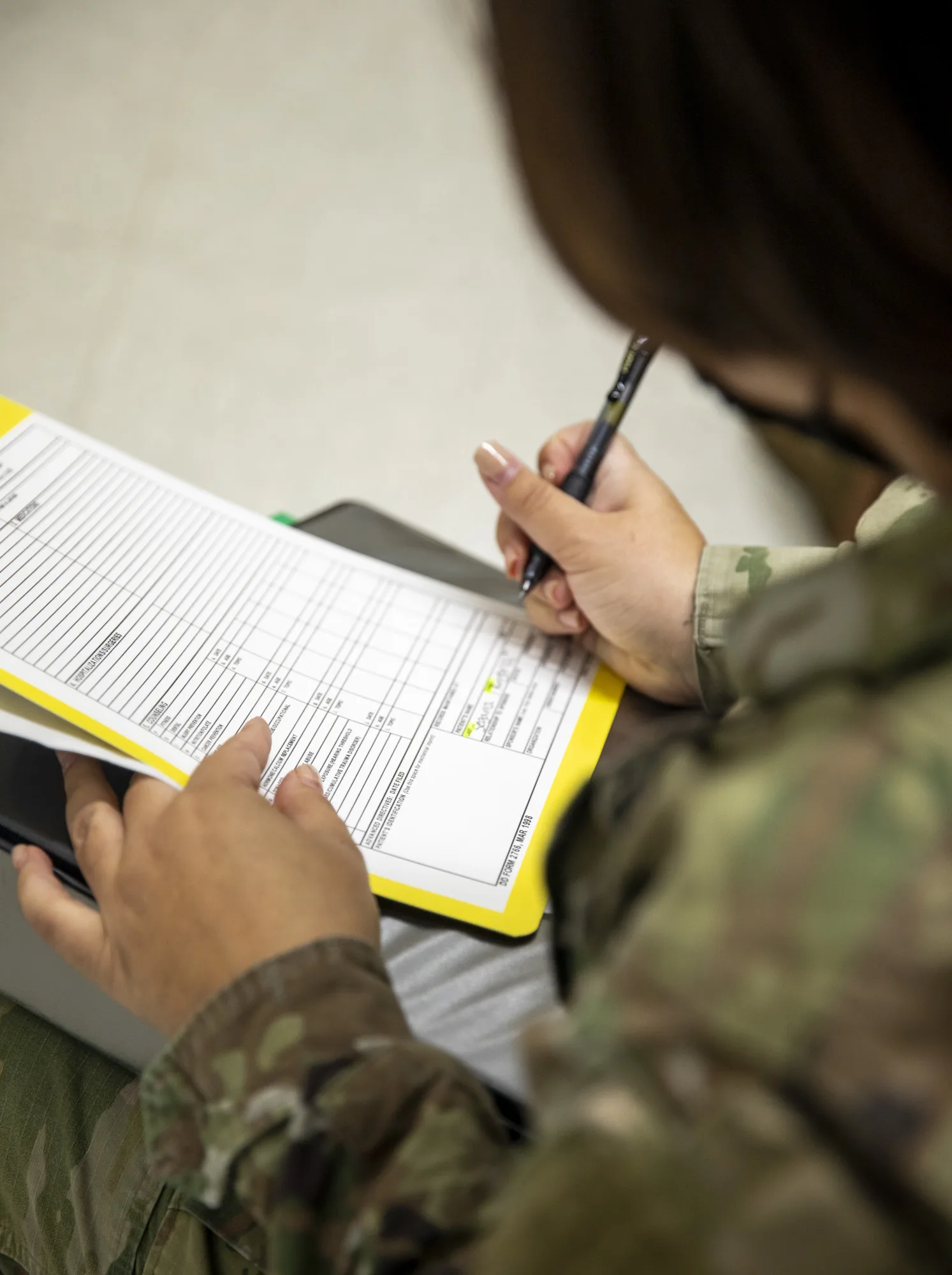
First, you file an Army Discharge Review Board application on DD Form 293. Importantly, you must file within 15 years of your separation date. If more than 15 years have passed, you must instead apply to the Army Board for Correction of Military Records using DD Form 149. Our practice page on BCMR and BCNR petitions explains the difference.
However, the rules shift if you are raising PTSD, traumatic brain injury, military sexual trauma, or other behavioral-health conditions. In those cases, the Kurta memo (2017) and its predecessors require the Board to give liberal consideration to mitigation arguments. Liberal consideration does not mean automatic relief. Rather, it means the Board must seriously weigh whether the condition caused or contributed to the misconduct that led to the discharge.
In addition, the Board can grant equitable relief under the 2018 Wilkie memorandum. Equity is a separate track. Notably, it does not require any behavioral-health diagnosis at all. Instead, it asks whether the discharge was just, considering the veteran’s entire record, including post-service rehabilitation.
The three cases below show both tracks in action.
Case 1: Combat chaplain, alcohol, and partial mitigation (AR20210012790)
The applicant served as an Army chaplain. He deployed to Iraq from August 2008 to August 2009, where he provided spiritual support to units that had taken combat losses. After redeployment, he handled death notifications and military funerals. He developed severe anxiety and began drinking to manage it.
By early 2013, his alcohol use had spiraled. Construction workers found him asleep in his running vehicle with a blood alcohol content of 0.12 percent. In response, the command issued a written reprimand. Three months later, in April 2013, two enlisted soldiers had to remove him from an off-post adult entertainment venue while he was in uniform. Subsequently, the command preferred charges that included drunk and disorderly conduct, public exposure, leaving the scene of an accident, failure to obey lawful regulations, and conduct unbecoming an officer. Rather than face a general court-martial, he resigned for the good of the service. As a result, the Department of the Army accepted the resignation and characterized the discharge as Under Other Than Honorable Conditions.
Years later, the Department of Veterans Affairs granted service connection for combat-related PTSD. He applied to the Army Discharge Review Board with that diagnosis and a forensic theory connecting his trauma to his alcohol misconduct.
In July 2025, the Board voted 5-0 to upgrade the discharge to General (Under Honorable Conditions). The reasoning is the part that matters. The Board did not find that PTSD mitigated every charge. First, it found that PTSD mitigated the alcohol-driven misconduct: wrongful inhalation of compressed air, being drunk on duty, and drunk and disorderly conduct. The medical advisor recognized the well-known nexus between PTSD and self-medication. However, the Board separately held that PTSD did not mitigate the indecent exposure, the strip-club-in-uniform charge, or leaving the scene of the accident. Its reasoning: PTSD does not impair the ability to distinguish right from wrong.
What carried the day on those unmitigated offenses was the rest of the record: length of service, quality of performance, and combat experience. The lesson is that PTSD does not have to mitigate every charge for the Board to upgrade. A strong combat record and quality service can do the work on the offenses the medical theory cannot reach.
Case 2: Drug misconduct fully outweighed by combat PTSD (AR20220003641)
The applicant enlisted as a Private First Class in 2010. He promoted to Specialist and deployed to Afghanistan from December 2012 to September 2013. His awards included the Afghanistan Campaign Medal with campaign star, the Army Commendation Medal, two Army Achievement Medals, the Army Good Conduct Medal, and the NATO Medal. After redeployment, he received nonjudicial punishment in July 2015 and was demoted. In February 2016, the Army separated him under AR 635-200, Chapter 14-12c(2), for Misconduct (Drug Abuse), with a General (Under Honorable Conditions) characterization of service.
After separation, the VA rated him 100 percent service-connected for combat-related PTSD. He then filed his Army Discharge Review Board application and asked the Board to consider that PTSD as the root cause of his drug use.
The Board issued its decision in April 2025. First, the medical advisor concluded that the nexus between trauma and self-medication mitigated the drug misconduct. The Board agreed and went further. By a 5-0 vote, it upgraded the characterization to Honorable and changed the narrative reason for separation from Misconduct (Drug Abuse) to Secretarial Authority. As a result, the Separation Program Designator code changed from JKK to JFF.
Importantly, the shift in narrative reason matters as much as the upgrade itself. Future employers, schools, and benefits administrators read the narrative reason. A line that says “Misconduct (Drug Abuse)” is a very different document than one that says “Secretarial Authority.”
The lesson is that a clean drug-only misconduct file paired with documented combat PTSD is one of the strongest fact patterns for full relief. When the medical nexus is clean and the misconduct fits the self-medication theory, the Board can rewrite the discharge end-to-end.
Case 3: Equity relief without a PTSD diagnosis (AR20210017378)
This case is different on purpose. The applicant did not claim PTSD. He did not deploy. After two years and one month of service, he received a General discharge for Misconduct (Serious Offense) under AR 635-200, Chapter 14-12c, following a single DUI in May 2016. His blood alcohol content was 0.15 percent. Afterward, he owned the mistake. He stopped drinking. He found steady employment. Finally, he submitted four character letters.
In August 2025, the Board voted 5-0 to upgrade his discharge to Honorable. Notably, the medical advisor found no mitigating behavioral-health diagnosis. As a result, the Board did not apply the Kurta memo at all. Instead, it applied the equity and clemency framework from the 2018 Wilkie memorandum. Specifically, the Board cited the applicant’s length of service, his first duty station performance, his post-service accomplishments, and the letters of support. It also changed the narrative reason from “Misconduct (Serious Offense)” to “Misconduct (Minor Infractions),” with a new SPD code of JKN.
The lesson is that applicants without a PTSD claim still have a credible path to relief. Equity arguments do not depend on a behavioral-health diagnosis alone. They depend on the whole-person record, accepted accountability, and credible evidence of rehabilitation. If you assumed that no medical condition means no chance, this decision says otherwise.
What recent Army Discharge Review Board PTSD decisions teach about strategy
Read together, these three 2025 Board decisions reveal patterns that should shape how you build your application.
First, the Board reasons offense by offense. The chaplain case shows that the Board can mitigate some charges through PTSD and other charges through equity in the same opinion. You do not have to find one theory that explains everything. You need a theory that explains each piece.
Second, combat service is heavy weight on the scale. In two of the three cases, combat deployment was an independent factor the Board used to mitigate misconduct that PTSD did not reach. If you deployed, document the deployment in your packet with your DD Form 214, your awards, and a short narrative of what you did.
Third, post-service rehabilitation matters more than most applicants realize. Sobriety, steady employment, education, and community involvement are not just background facts. They are central to both the liberal-consideration analysis and the equity track. Build that record. Then prove it with letters from people who know you.
Fourth, narrative reason changes are achievable. Two of the three cases changed the narrative reason for separation, not just the characterization. That is a real-world benefit that often matters more than the line above it on the DD Form 214.
In our experience, the most common preparation mistakes in denied cases are predictable. For example, the petitioner submitted a personal statement but no clinical opinion connecting the trauma to the misconduct. In other cases, the packet had no character letters or only generic ones. Often, the post-service rehabilitation evidence was thin. Finally, the application lumped every charge under one theory instead of addressing each on its own terms.
Are you preparing an Army Discharge Review Board PTSD application and want a careful set of eyes on the evidence before you submit? Our military discharge upgrade attorneys can help you evaluate the record.
“I brought Kevin my case, he looked at it and said ‘I can help you.’ He did that tremendously. Kevin stayed in contact with me throughout the process and when he wasnt able to, his office staff were always a pleasure to work with. We had 1 shot and Kevin executed the task perfectly. I would recommend anyone in need of military related legal services to contact Kevin Courtney.” — Prior Discharge Upgrade Client.
Request a discharge upgrade consultation today.
How these decisions translate to your case
To be clear, published Board decisions do not bind the Board the way appellate opinions bind lower courts. The Board can reach a different result on similar facts. Still, recent opinions are the closest thing we have to a roadmap. In particular, they tell us which arguments the Board has accepted, which facts moved the medical advisors, and which combinations of evidence produced full relief. They even show us how the boards remove personality disorders from a DD-214.
When we evaluate a potential client’s file, we look for the same elements the Board looked for in these three opinions. First, a documented nexus between the in-service condition and the misconduct. Second, combat service that bears independent weight. Third, post-service rehabilitation supported by named witnesses. Finally, a clean explanation of why the original characterization was either inequitable or improper. When those pieces are present, the application carries itself. When they are missing, we work to build them.
Frequently asked questions about Army Discharge Review Board PTSD applications
Do I have to be diagnosed with PTSD during service for the Board to consider it?
No. The Kurta memo expressly directs the Board to give special consideration to civilian and VA diagnoses made after service if the record supports symptoms at the time of separation. Two of the three 2025 cases above involved post-service or late-service diagnoses.
What is the deadline to apply to the Army Discharge Review Board?
You have 15 years from your separation date to apply to the Army Discharge Review Board on DD Form 293. After that, you must apply to the Army Board for Correction of Military Records using DD Form 149. The standards differ. We covered the differences in our post on how to upgrade an OTH discharge.
Will the Board upgrade my discharge if my misconduct was serious?
It depends. The chaplain case involved indecent exposure, hit-and-run, and a general court-martial referral. The Board still upgraded the discharge. Serious misconduct does not automatically disqualify you. It does require a careful explanation of why mitigation or equity weighs in your favor. A BCD or OTH discharge upgrade attorney can help assess your case.
What is the difference between the Army Discharge Review Board and the Army Board for Correction of Military Records?
The Army Discharge Review Board handles characterization-of-service appeals filed within 15 years of separation. The Army Board for Correction of Military Records can correct any error or injustice in a service record, including discharge characterization. The ABCMR standard is “error or injustice,” which is different from the equity-and-propriety standard the ADRB uses.
A note on what we can and cannot promise
This article is general information and is not legal advice. Every case is different. Recent Army Discharge Review Board PTSD decisions and past federal cases on PTSD discharge upgrades are useful guides, but they are not predictions. No attorney can guarantee an upgrade, and any attorney who promises one is overselling. However, a good military discharge attorney can help you build the strongest possible record. Counsel can identify the arguments most likely to move the Board. Most importantly, counsel can make sure your application does not leave evidence on the table.
If you have questions about a potential upgrade, you can contact Courtney Military Law Group for a confidential consultation. We will look at your records, explain your options honestly, and tell you whether we believe an application has a credible path to relief.