
Blog

A Combat-Related Special Compensation denial is not the end of the road — but it can feel that way. If you recently received a letter rejecting your CRSC application, the CRSC denial appeal process gives you multiple chances to reverse that outcome. The process has several stages, and new evidence can change the result at any step. This guide explains how to appeal a CRSC denial, walks through the most common reasons claims are rejected, and tells you what documentation actually makes a difference. As a former Marine Corps Judge Advocate who now represents veterans in military law matters, I want you to understand your options clearly before you accept a result that may not be final.

Why CRSC Claims Get Denied

Before you can build a strong reconsideration package, you need to understand why the board denied your claim. Your denial letter will state the reason. Read it carefully. In most cases, denials fall into one of three categories.

The Combat-Related Standard Is Different from VA Service Connection

This distinction causes more confusion than anything else I see in CRSC cases. Your branch’s CRSC board does not simply adopt your VA rating. A condition can be fully VA service-connected — meaning VA has recognized it as related to your military service — and the CRSC board can still deny it because the board finds it is not combat-related under 10 U.S.C. § 1413a.

Under that statute, a disability qualifies for CRSC only if combat caused it through one of five pathways: direct armed conflict, hazardous duty (such as demolitions or parachuting), war simulation training (such as live-fire exercises), exposure to an instrumentality of war, or an injury for which you received a Purple Heart. If your service records do not clearly connect your disability to one of those categories, the board will deny the claim — even if VA has rated the condition at 70 percent.

Common Reasons Boards Deny CRSC Claims

Beyond the combat-related standard, boards also deny claims because of documentation gaps and record problems. Specifically, common denial reasons include:

  • Service medical records that do not describe the specific incident or event that caused the disability
  • No corroborating service records — no After Action Reports, award recommendations, or investigative records — connecting the disability to a combat-qualifying event
  • A VA rating that the board classifies as occupational or training-related rather than combat-related under one of the five qualifying categories
  • An application that used the wrong CRSC category for the disability type
  • Incomplete or improperly submitted documentation

Each denial reason tells you what the reconsideration package needs to fix. A vague denial is harder to address; a specific one gives you a roadmap.

Step One: Submit a Reconsideration Request

After a CRSC denial, your first formal option is to request reconsideration from the same service branch that issued the denial. This is not just a courtesy step. It is a real opportunity to submit new evidence and correct the record. Most branches require reconsideration before you can escalate to a higher-level appeal — so do not skip it.

What “New and Relevant Evidence” Actually Means

Every branch asks for “new and relevant evidence” with a reconsideration request. Veterans often make the mistake of resubmitting the same package that the board already reviewed. That approach almost never works.

New evidence means documentation that was not in your original submission or that directly addresses the specific reason the board stated in the denial. For example:

  • An After Action Report or operational record placing you in the combat situation described in your claim
  • A medical nexus letter from a physician connecting your diagnosed condition to the specific combat event documented in your records
  • Award documentation — a Combat Action Badge, a Purple Heart citation, or a valor recommendation — corroborating the combat-related nature of your injury

The more precisely your new evidence responds to the board’s stated denial reason, the stronger your reconsideration case. A letter saying “I disagree with the decision” is not new evidence. A sworn statement from your squad leader describing the IED strike that caused your traumatic brain injury very likely is.

If you are uncertain what your record needs, the CRSC attorneys at Courtney Military Law Group can review your denial letter and identify the specific evidentiary gaps before you file.

How to Request Reconsideration — By Branch

Each service handles reconsideration differently. Here is what each branch requires:

Army: Submit CRSC Form 12e (the Reconsideration Request Form) along with all new evidence to the Army Human Resources Command, CRSC Branch. You can send the package by mail to 1600 Spearhead Division Avenue, Dept. 480, Fort Knox, KY 40122-5408; by email to usarmy.knox.hrc.mbx.tagd-crsc-claims@army.mil; or by eFAX at 502-613-9550.

Navy and Marine Corps: The Secretary of the Navy’s Council of Review Boards will mail you a reconsideration form with your denial letter. Submit that form and all new evidence to the CRSC Board at the Washington Navy Yard, 720 Kennon Street SE, Suite 309, Washington, DC 20374-5023. You can also email the package to CRSC@navy.mil or call 877-366-2772. For more background on the types of combat-related conditions that qualify under Navy and Marine Corps CRSC criteria, see our related post on Navy and Marine Corps CRSC qualifying categories.

Air Force and Space Force: Your denial letter will include a Reconsideration Request Form. Submit that form, or a signed letter, along with new evidence to HQ AFPC/DPFDC, 550 C Street West, JBSA Randolph, TX 78150. For questions, call 800-525-0102.

Coast Guard: No special form is required. Send a letter and all supporting evidence by mail to Commander (PSC-PSD-MED), Personnel Service Center, Attn: CRSC, 2703 Martin Luther King Jr. Avenue SE, Washington, DC 20593-7200, or by email to ARL-SMB-CGPSC-PSD-CRSC@uscg.mil.

Always send copies, not originals — the branch will not return original documents. Keep a complete copy of everything you send and record the submission date.

Step Two: If Reconsideration Is Also Denied

A second denial is not the end of the CRSC denial appeal process. Your options at this stage depend on your branch.

Army: Appeal to the Army Review Boards Agency

Army veterans who receive a second denial can appeal to the Army Review Boards Agency (ARBA) using DD Form 149. This is a more formal proceeding than a reconsideration. An ARBA submission should include a written legal and factual argument — not simply a retelling of your service history. ARBA will review the record and the board’s reasoning, not just the raw evidence.

The BCMR and BCNR as a Final Avenue

Veterans who exhaust the internal branch process without a favorable outcome may still have a path through the Board for Correction of Military Records (BCMR) or the Board for Correction of Naval Records (BCNR). These boards have statutory authority to correct errors and injustices in military records. A wrongly denied CRSC claim can, in the right circumstances, constitute the kind of injustice these boards were created to address.

BCMR and BCNR petitions require a different analytical framework than a standard reconsideration. You need to demonstrate that the original determination was legally erroneous or fundamentally unjust — a higher standard that requires careful legal argument. Working with an attorney experienced in BCMR and BCNR petitions at this stage can be the difference between a compelling record and one dismissed on procedural grounds.

What the Soto Ruling Means for Your Back Pay

One of the most significant recent changes in CRSC law directly affects how far back your compensation can reach — and it changes the urgency of filing.

For years, the Department of Defense applied the federal Barring Act, 31 U.S.C. § 3702, to cap CRSC back pay at six years. On June 12, 2025, the Supreme Court unanimously ended that practice in Soto v. United States, 605 U.S. ___ (2025). The Court held that the CRSC statute, 10 U.S.C. § 1413a, creates its own settlement authority, which displaces the Barring Act. The six-year limit never legitimately applied.

Two months later, on August 20, 2025, the Department of Defense issued interim guidance implementing the ruling. That guidance identifies what it calls the “Pre-Soto Population” — retirees whose CRSC awards DoD previously capped at six years — and orders recalculation of those effective dates without the artificial limit. For many veterans, this means substantial retroactive payments they have never received.

However, the same DoD guidance also established a prospective rule that matters going forward: for CRSC awards made on or after August 20, 2025, back pay runs from the date the branch received your completed application — not from an earlier date. Filing promptly still matters. Every month you delay is a month of compensation you cannot recover.

Important note: As of this writing, the VA.gov CRSC page still contains language stating there is “a 6-year statute of limitations for CRSC.” That language is outdated following Soto. If you delayed filing because you believed the six-year window had closed, speak with a military law attorney about your options under the current framework.
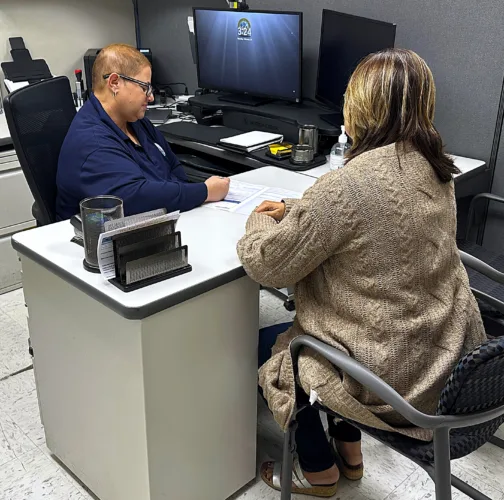
Veteran reviewing CRSC denial letter with military law attorney to prepare a CRSC denial appeal

How Long Does a CRSC Appeal Take?

Expect a long wait. Army reconsideration decisions average approximately 10 months from submission. ARBA appeals and second-level branch reviews take longer. BCMR and BCNR petitions regularly take one to two years from filing to a final decision. These are realistic timelines, not worst-case scenarios.

Because the effective date of your CRSC award ties to when you submitted a completed application, starting the process early matters. Delays cost you money that the current post-Soto framework does not allow you to recover once the application date is set.

If you are preparing a CRSC denial appeal and want to ensure your record is complete and your evidence is well-organized before you file, contact Courtney Military Law Group to discuss your situation.

When to Work with a Military Law Attorney on a CRSC Appeal

Not every CRSC denial appeal requires an attorney. However, certain situations make legal help worth considering.

Think about it seriously if your initial reconsideration came back denied and you are now preparing an ARBA submission or a second branch-level appeal — at that stage, the legal and evidentiary arguments need to be precise. Also consider it if your denial involves a complex condition like PTSD, TBI, or hearing loss from blast exposure, where establishing the combat nexus requires more than just pointing to a service record entry. And consider it strongly if you are heading toward a BCMR or BCNR petition, which operates under a different legal standard than a standard reconsideration.

As a former Marine Corps Judge Advocate and licensed attorney, I represent military retirees in CRSC appeals, BCMR and BCNR petitions, and related military benefits matters. I understand the records, the standards, and the arguments that move these cases forward.

Frequently Asked Questions

Can I appeal a CRSC denial more than once?

Yes. The CRSC denial appeal process has multiple stages. After an initial denial, you can request reconsideration. If reconsideration is also denied, military retirees can file a DD Form 149 with the BCMR or BCNR.

Does a VA rating automatically qualify me for CRSC?

No. VA service connection and the CRSC combat-related determination use different legal standards. The CRSC board must independently find that your disability resulted from armed conflict, hazardous duty, war simulation, exposure to an instrumentality of war, or an activity for which you received a Purple Heart. A high VA rating does not guarantee CRSC approval.

How long does a CRSC reconsideration take?

Army reconsideration decisions average approximately 10 months. Processing times vary by branch and by claim complexity. BCMR and BCNR reviews take longer.

Does the six-year back-pay limit still apply to CRSC?

No. The Supreme Court’s June 2025 ruling in Soto v. United States eliminated the Barring Act’s six-year limitation on CRSC back pay. However, under DoD’s August 2025 implementing guidance, back pay for new awards runs from the date the branch received your completed application — not from an earlier date. Prompt filing remains important.

What is the difference between CRSC and CRDP?

Combat-Related Special Compensation is tax-free and requires that your qualifying disabilities be combat-related under 10 U.S.C. § 1413a. Concurrent Retirement and Disability Pay (CRDP) is available to retirees with a combined VA rating of 50 percent or higher, is taxable, and does not require a combat-related determination. You cannot receive both simultaneously — you must elect one. The DFAS comparison page provides a useful side-by-side breakdown of both programs.

This article is general information and is not legal advice. Every case is different. If you have questions about your specific situation, speak with a qualified military law attorney.

Veteran reviewing CRSC denial letter with military law attorney to prepare a CRSC denial appeal
How to Appeal a CRSC Denial: A Step-by-Step Guide

A Combat-Related Special Compensation denial is not the end of the road — but it can feel that way. If you recently received a letter rejecting your CRSC application, the CRSC denial appeal process gives you multiple chances to reverse that outcome. The process has several stages, and new evidence can change the result at any step. This guide explains how to appeal a CRSC denial, walks through the most common reasons claims are rejected, and tells you what documentation actually makes a difference. As a former Marine Corps Judge Advocate who now represents veterans in military law matters, I want you to understand your options clearly before you accept a result that may not be final.

Why CRSC Claims Get Denied

Before you can build a strong reconsideration package, you need to understand why the board denied your claim. Your denial letter will state the reason. Read it carefully. In most cases, denials fall into one of three categories.

The Combat-Related Standard Is Different from VA Service Connection

This distinction causes more confusion than anything else I see in CRSC cases. Your branch’s CRSC board does not simply adopt your VA rating. A condition can be fully VA service-connected — meaning VA has recognized it as related to your military service — and the CRSC board can still deny it because the board finds it is not combat-related under 10 U.S.C. § 1413a.

Under that statute, a disability qualifies for CRSC only if combat caused it through one of five pathways: direct armed conflict, hazardous duty (such as demolitions or parachuting), war simulation training (such as live-fire exercises), exposure to an instrumentality of war, or an injury for which you received a Purple Heart. If your service records do not clearly connect your disability to one of those categories, the board will deny the claim — even if VA has rated the condition at 70 percent.

Common Reasons Boards Deny CRSC Claims

Beyond the combat-related standard, boards also deny claims because of documentation gaps and record problems. Specifically, common denial reasons include:

  • Service medical records that do not describe the specific incident or event that caused the disability
  • No corroborating service records — no After Action Reports, award recommendations, or investigative records — connecting the disability to a combat-qualifying event
  • A VA rating that the board classifies as occupational or training-related rather than combat-related under one of the five qualifying categories
  • An application that used the wrong CRSC category for the disability type
  • Incomplete or improperly submitted documentation

Each denial reason tells you what the reconsideration package needs to fix. A vague denial is harder to address; a specific one gives you a roadmap.

Step One: Submit a Reconsideration Request

After a CRSC denial, your first formal option is to request reconsideration from the same service branch that issued the denial. This is not just a courtesy step. It is a real opportunity to submit new evidence and correct the record. Most branches require reconsideration before you can escalate to a higher-level appeal — so do not skip it.

What “New and Relevant Evidence” Actually Means

Every branch asks for “new and relevant evidence” with a reconsideration request. Veterans often make the mistake of resubmitting the same package that the board already reviewed. That approach almost never works.

New evidence means documentation that was not in your original submission or that directly addresses the specific reason the board stated in the denial. For example:

  • An After Action Report or operational record placing you in the combat situation described in your claim
  • A medical nexus letter from a physician connecting your diagnosed condition to the specific combat event documented in your records
  • Award documentation — a Combat Action Badge, a Purple Heart citation, or a valor recommendation — corroborating the combat-related nature of your injury

The more precisely your new evidence responds to the board’s stated denial reason, the stronger your reconsideration case. A letter saying “I disagree with the decision” is not new evidence. A sworn statement from your squad leader describing the IED strike that caused your traumatic brain injury very likely is.

If you are uncertain what your record needs, the CRSC attorneys at Courtney Military Law Group can review your denial letter and identify the specific evidentiary gaps before you file.

How to Request Reconsideration — By Branch

Each service handles reconsideration differently. Here is what each branch requires:

Army: Submit CRSC Form 12e (the Reconsideration Request Form) along with all new evidence to the Army Human Resources Command, CRSC Branch. You can send the package by mail to 1600 Spearhead Division Avenue, Dept. 480, Fort Knox, KY 40122-5408; by email to usarmy.knox.hrc.mbx.tagd-crsc-claims@army.mil; or by eFAX at 502-613-9550.

Navy and Marine Corps: The Secretary of the Navy’s Council of Review Boards will mail you a reconsideration form with your denial letter. Submit that form and all new evidence to the CRSC Board at the Washington Navy Yard, 720 Kennon Street SE, Suite 309, Washington, DC 20374-5023. You can also email the package to CRSC@navy.mil or call 877-366-2772. For more background on the types of combat-related conditions that qualify under Navy and Marine Corps CRSC criteria, see our related post on Navy and Marine Corps CRSC qualifying categories.

Air Force and Space Force: Your denial letter will include a Reconsideration Request Form. Submit that form, or a signed letter, along with new evidence to HQ AFPC/DPFDC, 550 C Street West, JBSA Randolph, TX 78150. For questions, call 800-525-0102.

Coast Guard: No special form is required. Send a letter and all supporting evidence by mail to Commander (PSC-PSD-MED), Personnel Service Center, Attn: CRSC, 2703 Martin Luther King Jr. Avenue SE, Washington, DC 20593-7200, or by email to ARL-SMB-CGPSC-PSD-CRSC@uscg.mil.

Always send copies, not originals — the branch will not return original documents. Keep a complete copy of everything you send and record the submission date.

Step Two: If Reconsideration Is Also Denied

A second denial is not the end of the CRSC denial appeal process. Your options at this stage depend on your branch.

Army: Appeal to the Army Review Boards Agency

Army veterans who receive a second denial can appeal to the Army Review Boards Agency (ARBA) using DD Form 149. This is a more formal proceeding than a reconsideration. An ARBA submission should include a written legal and factual argument — not simply a retelling of your service history. ARBA will review the record and the board’s reasoning, not just the raw evidence.

The BCMR and BCNR as a Final Avenue

Veterans who exhaust the internal branch process without a favorable outcome may still have a path through the Board for Correction of Military Records (BCMR) or the Board for Correction of Naval Records (BCNR). These boards have statutory authority to correct errors and injustices in military records. A wrongly denied CRSC claim can, in the right circumstances, constitute the kind of injustice these boards were created to address.

BCMR and BCNR petitions require a different analytical framework than a standard reconsideration. You need to demonstrate that the original determination was legally erroneous or fundamentally unjust — a higher standard that requires careful legal argument. Working with an attorney experienced in BCMR and BCNR petitions at this stage can be the difference between a compelling record and one dismissed on procedural grounds.

What the Soto Ruling Means for Your Back Pay

One of the most significant recent changes in CRSC law directly affects how far back your compensation can reach — and it changes the urgency of filing.

For years, the Department of Defense applied the federal Barring Act, 31 U.S.C. § 3702, to cap CRSC back pay at six years. On June 12, 2025, the Supreme Court unanimously ended that practice in Soto v. United States, 605 U.S. ___ (2025). The Court held that the CRSC statute, 10 U.S.C. § 1413a, creates its own settlement authority, which displaces the Barring Act. The six-year limit never legitimately applied.

Two months later, on August 20, 2025, the Department of Defense issued interim guidance implementing the ruling. That guidance identifies what it calls the “Pre-Soto Population” — retirees whose CRSC awards DoD previously capped at six years — and orders recalculation of those effective dates without the artificial limit. For many veterans, this means substantial retroactive payments they have never received.

However, the same DoD guidance also established a prospective rule that matters going forward: for CRSC awards made on or after August 20, 2025, back pay runs from the date the branch received your completed application — not from an earlier date. Filing promptly still matters. Every month you delay is a month of compensation you cannot recover.

Important note: As of this writing, the VA.gov CRSC page still contains language stating there is “a 6-year statute of limitations for CRSC.” That language is outdated following Soto. If you delayed filing because you believed the six-year window had closed, speak with a military law attorney about your options under the current framework.

Veteran reviewing CRSC denial letter with military law attorney to prepare a CRSC denial appeal

How Long Does a CRSC Appeal Take?

Expect a long wait. Army reconsideration decisions average approximately 10 months from submission. ARBA appeals and second-level branch reviews take longer. BCMR and BCNR petitions regularly take one to two years from filing to a final decision. These are realistic timelines, not worst-case scenarios.

Because the effective date of your CRSC award ties to when you submitted a completed application, starting the process early matters. Delays cost you money that the current post-Soto framework does not allow you to recover once the application date is set.

If you are preparing a CRSC denial appeal and want to ensure your record is complete and your evidence is well-organized before you file, contact Courtney Military Law Group to discuss your situation.

When to Work with a Military Law Attorney on a CRSC Appeal

Not every CRSC denial appeal requires an attorney. However, certain situations make legal help worth considering.

Think about it seriously if your initial reconsideration came back denied and you are now preparing an ARBA submission or a second branch-level appeal — at that stage, the legal and evidentiary arguments need to be precise. Also consider it if your denial involves a complex condition like PTSD, TBI, or hearing loss from blast exposure, where establishing the combat nexus requires more than just pointing to a service record entry. And consider it strongly if you are heading toward a BCMR or BCNR petition, which operates under a different legal standard than a standard reconsideration.

As a former Marine Corps Judge Advocate and licensed attorney, I represent military retirees in CRSC appeals, BCMR and BCNR petitions, and related military benefits matters. I understand the records, the standards, and the arguments that move these cases forward.

Frequently Asked Questions

Can I appeal a CRSC denial more than once?

Yes. The CRSC denial appeal process has multiple stages. After an initial denial, you can request reconsideration. If reconsideration is also denied, military retirees can file a DD Form 149 with the BCMR or BCNR.

Does a VA rating automatically qualify me for CRSC?

No. VA service connection and the CRSC combat-related determination use different legal standards. The CRSC board must independently find that your disability resulted from armed conflict, hazardous duty, war simulation, exposure to an instrumentality of war, or an activity for which you received a Purple Heart. A high VA rating does not guarantee CRSC approval.

How long does a CRSC reconsideration take?

Army reconsideration decisions average approximately 10 months. Processing times vary by branch and by claim complexity. BCMR and BCNR reviews take longer.

Does the six-year back-pay limit still apply to CRSC?

No. The Supreme Court’s June 2025 ruling in Soto v. United States eliminated the Barring Act’s six-year limitation on CRSC back pay. However, under DoD’s August 2025 implementing guidance, back pay for new awards runs from the date the branch received your completed application — not from an earlier date. Prompt filing remains important.

What is the difference between CRSC and CRDP?

Combat-Related Special Compensation is tax-free and requires that your qualifying disabilities be combat-related under 10 U.S.C. § 1413a. Concurrent Retirement and Disability Pay (CRDP) is available to retirees with a combined VA rating of 50 percent or higher, is taxable, and does not require a combat-related determination. You cannot receive both simultaneously — you must elect one. The DFAS comparison page provides a useful side-by-side breakdown of both programs.

This article is general information and is not legal advice. Every case is different. If you have questions about your specific situation, speak with a qualified military law attorney.

Website developed in accordance with Web Content Accessibility Guidelines 2.2.
If you encounter any issues while using this site, please contact us: 949.987.8385