
By Kevin Courtney, Esq. | Former USMC Judge Advocate | California Attorney
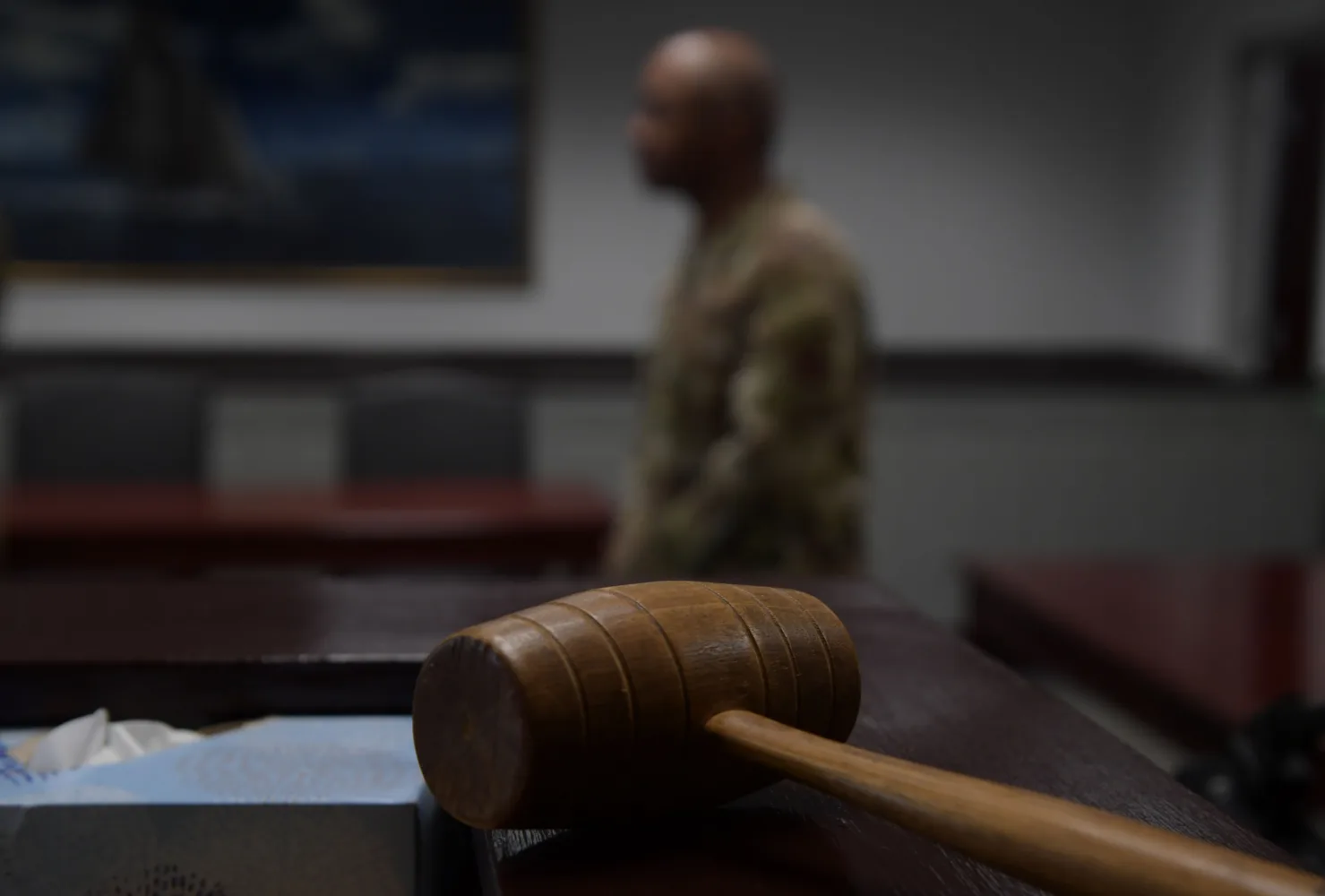
If your command has started an involuntary separation against you, an administrative separation board hearing may be the most important few hours of your military career. It is your chance to stand before a panel of senior members, test the government’s evidence, and ask them to keep you in uniform — or at least to protect your characterization of service. As a former Marine Corps Judge Advocate, I have seen these boards go both ways, and the difference often comes down to preparation. This guide explains, in plain English, what actually happens, who decides, what the board can and cannot do, and how to walk in ready rather than rattled.
The short version
An administrative separation board is an administrative proceeding, not a criminal trial. The government does not have to prove anything beyond a reasonable doubt. Instead, it has to convince a majority of the board that the alleged basis for separation is more likely true than not — the “preponderance of the evidence” standard. The board then answers two questions: should you be separated, and if so, with what characterization of service? Because the outcome touches your career, your benefits, and your reputation, you should treat the hearing as seriously as you would a trial.
When you are entitled to an administrative separation board
Not every separation comes with a hearing. Under Department of Defense Instruction 1332.14, the rule that governs enlisted separations, you are generally entitled to a board when one of two things is true: you have six or more years of total military service, or your command is seeking an Other Than Honorable (OTH) characterization.
If you have fewer than six years and you are not facing an OTH, your case usually moves through the notification procedure instead. That is a paper process, decided by a commander rather than a panel. You still hold important rights there, including the right to consult counsel and to submit a written rebuttal. But the board hearing gives you something the paper process cannot: a live chance to be heard and to cross-examine the people building the case against you.
Who sits on an administrative separation board
A board normally has at least three voting members, all senior in rank to you. In most cases that means two officers and one senior enlisted member, with a field-grade officer serving as president. If you are enlisted, you can usually ask that an enlisted member sit on the panel, and you may request other reasonable adjustments to its makeup.
A few other people fill defined roles. A recorder presents the government’s case, much like a prosecutor would. A legal advisor may rule on procedure and instruct the members on the law. And your defense counsel — a military attorney at no cost to you, or a civilian attorney you choose to hire — speaks for you throughout.
What actually happens at the hearing
The hearing follows a predictable order, and knowing the sequence in advance removes much of the fear. Here is how a typical administrative separation board hearing unfolds:
- The government presents its case. The recorder offers documents and may call witnesses to support each alleged basis for separation. For example, our post on ADSEP boards for drugs explains this process.
- Your counsel cross-examines. Your attorney questions the government’s witnesses and challenges weak or unreliable evidence.
- You present your defense. You can introduce documents, call witnesses, and offer character statements. Thoughtful, well-prepared character testimony often carries real weight, so it pays to think carefully about choosing the right character witnesses.
- You decide whether to speak. You may testify under oath and face cross-examination, give an unsworn statement that the board cannot question you on, or remain silent. Each choice is a strategy, not a default.
- Both sides give closing arguments. The recorder and your counsel sum up what the evidence does and does not show.
- The board deliberates in private and votes by majority. You will not be in the room for this part.
What an administrative separation board can — and cannot — do
If the board decides to separate you, it recommends one of three characterizations: Honorable, General (under honorable conditions), or Other Than Honorable. Each one carries different consequences, so it helps to understand the different types of military discharge and the benefits tied to each.
Here is a point service members often misunderstand. An administrative board cannot give you a punitive discharge. A bad-conduct or dishonorable discharge can come only from a court-martial. The worst an administrative board can recommend is an OTH. That still matters, because an OTH can limit your access to some VA benefits — but it is not a criminal conviction, and you can often challenge an other-than-honorable discharge later.
The board’s recommendation also protects you in one important way. The separation authority who makes the final decision cannot impose a result worse than what the board recommends. If the board votes to retain you, you stay. If it recommends a General discharge, the separation authority cannot downgrade that to an OTH. In other words, the board sets a floor that the chain of command cannot dig beneath.
Common mistakes at an administrative separation board hearing
Most avoidable losses trace back to a handful of errors. Watch for these:
- Waiving the board to get it over with. The hearing is your best leverage. Giving it up usually means accepting whatever the command wants.
- Treating it like a formality. Boards take their job seriously, and a thin, last-minute defense shows.
- Putting witnesses up without preparing them. An unprepared witness can hurt more than help.
- Testifying without a plan. Choosing to speak should be a deliberate decision, made with counsel, not a reflex.
- Fighting only the separation. Even when retention is unlikely, the fight over characterization can protect years of future benefits.
- Going in without experienced counsel. The rules, the evidence, and the strategy all reward preparation that most respondents cannot manage alone.
How to prepare — and when to talk with an attorney
Preparation starts the day you receive notice, not the week of the hearing. Strong cases are built early: reviewing the government’s evidence, identifying the weak points in each basis, developing a clear theory of the case, lining up and preparing witnesses, and deciding whether and how you should testify. Good counsel does all of this with you, then carries the argument in the room so you are not navigating procedure and cross-examination on your own.
If you have received notice of an administrative separation board, consider speaking with an administrative separation defense attorney early. The weeks before the hearing are when these cases are won or lost. You can request a case review to talk through your options.
Kevin is an incredibly sharp and genuine attorney who took the time to understand my legal situation, my family dynamics, and me as a man. His counsel was timely and matter-of-fact, which helped me provide legally sound responses to the organization that I was dealing with. I am convinced that he is one of the best attorneys, especially when it comes to military law. No matter what came up throughout the process, Kevin set aside the time to either take my call, text, or send an email to make sure that I was making a legally sound decision. He also ensured that if something that the organization was suggesting or presenting to me wasn’t either correct or supported by policy, corrective action and acknowledgement were given. It goes a long way to having an attorney represent you if you have complete trust and confidence in their abilities to represent you. If the need for representation ever came up again, I would not hesitate to reach out to Kevin. Additionally, I trust that he can support my colleagues in any legal process that they may be going through with any organization, especially the Marine Corps. – Michael (Avvo.com review)
This article is general information and is not legal advice. Every case is different, and outcomes depend on the record, the requested relief, the applicable board, and the strength of the evidence. Past results do not guarantee future outcomes. If you have questions about your situation, speak with a qualified military law attorney.
The bottom line
An administrative separation board hearing is serious, but it is not a mystery. You know the standard the government must meet, you know who decides, and you know the board cannot reach below its own recommendation. With early, careful preparation, you can walk in informed and on offense. If you want help building that defense, you can contact our office to request a case review.
Frequently asked questions
Is an administrative separation board the same as a court-martial?
No. A court-martial is a criminal trial that can impose punishment, including a punitive discharge or confinement. An administrative separation board only decides whether to separate you and, if so, your characterization of service. It cannot impose criminal punishment.
Do I need six years of service to get a board?
Not necessarily. You are generally entitled to a board if you have six or more years of total military service, or if your command is seeking an Other Than Honorable discharge, whichever applies first.
Can I be forced to testify at the board?
No. You can testify under oath, give an unsworn statement the board cannot cross-examine you on, or remain silent. Which choice serves you best depends on the facts, so decide it with your counsel.
What is the worst discharge an administrative board can give?
The most severe characterization an administrative board can recommend is Other Than Honorable. A bad-conduct or dishonorable discharge can come only from a court-martial.
Should I use military counsel or hire a civilian attorney?
You are entitled to military defense counsel at no cost, and you may also hire a civilian attorney. Many service members use both. The right choice depends on the complexity of your case and the experience you want in the room.