
Blog

If your DD-214 says you were separated for a “condition, not a disability,” you may have been steered away from a medical retirement you were entitled to pursue. On September 9, 2026, the U.S. Court of Federal Claims ruled for an Army veteran in exactly that position. The court held that the Army Board for Correction of Military Records ignored his own separation physical, which showed he failed medical retention standards, and sent the case back to the board. The court also refused to throw the case out as too old, even though the veteran had been discharged seventeen years earlier. Here is what the court decided, why the timing ruling matters as much as the merits, and what to do if this sounds like your discharge.

By Kevin Courtney, Esq.  |  Former USMC Judge Advocate  |  California Attorney
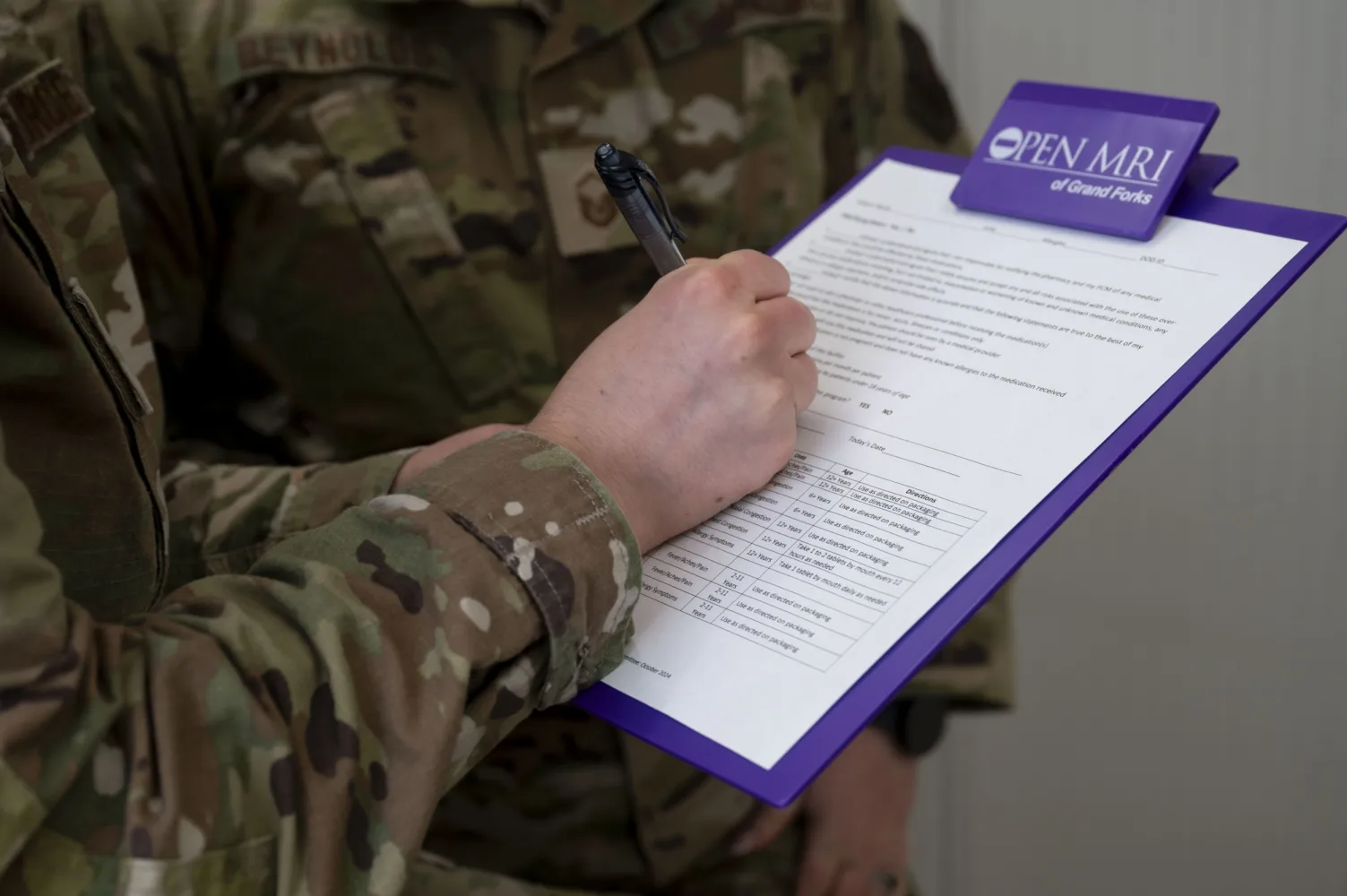
service member reviewing a discharge document that lists condition, not a disability as the reason for discharge

What happened in Peterson v. United States

The case is Peterson v. United States, No. 26-476C (Fed. Cl. Sept. 9, 2026). Judge Armando O. Bonilla wrote the opinion. The veteran, William Peterson, represented himself.

Mr. Peterson enlisted in the Army in July 2008 and served less than eleven months. In early 2009 he told his command about mental health problems and asked to leave the Army. His command refused. He went AWOL twice for short periods, sought outpatient mental health care, and in April 2009 attempted suicide in his barracks. He spent three weeks in the hospital. His treating psychiatrist and the treatment team concluded he could not adapt to military life and recommended an administrative separation under Army Regulation 635-200, paragraph 5-17. The hospital discharge sheet read “Medical Board: No.”

Then came the document at the center of the case. On May 28, 2009, Mr. Peterson had a pre-separation medical examination. The DD Form 2808 from that exam recorded diagnoses of depression, anxiety, and insomnia. It assigned him a psychiatric PULHES score of 3, which means one or more conditions that may require significant duty limitations. And the examining physician checked the box stating he was “not qualified for service.”

Nobody referred him to a Medical Evaluation Board. Instead, the Army separated him on June 17, 2009, with a general discharge and a DD-214 that listed the reason as a “condition, not a disability.” The VA later rated him 100% disabled for major depressive disorder, effective the day after his discharge.

What the correction board got wrong

Starting in 2022, Mr. Peterson applied to the ABCMR. The board upgraded his discharge to honorable and changed his separation code to Secretarial Authority. It denied a disability retirement, however, and it did so twice.

Both times the board relied on an Army Review Boards Agency medical advisor who concluded there was no evidence Mr. Peterson failed retention standards. Both times the advisor never mentioned the May 28, 2009 DD Form 2808. And both times the board itself misdated that form to 2008, listed the diagnoses on it, but never acknowledged the PULHES score of 3 or discussed whether the form required a referral to the Disability Evaluation System. Mr. Peterson sued in March 2026.

What the court decided

The court granted Mr. Peterson’s motion for judgment on the administrative record. The government did not file a response. The court vacated the board’s December 2025 denial and remanded the case to the ABCMR with specific instructions.

The reasoning turned on Army regulations in effect in 2009. Under Army Regulation 40-501, the DD Form 2808 asks the examining doctor to decide whether the soldier meets the medical retention standards in chapter 3. By checking “not qualified for service,” the doctor was saying Mr. Peterson did not meet those standards. Chapter 3 then directs that soldiers pending an administrative separation who fail retention standards “will be referred to an MEB.” And Army Regulation 635-200 provides that disposition through medical channels takes precedence over administrative separation.

Put those rules together, the court said, and a referral to the Disability Evaluation System “was seemingly required.” The board never explained why it did not happen. A correction board does not have to discuss every document in the file. But failing to analyze this one, the court held, was a failure “to consider an important aspect of the problem.” That is the classic definition of an arbitrary and capricious decision. The board’s misdating of the form only confirmed that it never appreciated what the form meant.

On remand, the board must decide whether Mr. Peterson is entitled to a retroactive disability evaluation. If the board denies him again, its written decision must specifically address the DD Form 2808 and explain whether it warranted a referral. The court gave the board 120 days and kept the case on its own docket.

Why a trial-court ruling still matters

This is a decision of the Court of Federal Claims, the trial court that hears military pay and disability retirement claims against the United States. It is not a Federal Circuit opinion, so it does not bind other judges. Correction boards and government lawyers still read these decisions closely, however, and other judges on the same court frequently cite them. More importantly for you, the opinion lays out the regulatory chain, from separation physical to retention standards to mandatory MEB referral, that a board must confront when the paperwork shows a soldier failed the standards on the way out the door.

The six-year deadline and the Real test, explained

The timing ruling in Peterson may matter to more veterans than the merits ruling. Every claim in the Court of Federal Claims must be filed within six years after it “first accrues.” The rule is in 28 U.S.C. § 2501. It is jurisdictional. That means the court cannot excuse a late filing for hardship, good cause, or fairness. If the clock started too early, the case is over before it begins.

So the entire question is: when did the clock start?

The general rule: the clock starts when a board says no

For a disability retirement claim, the Federal Circuit’s general rule is veteran-friendly. The claim accrues when the appropriate military board either finally denies the claim or refuses to hear it. In practice that usually means the first decision of a Physical Evaluation Board or a correction board on the disability question. Under that rule, Mr. Peterson’s claim accrued in March 2024, when the ABCMR first denied his medical retirement, and his 2026 lawsuit was easily on time.

The exception: the Real test

The exception comes from a 1990 Federal Circuit case, Real v. United States. In plain terms, the Real exception says the clock can start at discharge, rather than at a later board denial, when the service member essentially waived board review by walking away from it. Courts have described that exception as having two parts.

Prong one: you knew, or should have known, about the disability. The question is whether, at the time of discharge, the service member knew or reasonably should have known that he or she was suffering from a permanently disabling condition. Severity alone is not enough. The evidence has to show the member understood, or should have understood, that the condition was permanent.

Prong two: you knew that skipping a board would cost you. The question is whether the service member was made aware, before discharge, that failing to demand a board review would mean potentially missing out on disability benefits. This prong asks about knowledge of the process, not knowledge of the condition.

Here is the part that has not been settled. The Federal Circuit has not decided whether prong two is required. In a 2023 decision, Pohl v. United States, the court expressly withheld judgment on whether the test has one prong or two. Some older decisions read Real as requiring both awareness of the disability and awareness of the board process. At least one unpublished decision, Ullmann v. United States, described the test without the second element. Judge Bonilla sided with what he called the weight of authority: the Real exception bars a claim only when both prongs are met.

How the test applied to Mr. Peterson

On prong one, the court ruled against Mr. Peterson. His major depressive disorder led to a suicide attempt and hospitalization. A provider wrote in May 2009 that he was unlikely ever to resume being a productive member of the military. He also applied for VA disability compensation before his discharge. Taken together, the court found he knew or should have known his condition was both severe and permanent.

On prong two, the court ruled for him. Nothing in the record showed anyone told him a pre-separation disability board was available. In fact, the record showed the opposite. Mr. Peterson believed he was not entitled to a board at all because he had less than six years of service. That belief was correct about an administrative separation board, which does require six years of service for a soldier in his situation. It was wrong about a Medical Evaluation Board or Physical Evaluation Board, which could have evaluated him for disability retirement. The court found he reasonably, if mistakenly, assumed the only board he had heard of was the only board that existed. Because prong two was not satisfied, the exception did not apply and the clock did not start at discharge.

Two cautions. First, the court ruled on the record before it and said prong two was not met “at this juncture.” If the government produces evidence that a service member was counseled about the disability process, the analysis changes. Second, because the Federal Circuit has not resolved the one-prong versus two-prong question, a different judge could apply the test differently. Do not treat Peterson as a guarantee that an old claim is timely. Treat it as a well-reasoned roadmap for arguing that it is.

Why this ruling matters to veterans

Thousands of service members have been separated under “condition, not a disability” chapters, including adjustment disorder and other non-disability mental health separations. The pattern in Peterson is common. A soldier in crisis is processed for a quick administrative separation. The separation physical documents a failing psychiatric profile. Nobody connects the physical to the retention standards, and nobody starts an MEB. Years later the VA rates the same condition at a high percentage, effective the day after discharge.

The difference between those two outcomes is significant. A medical retirement at 30% or higher can carry retired pay, TRICARE, and other retiree benefits. An administrative separation carries none of that. Peterson tells correction boards that when the separation physical says “not qualified,” they must explain why the soldier was not referred for disability evaluation. And it tells veterans that the passage of time, by itself, does not necessarily close the courthouse door.

What to do if this sounds like your discharge

If you were separated for a “condition, not a disability” and you believe you should have been evaluated for a medical retirement, the record is everything. A strong petition usually requires the following.

  • Get your complete separation packet and medical records. Look specifically for the pre-separation DD Form 2808 and any PULHES profile. A psychiatric score of 3 or 4, or a “not qualified for service” finding, is the kind of evidence the board in Peterson was required to address.
  • Identify the retention standard you failed. The argument is not simply that you were sick. It is that, under the regulation in effect when you separated, your documented condition fell below retention standards and required an MEB referral.
  • Build the timeline. Diagnoses during service, hospitalizations, the separation physical, the VA rating and its effective date. A VA rating effective the day after discharge is persuasive, though the VA and the military apply different standards.
  • Address the deadline head-on. If you are outside six years from discharge, be prepared to explain what you knew about your condition and what you were told about the disability process before you left. Counseling forms, election-of-rights forms, and your own sworn statement matter here.
  • Petition the correction board first. The application is a DD Form 149 to the BCMR or BCNR. If the board denies you without confronting your evidence, federal court review may be available.

Consider talking with a military records correction attorney before you file. Mr. Peterson won his remand without a lawyer, but he also spent four years and multiple board applications getting there. A petition that identifies the controlling regulation, rebuts the medical advisory opinion, and squarely addresses the limitations question gives the board far less room to look past your evidence.

Common mistakes to avoid

  • Relying on the VA rating alone. The VA rating helps, but the board applies military retention and fitness standards. You have to connect the evidence to those standards.
  • Ignoring the medical advisory opinion. In Peterson, the advisor omitted the key document twice and the board adopted the advisor’s conclusion both times. You should rebut the advisory opinion point by point before the board votes.
  • Assuming an old discharge is hopeless. The correction board can waive its own three-year filing rule in the interest of justice, as it did for Mr. Peterson. The six-year court deadline is stricter, but the Real analysis may keep a claim alive.
  • Assuming an old discharge is safe. The reverse mistake. If you were counseled about the disability process and walked away from it, the clock may already have run. Get an honest assessment early.

This is the same family of issues the Federal Circuit addressed in its liberal consideration decisions, and it pairs with our earlier discussion of removing a personality disorder diagnosis from a DD-214. If a mental health condition drove your separation, those posts are worth reading alongside this one.

This article is general information and is not legal advice. Every case is different, and outcomes depend on the record, the requested relief, the applicable board, and the strength of the evidence. Past results do not guarantee future outcomes. If you have questions about your situation, speak with a qualified military law attorney.

Talk with a military records correction attorney

Courtney Military Law Group represents service members, veterans, and retirees nationwide in BCMR and BCNR petitions, including medical retirement corrections and federal court review of board denials. Kevin Courtney is a former Marine Corps Judge Advocate. If your DD-214 says “condition, not a disability” and your records suggest you should have been medically evaluated, request a case review. Tell us your branch, your separation date, the reason listed on your DD-214, and whether you have already applied to a board.

Frequently asked questions

What does “condition, not a disability” mean on a DD-214?

It means the service separated you administratively for a physical or mental condition that interfered with duty, rather than through the Disability Evaluation System. The Army version is paragraph 5-17 of Army Regulation 635-200. The label itself is not proof that you had no disability. It reflects the path the command chose, not necessarily the path the regulations required.

Can I get a medical retirement after a “condition, not a disability” discharge?

Possibly, depending on the facts. You would petition the correction board to show that, under the regulations in effect when you separated, your documented condition failed retention standards and required referral to a Medical Evaluation Board. The board may order a retroactive disability evaluation. Relief is discretionary and the evidence matters.

How long do I have to challenge my discharge in federal court?

Six years from when the claim accrues, and the court cannot extend that period. For disability retirement claims, the clock generally starts when a board first denies the claim. Under the Real exception, it can start at discharge if you knew about your permanent disability and knew that skipping board review would forfeit benefits. Peterson applied both prongs and found the second one unmet.

What is a PULHES score?

It is the Army’s medical profile system. Each letter covers a body system, and the “S” is psychiatric. Scores run from 1, the most fit, to 4, the least fit. A 3 indicates a condition that may require significant limitations. In Peterson, the psychiatric score of 3 on the separation physical was central to the court’s ruling.

Does a 100% VA rating mean I should have been medically retired?

Not by itself. The VA rates service-connected conditions; the military decides fitness for duty and retention. But a high VA rating effective the day after discharge for the same condition that drove your separation is strong supporting evidence, and it was part of the record in Peterson.

Was Peterson v. United States a final win?

No. The court vacated the board’s denial and sent the case back for a new decision. The board could still deny relief, but if it does, it must address the separation physical and explain its reasoning. That kind of remand is often the turning point in these cases.

“Condition, Not a Disability” Discharge: When the Army Should Have Sent You to a Medical Board

If your DD-214 says you were separated for a “condition, not a disability,” you may have been steered away from a medical retirement you were entitled to pursue. On September 9, 2026, the U.S. Court of Federal Claims ruled for an Army veteran in exactly that position. The court held that the Army Board for Correction of Military Records ignored his own separation physical, which showed he failed medical retention standards, and sent the case back to the board. The court also refused to throw the case out as too old, even though the veteran had been discharged seventeen years earlier. Here is what the court decided, why the timing ruling matters as much as the merits, and what to do if this sounds like your discharge.

By Kevin Courtney, Esq.  |  Former USMC Judge Advocate  |  California Attorney

service member reviewing a discharge document that lists condition, not a disability as the reason for discharge

What happened in Peterson v. United States

The case is Peterson v. United States, No. 26-476C (Fed. Cl. Sept. 9, 2026). Judge Armando O. Bonilla wrote the opinion. The veteran, William Peterson, represented himself.

Mr. Peterson enlisted in the Army in July 2008 and served less than eleven months. In early 2009 he told his command about mental health problems and asked to leave the Army. His command refused. He went AWOL twice for short periods, sought outpatient mental health care, and in April 2009 attempted suicide in his barracks. He spent three weeks in the hospital. His treating psychiatrist and the treatment team concluded he could not adapt to military life and recommended an administrative separation under Army Regulation 635-200, paragraph 5-17. The hospital discharge sheet read “Medical Board: No.”

Then came the document at the center of the case. On May 28, 2009, Mr. Peterson had a pre-separation medical examination. The DD Form 2808 from that exam recorded diagnoses of depression, anxiety, and insomnia. It assigned him a psychiatric PULHES score of 3, which means one or more conditions that may require significant duty limitations. And the examining physician checked the box stating he was “not qualified for service.”

Nobody referred him to a Medical Evaluation Board. Instead, the Army separated him on June 17, 2009, with a general discharge and a DD-214 that listed the reason as a “condition, not a disability.” The VA later rated him 100% disabled for major depressive disorder, effective the day after his discharge.

What the correction board got wrong

Starting in 2022, Mr. Peterson applied to the ABCMR. The board upgraded his discharge to honorable and changed his separation code to Secretarial Authority. It denied a disability retirement, however, and it did so twice.

Both times the board relied on an Army Review Boards Agency medical advisor who concluded there was no evidence Mr. Peterson failed retention standards. Both times the advisor never mentioned the May 28, 2009 DD Form 2808. And both times the board itself misdated that form to 2008, listed the diagnoses on it, but never acknowledged the PULHES score of 3 or discussed whether the form required a referral to the Disability Evaluation System. Mr. Peterson sued in March 2026.

What the court decided

The court granted Mr. Peterson’s motion for judgment on the administrative record. The government did not file a response. The court vacated the board’s December 2025 denial and remanded the case to the ABCMR with specific instructions.

The reasoning turned on Army regulations in effect in 2009. Under Army Regulation 40-501, the DD Form 2808 asks the examining doctor to decide whether the soldier meets the medical retention standards in chapter 3. By checking “not qualified for service,” the doctor was saying Mr. Peterson did not meet those standards. Chapter 3 then directs that soldiers pending an administrative separation who fail retention standards “will be referred to an MEB.” And Army Regulation 635-200 provides that disposition through medical channels takes precedence over administrative separation.

Put those rules together, the court said, and a referral to the Disability Evaluation System “was seemingly required.” The board never explained why it did not happen. A correction board does not have to discuss every document in the file. But failing to analyze this one, the court held, was a failure “to consider an important aspect of the problem.” That is the classic definition of an arbitrary and capricious decision. The board’s misdating of the form only confirmed that it never appreciated what the form meant.

On remand, the board must decide whether Mr. Peterson is entitled to a retroactive disability evaluation. If the board denies him again, its written decision must specifically address the DD Form 2808 and explain whether it warranted a referral. The court gave the board 120 days and kept the case on its own docket.

Why a trial-court ruling still matters

This is a decision of the Court of Federal Claims, the trial court that hears military pay and disability retirement claims against the United States. It is not a Federal Circuit opinion, so it does not bind other judges. Correction boards and government lawyers still read these decisions closely, however, and other judges on the same court frequently cite them. More importantly for you, the opinion lays out the regulatory chain, from separation physical to retention standards to mandatory MEB referral, that a board must confront when the paperwork shows a soldier failed the standards on the way out the door.

The six-year deadline and the Real test, explained

The timing ruling in Peterson may matter to more veterans than the merits ruling. Every claim in the Court of Federal Claims must be filed within six years after it “first accrues.” The rule is in 28 U.S.C. § 2501. It is jurisdictional. That means the court cannot excuse a late filing for hardship, good cause, or fairness. If the clock started too early, the case is over before it begins.

So the entire question is: when did the clock start?

The general rule: the clock starts when a board says no

For a disability retirement claim, the Federal Circuit’s general rule is veteran-friendly. The claim accrues when the appropriate military board either finally denies the claim or refuses to hear it. In practice that usually means the first decision of a Physical Evaluation Board or a correction board on the disability question. Under that rule, Mr. Peterson’s claim accrued in March 2024, when the ABCMR first denied his medical retirement, and his 2026 lawsuit was easily on time.

The exception: the Real test

The exception comes from a 1990 Federal Circuit case, Real v. United States. In plain terms, the Real exception says the clock can start at discharge, rather than at a later board denial, when the service member essentially waived board review by walking away from it. Courts have described that exception as having two parts.

Prong one: you knew, or should have known, about the disability. The question is whether, at the time of discharge, the service member knew or reasonably should have known that he or she was suffering from a permanently disabling condition. Severity alone is not enough. The evidence has to show the member understood, or should have understood, that the condition was permanent.

Prong two: you knew that skipping a board would cost you. The question is whether the service member was made aware, before discharge, that failing to demand a board review would mean potentially missing out on disability benefits. This prong asks about knowledge of the process, not knowledge of the condition.

Here is the part that has not been settled. The Federal Circuit has not decided whether prong two is required. In a 2023 decision, Pohl v. United States, the court expressly withheld judgment on whether the test has one prong or two. Some older decisions read Real as requiring both awareness of the disability and awareness of the board process. At least one unpublished decision, Ullmann v. United States, described the test without the second element. Judge Bonilla sided with what he called the weight of authority: the Real exception bars a claim only when both prongs are met.

How the test applied to Mr. Peterson

On prong one, the court ruled against Mr. Peterson. His major depressive disorder led to a suicide attempt and hospitalization. A provider wrote in May 2009 that he was unlikely ever to resume being a productive member of the military. He also applied for VA disability compensation before his discharge. Taken together, the court found he knew or should have known his condition was both severe and permanent.

On prong two, the court ruled for him. Nothing in the record showed anyone told him a pre-separation disability board was available. In fact, the record showed the opposite. Mr. Peterson believed he was not entitled to a board at all because he had less than six years of service. That belief was correct about an administrative separation board, which does require six years of service for a soldier in his situation. It was wrong about a Medical Evaluation Board or Physical Evaluation Board, which could have evaluated him for disability retirement. The court found he reasonably, if mistakenly, assumed the only board he had heard of was the only board that existed. Because prong two was not satisfied, the exception did not apply and the clock did not start at discharge.

Two cautions. First, the court ruled on the record before it and said prong two was not met “at this juncture.” If the government produces evidence that a service member was counseled about the disability process, the analysis changes. Second, because the Federal Circuit has not resolved the one-prong versus two-prong question, a different judge could apply the test differently. Do not treat Peterson as a guarantee that an old claim is timely. Treat it as a well-reasoned roadmap for arguing that it is.

Why this ruling matters to veterans

Thousands of service members have been separated under “condition, not a disability” chapters, including adjustment disorder and other non-disability mental health separations. The pattern in Peterson is common. A soldier in crisis is processed for a quick administrative separation. The separation physical documents a failing psychiatric profile. Nobody connects the physical to the retention standards, and nobody starts an MEB. Years later the VA rates the same condition at a high percentage, effective the day after discharge.

The difference between those two outcomes is significant. A medical retirement at 30% or higher can carry retired pay, TRICARE, and other retiree benefits. An administrative separation carries none of that. Peterson tells correction boards that when the separation physical says “not qualified,” they must explain why the soldier was not referred for disability evaluation. And it tells veterans that the passage of time, by itself, does not necessarily close the courthouse door.

What to do if this sounds like your discharge

If you were separated for a “condition, not a disability” and you believe you should have been evaluated for a medical retirement, the record is everything. A strong petition usually requires the following.

  • Get your complete separation packet and medical records. Look specifically for the pre-separation DD Form 2808 and any PULHES profile. A psychiatric score of 3 or 4, or a “not qualified for service” finding, is the kind of evidence the board in Peterson was required to address.
  • Identify the retention standard you failed. The argument is not simply that you were sick. It is that, under the regulation in effect when you separated, your documented condition fell below retention standards and required an MEB referral.
  • Build the timeline. Diagnoses during service, hospitalizations, the separation physical, the VA rating and its effective date. A VA rating effective the day after discharge is persuasive, though the VA and the military apply different standards.
  • Address the deadline head-on. If you are outside six years from discharge, be prepared to explain what you knew about your condition and what you were told about the disability process before you left. Counseling forms, election-of-rights forms, and your own sworn statement matter here.
  • Petition the correction board first. The application is a DD Form 149 to the BCMR or BCNR. If the board denies you without confronting your evidence, federal court review may be available.

Consider talking with a military records correction attorney before you file. Mr. Peterson won his remand without a lawyer, but he also spent four years and multiple board applications getting there. A petition that identifies the controlling regulation, rebuts the medical advisory opinion, and squarely addresses the limitations question gives the board far less room to look past your evidence.

Common mistakes to avoid

  • Relying on the VA rating alone. The VA rating helps, but the board applies military retention and fitness standards. You have to connect the evidence to those standards.
  • Ignoring the medical advisory opinion. In Peterson, the advisor omitted the key document twice and the board adopted the advisor’s conclusion both times. You should rebut the advisory opinion point by point before the board votes.
  • Assuming an old discharge is hopeless. The correction board can waive its own three-year filing rule in the interest of justice, as it did for Mr. Peterson. The six-year court deadline is stricter, but the Real analysis may keep a claim alive.
  • Assuming an old discharge is safe. The reverse mistake. If you were counseled about the disability process and walked away from it, the clock may already have run. Get an honest assessment early.

This is the same family of issues the Federal Circuit addressed in its liberal consideration decisions, and it pairs with our earlier discussion of removing a personality disorder diagnosis from a DD-214. If a mental health condition drove your separation, those posts are worth reading alongside this one.

This article is general information and is not legal advice. Every case is different, and outcomes depend on the record, the requested relief, the applicable board, and the strength of the evidence. Past results do not guarantee future outcomes. If you have questions about your situation, speak with a qualified military law attorney.

Talk with a military records correction attorney

Courtney Military Law Group represents service members, veterans, and retirees nationwide in BCMR and BCNR petitions, including medical retirement corrections and federal court review of board denials. Kevin Courtney is a former Marine Corps Judge Advocate. If your DD-214 says “condition, not a disability” and your records suggest you should have been medically evaluated, request a case review. Tell us your branch, your separation date, the reason listed on your DD-214, and whether you have already applied to a board.

Frequently asked questions

What does “condition, not a disability” mean on a DD-214?

It means the service separated you administratively for a physical or mental condition that interfered with duty, rather than through the Disability Evaluation System. The Army version is paragraph 5-17 of Army Regulation 635-200. The label itself is not proof that you had no disability. It reflects the path the command chose, not necessarily the path the regulations required.

Can I get a medical retirement after a “condition, not a disability” discharge?

Possibly, depending on the facts. You would petition the correction board to show that, under the regulations in effect when you separated, your documented condition failed retention standards and required referral to a Medical Evaluation Board. The board may order a retroactive disability evaluation. Relief is discretionary and the evidence matters.

How long do I have to challenge my discharge in federal court?

Six years from when the claim accrues, and the court cannot extend that period. For disability retirement claims, the clock generally starts when a board first denies the claim. Under the Real exception, it can start at discharge if you knew about your permanent disability and knew that skipping board review would forfeit benefits. Peterson applied both prongs and found the second one unmet.

What is a PULHES score?

It is the Army’s medical profile system. Each letter covers a body system, and the “S” is psychiatric. Scores run from 1, the most fit, to 4, the least fit. A 3 indicates a condition that may require significant limitations. In Peterson, the psychiatric score of 3 on the separation physical was central to the court’s ruling.

Does a 100% VA rating mean I should have been medically retired?

Not by itself. The VA rates service-connected conditions; the military decides fitness for duty and retention. But a high VA rating effective the day after discharge for the same condition that drove your separation is strong supporting evidence, and it was part of the record in Peterson.

Was Peterson v. United States a final win?

No. The court vacated the board’s denial and sent the case back for a new decision. The board could still deny relief, but if it does, it must address the separation physical and explain its reasoning. That kind of remand is often the turning point in these cases.

Ask AI about Courtney Military Law Group

Get an instant, plain-English summary of the firm from the AI assistant you trust. Opens in a new tab with the question already typed.

Gemini doesn't accept a pre-filled link — we'll copy the question to your clipboard so you can paste it.

Website developed in accordance with Web Content Accessibility Guidelines 2.2.
If you encounter any issues while using this site, please contact us: 949.987.8385