Blog

On July 30, 2026, the U.S. Court of Appeals for the Federal Circuit decided Qoye v. United States, a precedential ruling for veterans denied a medical disability retirement. The court held that a correction board cannot make a lawful fitness for duty determination without first identifying the actual duties of the veteran’s job and weighing all of the relevant factors in the governing Navy instruction. The court vacated the decision below and sent the case back to the Board for Correction of Naval Records. This article explains what happened, what the ruling changes, and what it means if a board has already told you that you were fit.

By Kevin Courtney, Esq.  |  Former USMC Judge Advocate  |  California Attorney

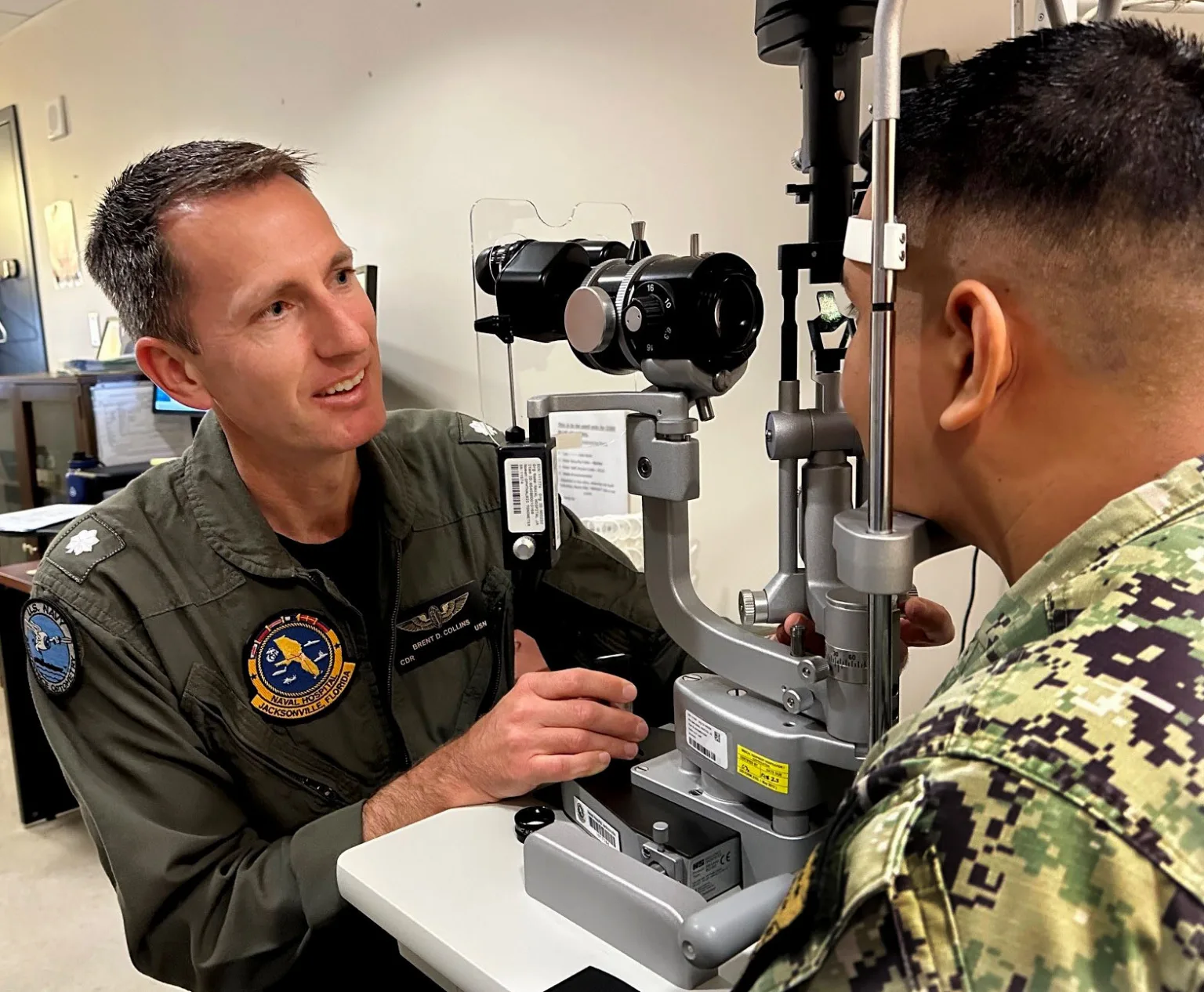
medical professional working through a fitness for duty determination

What happened in Qoye v. United States

Yishai Qoye served in the Navy as a nuclear machinist mate. In 2008, he began a tour aboard the USS Eisenhower, a nuclear-powered aircraft carrier. During that assignment he struggled to stay awake. Fellow sailors described him as consistently falling asleep in the middle of whatever he was doing, including while standing watch and while performing maintenance.

He sought treatment from the Navy in 2009 and again in 2010. The Navy finally ran a sleep study in September 2010. That study found that he snored and possibly had sleep apnea. It never tested him for narcolepsy, and the Navy ordered no separate narcolepsy test.

Separately, in December 2010 the Navy charged Mr. Qoye with failure to obey a lawful order and making a false official statement for falsifying a shipboard maintenance log. He received non-judicial punishment in January 2011. His supervisor then asked to remove his Navy Enlisted Classification as a nuclear machinist mate, citing “demonstrated unreliability and lack of integrity.” He requested early separation and left the Navy in 2011 with an honorable discharge and a narrative reason of “reduction in force.” Because he did not finish his reenlistment period, the Navy clawed back his reenlistment bonus.

In 2012, the VA ran its own sleep study, which ruled out sleep apnea. This time, however, Mr. Qoye also underwent a Multiple Sleep Latency Test, and that test showed symptoms consistent with narcolepsy. The VA then assigned a 40 percent service-connected rating for narcolepsy, effective the date of his discharge.

How the board handled his fitness for duty determination

Mr. Qoye petitioned the Board for Correction of Naval Records in 2015. He asked the board to correct his records to show a medical retirement, to refund the recouped bonus, and to change the reason for his classification removal from misconduct to medically unfit.

The board agreed that the Navy had failed to diagnose his narcolepsy during service and had failed to refer him to a Medical Evaluation Board and a Physical Evaluation Board. It then sent his records to an informal PEB for a look back in time. That PEB found him fit. Notably, it first reviewed the medical records of a different service member, discovered the error, reviewed the right records, and reached the same conclusion.

The board denied reconsideration in 2020 and again after a court-ordered remand in 2022. The Court of Federal Claims upheld the board in April 2024 and dismissed his records-correction and bonus claims as time-barred. Mr. Qoye appealed.

Why the “precedential” label matters

The Federal Circuit marked this opinion as precedential. That word carries real weight. A precedential decision binds the Court of Federal Claims in later cases and controls how courts will review correction board decisions going forward, not just in Mr. Qoye’s case. A nonprecedential decision, by contrast, resolves only the dispute in front of the court and sets no rule for anyone else. Because Qoye is precedential, a board that repeats these errors risks the same reversal. You can read the full opinion in Qoye v. United States on the court’s website.

What the court said about the fitness for duty determination

Military disability retirement comes from 10 U.S.C. § 1201. Among other statutory requirements, a veteran must show two things by a preponderance of the evidence: that the disability arose while entitled to basic pay, and that it made him unfit to perform the duties of his office, grade, rank, or rating. That second question is the fitness determination.

The Navy spells out how to answer it. Secretary of the Navy Instruction 1850.4E § 3304(a) lists four factors: common military tasks, physical readiness and fitness tests, deployability, and special qualifications. Section 3303 tells the board to consider all relevant evidence, and § 3301 requires the board to relate the disability to the duties the member could reasonably be expected to perform.

The Federal Circuit found that the board skipped three of those four factors. It never identified or discussed any common military task required of a nuclear machinist mate. It never asked whether narcolepsy affected his deployability — the government conceded that point at oral argument. And it never discussed the special qualifications he obtained to become a nuclear machinist mate, or whether narcolepsy would affect them. Each failure, standing alone, was arbitrary and capricious and required vacatur.

The board must measure you against your real job

The most useful part of the ruling is what the court said about job duties. A board cannot judge fitness in the abstract. It must relate the disability to the requirements and duties the member could reasonably be expected to perform in his own office, grade, rank, and rating. The court was direct: that obligation belongs to the board, and the board cannot pass it to the veteran.

Here, the board leaned on high-level phrases pulled from performance evaluations, such as assisting with “complex maintenance items.” That was not enough. The court also rejected the board’s two other props. The 2010 sleep study never tested for narcolepsy, so it could not show whether narcolepsy affected his work. And the board pointed to a mechanic job Mr. Qoye applied for years after discharge without ever explaining what that job required or how it compared to his Navy duties.

The court added one more point that matters for technical ratings. The Navy’s Manual of the Medical Department states that sleep disorders causing daytime fatigue, somnolence, or inattention disqualify a sailor from nuclear field duty. The board should have considered that manual, because it bears directly on the special-qualifications factor. This reasoning builds on the same line of cases we discuss in our article on military disability retirement and the BCMR.

The Court of Federal Claims had thrown out two of Mr. Qoye’s claims on timing grounds. It held that his records-correction claim accrued at discharge and that his bonus claim accrued in 2011. Under 28 U.S.C. § 2501, a claim must reach that court within six years of accrual.

The Federal Circuit disagreed. Where a service member was never referred to a medical board before discharge, a disability retirement claim does not accrue until the correction board takes final action. Mr. Qoye’s medical retirement claim was timely, and his other two claims were tethered to it. The board could not fix his classification or discharge narrative without first finding him unfit, and the Navy would not have recouped the bonus had he been medically retired. Because those claims rose or fell with the retirement claim, the trial court had jurisdiction over them.

This is a practical holding. It means a veteran does not lose the downstream pieces of relief — a corrected DD-214 narrative, a corrected classification code, a refunded bonus — simply because years passed while the boards worked through the fitness question. If a board has already denied you and you are weighing federal court, see our discussion of what a federal-court challenge to a BCNR denial looks like.

An honorable discharge does not block liberal consideration

The board had also refused to apply liberal consideration, reasoning that Mr. Qoye received an honorable characterization of service. The Federal Circuit called that rationale improper. Liberal consideration reaches more than the characterization on a discharge certificate. Under the Kurta memorandum, it also reaches the narrative reason, the separation code, and the reenlistment code. Under 10 U.S.C. § 1552(h) and the Federal Circuit’s Doyon decision, it reaches the narrative reason for separation as well.

One caution belongs here. The court did not hold that Mr. Qoye wins on this point. He still must show that narcolepsy is a condition eligible for liberal consideration, and the court left that question for the military to answer first. For the general standard, see our explainer on what liberal consideration really means in a PTSD discharge upgrade.

Why this ruling matters to service members and veterans

Many veterans left service with a condition no one properly diagnosed, then received a high VA rating for that same condition months later. When they later ask a correction board for a medical retirement, they often get a short denial that says they were fit — supported by little more than a few performance evaluations.

The difference between an ordinary discharge and a medical disability retirement can be substantial. A medical retirement may carry retired pay and health-care eligibility that an ordinary discharge does not. Qoye gives veterans in this position a concrete argument: the board owes you a reasoned fitness for duty determination that names your duties, addresses deployability, and accounts for the special qualifications your rating required. A conclusory denial no longer satisfies that duty.
What to do if a board found you fit for duty

If a correction board denied your medical retirement, the ruling may help you. Strong petitions and reconsideration requests usually share a few features.

  • A documented duty description. Pull your rating or MOS description, watch bills, and job qualification requirements. Show the board exactly what your work demanded.
  • Evidence tied to those duties. Connect your condition to specific tasks you could not reliably perform, rather than to general fatigue or discomfort.
  • A deployability argument. Address whether your condition affected your ability to deploy, because boards routinely skip this factor.
  • Special-qualification standards. If your rating carried medical screening standards — nuclear field duty, aviation, dive, or similar — cite the governing manual and the disqualifying condition.
  • A clear theory of legal error. Name the factor the board omitted and the instruction it violated. Boards respond to specifics.

Veterans file these petitions with the BCMR or BCNR on DD Form 149. A three-year period generally runs from when you discover the error, though a board may waive it in the interest of justice. Under 10 U.S.C. § 1552, relief remains discretionary, so a board may decline even when you show error. This work is evidence-intensive and slow. If you want a candid read on your record, you can request a case review with our firm.

Common mistakes to avoid

Several errors weaken otherwise promising petitions:

  • Arguing only that you were sick, without ever describing the duties you could not perform.
  • Assuming a VA rating proves unfitness at separation. The two systems use different standards, although the rating still matters as evidence.
  • Letting a board rely on a medical test that never examined your actual condition, as happened in Qoye.
  • Accepting a preliminary PEB finding without requesting the hearing you are entitled to request.
  • Assuming the six-year clock already ran out. Accrual rules for disability retirement claims are technical, and an attorney can tell you where you stand.

This article is general information and is not legal advice. Every case is different, and outcomes depend on the record, the requested relief, the applicable board, and the strength of the evidence. Past results do not guarantee future outcomes. If you have questions about your situation, speak with a qualified military law attorney.

I had the pleasure of working with Mr Courtney recently, and I can’t say enough good things about the exceptional legal services provided. From start to finish, Mr Courtney demonstrated professionalism, expertise, and a deep commitment to my case. — Seth, Avvo.com.

Read more client reviewsEvery case is different, and past results do not guarantee future outcomes.

Talk with a military records correction attorney

Qoye strengthens the position of veterans whose boards declared them fit without ever examining what their jobs actually required. If your record shows an ordinary discharge instead of the medical retirement your condition may have warranted, our firm can review the file, identify the factors the board skipped, and build the petition around them. Learn how we handle these matters as a BCMR and BCNR petition attorney, or request a case review to discuss your options.

Frequently asked questions

What is a fitness for duty determination?

It is the decision about whether a disability made a service member unable to perform the duties of his or her office, grade, rank, or rating. Under 10 U.S.C. § 1201, a veteran must clear that hurdle before the service may grant a medical disability retirement.

What did Qoye v. United States decide?

The Federal Circuit held that the Board for Correction of Naval Records acted arbitrarily when it found Mr. Qoye fit without addressing his common military tasks, his deployability, or the special qualifications his nuclear rating required. The court vacated the decision below and remanded to the board.

Does an honorable discharge prevent liberal consideration?

No. The court rejected that reasoning. Under the Kurta memorandum, liberal consideration can reach the narrative reason for separation, the separation code, and the reenlistment code, not just the characterization of service. A veteran must still show that the underlying condition qualifies.

My board denied me years ago. Is it too late?

Possibly not. When the service never referred a member to a medical board before discharge, the disability retirement claim generally does not accrue until the correction board takes final action. Related claims tied to that retirement claim may travel with it. The analysis is fact-specific, so have the timeline reviewed.

Does a VA disability rating prove I was unfit for duty?

Not by itself. The VA rates service-connected disability, while the service decides fitness for military duty. The two use different standards. A rating can still serve as meaningful evidence, particularly when it takes effect at or near your discharge date.
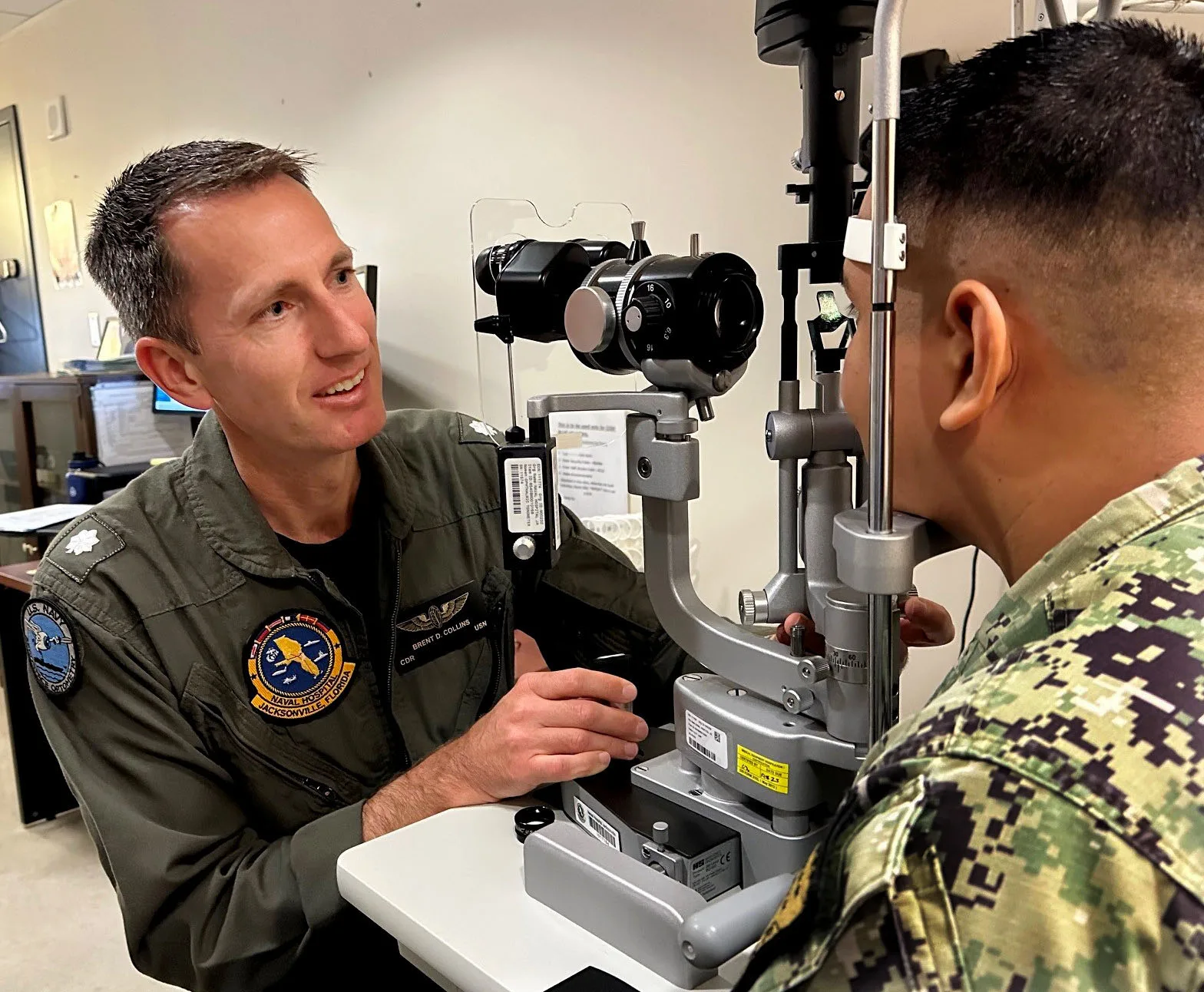
doctor conducting a fitness for duty determination
Fitness for Duty Determination: What Qoye v. United States Means for Denied Medical Retirements

On July 30, 2026, the U.S. Court of Appeals for the Federal Circuit decided Qoye v. United States, a precedential ruling for veterans denied a medical disability retirement. The court held that a correction board cannot make a lawful fitness for duty determination without first identifying the actual duties of the veteran’s job and weighing all of the relevant factors in the governing Navy instruction. The court vacated the decision below and sent the case back to the Board for Correction of Naval Records. This article explains what happened, what the ruling changes, and what it means if a board has already told you that you were fit.

By Kevin Courtney, Esq.  |  Former USMC Judge Advocate  |  California Attorney

medical professional working through a fitness for duty determination

What happened in Qoye v. United States

Yishai Qoye served in the Navy as a nuclear machinist mate. In 2008, he began a tour aboard the USS Eisenhower, a nuclear-powered aircraft carrier. During that assignment he struggled to stay awake. Fellow sailors described him as consistently falling asleep in the middle of whatever he was doing, including while standing watch and while performing maintenance.

He sought treatment from the Navy in 2009 and again in 2010. The Navy finally ran a sleep study in September 2010. That study found that he snored and possibly had sleep apnea. It never tested him for narcolepsy, and the Navy ordered no separate narcolepsy test.

Separately, in December 2010 the Navy charged Mr. Qoye with failure to obey a lawful order and making a false official statement for falsifying a shipboard maintenance log. He received non-judicial punishment in January 2011. His supervisor then asked to remove his Navy Enlisted Classification as a nuclear machinist mate, citing “demonstrated unreliability and lack of integrity.” He requested early separation and left the Navy in 2011 with an honorable discharge and a narrative reason of “reduction in force.” Because he did not finish his reenlistment period, the Navy clawed back his reenlistment bonus.

In 2012, the VA ran its own sleep study, which ruled out sleep apnea. This time, however, Mr. Qoye also underwent a Multiple Sleep Latency Test, and that test showed symptoms consistent with narcolepsy. The VA then assigned a 40 percent service-connected rating for narcolepsy, effective the date of his discharge.

How the board handled his fitness for duty determination

Mr. Qoye petitioned the Board for Correction of Naval Records in 2015. He asked the board to correct his records to show a medical retirement, to refund the recouped bonus, and to change the reason for his classification removal from misconduct to medically unfit.

The board agreed that the Navy had failed to diagnose his narcolepsy during service and had failed to refer him to a Medical Evaluation Board and a Physical Evaluation Board. It then sent his records to an informal PEB for a look back in time. That PEB found him fit. Notably, it first reviewed the medical records of a different service member, discovered the error, reviewed the right records, and reached the same conclusion.

The board denied reconsideration in 2020 and again after a court-ordered remand in 2022. The Court of Federal Claims upheld the board in April 2024 and dismissed his records-correction and bonus claims as time-barred. Mr. Qoye appealed.

Why the “precedential” label matters

The Federal Circuit marked this opinion as precedential. That word carries real weight. A precedential decision binds the Court of Federal Claims in later cases and controls how courts will review correction board decisions going forward, not just in Mr. Qoye’s case. A nonprecedential decision, by contrast, resolves only the dispute in front of the court and sets no rule for anyone else. Because Qoye is precedential, a board that repeats these errors risks the same reversal. You can read the full opinion in Qoye v. United States on the court’s website.

What the court said about the fitness for duty determination

Military disability retirement comes from 10 U.S.C. § 1201. Among other statutory requirements, a veteran must show two things by a preponderance of the evidence: that the disability arose while entitled to basic pay, and that it made him unfit to perform the duties of his office, grade, rank, or rating. That second question is the fitness determination.

The Navy spells out how to answer it. Secretary of the Navy Instruction 1850.4E § 3304(a) lists four factors: common military tasks, physical readiness and fitness tests, deployability, and special qualifications. Section 3303 tells the board to consider all relevant evidence, and § 3301 requires the board to relate the disability to the duties the member could reasonably be expected to perform.

The Federal Circuit found that the board skipped three of those four factors. It never identified or discussed any common military task required of a nuclear machinist mate. It never asked whether narcolepsy affected his deployability — the government conceded that point at oral argument. And it never discussed the special qualifications he obtained to become a nuclear machinist mate, or whether narcolepsy would affect them. Each failure, standing alone, was arbitrary and capricious and required vacatur.

The board must measure you against your real job

The most useful part of the ruling is what the court said about job duties. A board cannot judge fitness in the abstract. It must relate the disability to the requirements and duties the member could reasonably be expected to perform in his own office, grade, rank, and rating. The court was direct: that obligation belongs to the board, and the board cannot pass it to the veteran.

Here, the board leaned on high-level phrases pulled from performance evaluations, such as assisting with “complex maintenance items.” That was not enough. The court also rejected the board’s two other props. The 2010 sleep study never tested for narcolepsy, so it could not show whether narcolepsy affected his work. And the board pointed to a mechanic job Mr. Qoye applied for years after discharge without ever explaining what that job required or how it compared to his Navy duties.

The court added one more point that matters for technical ratings. The Navy’s Manual of the Medical Department states that sleep disorders causing daytime fatigue, somnolence, or inattention disqualify a sailor from nuclear field duty. The board should have considered that manual, because it bears directly on the special-qualifications factor. This reasoning builds on the same line of cases we discuss in our article on military disability retirement and the BCMR.

The Court of Federal Claims had thrown out two of Mr. Qoye’s claims on timing grounds. It held that his records-correction claim accrued at discharge and that his bonus claim accrued in 2011. Under 28 U.S.C. § 2501, a claim must reach that court within six years of accrual.

The Federal Circuit disagreed. Where a service member was never referred to a medical board before discharge, a disability retirement claim does not accrue until the correction board takes final action. Mr. Qoye’s medical retirement claim was timely, and his other two claims were tethered to it. The board could not fix his classification or discharge narrative without first finding him unfit, and the Navy would not have recouped the bonus had he been medically retired. Because those claims rose or fell with the retirement claim, the trial court had jurisdiction over them.

This is a practical holding. It means a veteran does not lose the downstream pieces of relief — a corrected DD-214 narrative, a corrected classification code, a refunded bonus — simply because years passed while the boards worked through the fitness question. If a board has already denied you and you are weighing federal court, see our discussion of what a federal-court challenge to a BCNR denial looks like.

An honorable discharge does not block liberal consideration

The board had also refused to apply liberal consideration, reasoning that Mr. Qoye received an honorable characterization of service. The Federal Circuit called that rationale improper. Liberal consideration reaches more than the characterization on a discharge certificate. Under the Kurta memorandum, it also reaches the narrative reason, the separation code, and the reenlistment code. Under 10 U.S.C. § 1552(h) and the Federal Circuit’s Doyon decision, it reaches the narrative reason for separation as well.

One caution belongs here. The court did not hold that Mr. Qoye wins on this point. He still must show that narcolepsy is a condition eligible for liberal consideration, and the court left that question for the military to answer first. For the general standard, see our explainer on what liberal consideration really means in a PTSD discharge upgrade.

Why this ruling matters to service members and veterans

Many veterans left service with a condition no one properly diagnosed, then received a high VA rating for that same condition months later. When they later ask a correction board for a medical retirement, they often get a short denial that says they were fit — supported by little more than a few performance evaluations.

The difference between an ordinary discharge and a medical disability retirement can be substantial. A medical retirement may carry retired pay and health-care eligibility that an ordinary discharge does not. Qoye gives veterans in this position a concrete argument: the board owes you a reasoned fitness for duty determination that names your duties, addresses deployability, and accounts for the special qualifications your rating required. A conclusory denial no longer satisfies that duty.

What to do if a board found you fit for duty

If a correction board denied your medical retirement, the ruling may help you. Strong petitions and reconsideration requests usually share a few features.

  • A documented duty description. Pull your rating or MOS description, watch bills, and job qualification requirements. Show the board exactly what your work demanded.
  • Evidence tied to those duties. Connect your condition to specific tasks you could not reliably perform, rather than to general fatigue or discomfort.
  • A deployability argument. Address whether your condition affected your ability to deploy, because boards routinely skip this factor.
  • Special-qualification standards. If your rating carried medical screening standards — nuclear field duty, aviation, dive, or similar — cite the governing manual and the disqualifying condition.
  • A clear theory of legal error. Name the factor the board omitted and the instruction it violated. Boards respond to specifics.

Veterans file these petitions with the BCMR or BCNR on DD Form 149. A three-year period generally runs from when you discover the error, though a board may waive it in the interest of justice. Under 10 U.S.C. § 1552, relief remains discretionary, so a board may decline even when you show error. This work is evidence-intensive and slow. If you want a candid read on your record, you can request a case review with our firm.

Common mistakes to avoid

Several errors weaken otherwise promising petitions:

  • Arguing only that you were sick, without ever describing the duties you could not perform.
  • Assuming a VA rating proves unfitness at separation. The two systems use different standards, although the rating still matters as evidence.
  • Letting a board rely on a medical test that never examined your actual condition, as happened in Qoye.
  • Accepting a preliminary PEB finding without requesting the hearing you are entitled to request.
  • Assuming the six-year clock already ran out. Accrual rules for disability retirement claims are technical, and an attorney can tell you where you stand.

This article is general information and is not legal advice. Every case is different, and outcomes depend on the record, the requested relief, the applicable board, and the strength of the evidence. Past results do not guarantee future outcomes. If you have questions about your situation, speak with a qualified military law attorney.

I had the pleasure of working with Mr Courtney recently, and I can’t say enough good things about the exceptional legal services provided. From start to finish, Mr Courtney demonstrated professionalism, expertise, and a deep commitment to my case. — Seth, Avvo.com.

Read more client reviewsEvery case is different, and past results do not guarantee future outcomes.

Talk with a military records correction attorney

Qoye strengthens the position of veterans whose boards declared them fit without ever examining what their jobs actually required. If your record shows an ordinary discharge instead of the medical retirement your condition may have warranted, our firm can review the file, identify the factors the board skipped, and build the petition around them. Learn how we handle these matters as a BCMR and BCNR petition attorney, or request a case review to discuss your options.

Frequently asked questions

What is a fitness for duty determination?

It is the decision about whether a disability made a service member unable to perform the duties of his or her office, grade, rank, or rating. Under 10 U.S.C. § 1201, a veteran must clear that hurdle before the service may grant a medical disability retirement.

What did Qoye v. United States decide?

The Federal Circuit held that the Board for Correction of Naval Records acted arbitrarily when it found Mr. Qoye fit without addressing his common military tasks, his deployability, or the special qualifications his nuclear rating required. The court vacated the decision below and remanded to the board.

Does an honorable discharge prevent liberal consideration?

No. The court rejected that reasoning. Under the Kurta memorandum, liberal consideration can reach the narrative reason for separation, the separation code, and the reenlistment code, not just the characterization of service. A veteran must still show that the underlying condition qualifies.

My board denied me years ago. Is it too late?

Possibly not. When the service never referred a member to a medical board before discharge, the disability retirement claim generally does not accrue until the correction board takes final action. Related claims tied to that retirement claim may travel with it. The analysis is fact-specific, so have the timeline reviewed.

Does a VA disability rating prove I was unfit for duty?

Not by itself. The VA rates service-connected disability, while the service decides fitness for military duty. The two use different standards. A rating can still serve as meaningful evidence, particularly when it takes effect at or near your discharge date.

Ask AI about Courtney Military Law Group

Get an instant, plain-English summary of the firm from the AI assistant you trust. Opens in a new tab with the question already typed.

Gemini doesn't accept a pre-filled link — we'll copy the question to your clipboard so you can paste it.

Website developed in accordance with Web Content Accessibility Guidelines 2.2.
If you encounter any issues while using this site, please contact us: 949.987.8385